

Key facts
- Flare threat researcher Assaf Morag built an identity graph analysis framework for attributing ransomware operations across roughly a decade.
- Ransomware attacks are not slowing down, according to the Dark Reading feature.
- Morag plans to present the repeatable investigative methodology during a Black Hat Europe 2026 briefing.
- Black Hat Europe runs Dec 7, 2026 to Dec 10, 2026 at Excel London, United Kingdom.
Flare threat researcher Assaf Morag built an identity graph analysis framework for attributing ransomware operations across roughly a decade, according to a Dark Reading feature published Nov. 23, 2026.
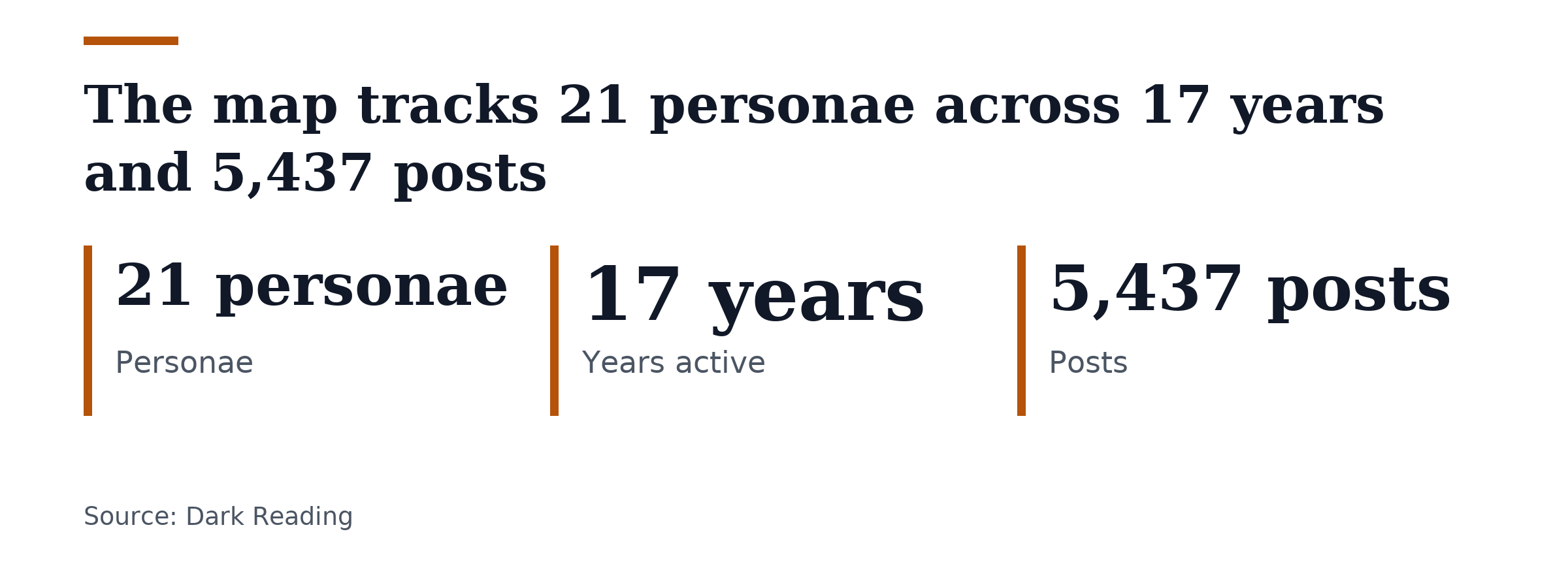
The framework’s map contains 21 personae active over 17 years with 5,437 posts, Dark Reading reported. Morag first set out to study initial access brokers on Dark Web forums rather than to create a framework. He originally spent two months manually connecting gang operators and affiliates to initial access brokers before building the framework, and once the framework was ready the same research took three hours.
Hard evidence in Morag’s method includes messaging IDs, e-mails and chat handles. Soft evidence includes writing styles, typos and reused phrases. Morag traced connections mainly by tracking Tox IDs, which revealed people behind fake personae and aliases such as John or Michael. Ransomware cartels commonly use Tox, Discord, Telegram and Jabber for payment negotiations with organizations or affiliate recruitment, according to the feature.
Morag discovered six operational layers across the ransomware business flow. A homemade ransom layer builds ransomware strains, infostealer payloads, and loader malware that gets around antivirus and endpoint detection and response (EDR) defenses. The ransom deployment layer consists of gang operators and affiliates who select malware, deploy it and extort victims. Pen-testers probe organizations for weaknesses to find entry points.
Dealers are initial access brokers who buy and sell access like a cybercrime sales department. Morag identified seven initial access brokers active for over nine years across 50 forums and 1,300 events. Fraud recovery organizations run diagnostics, bargain with attackers and set up settlements with victims. At scale, crypto drainers handle stolen seed phrases and private keys and offer related crypto services to empty victims’ wallets.
Morag warns that some firms claiming to help ransomware victims secretly defraud them and connect to ransomware deployers. Up to the fraud recovery layer, actors communicated in Russian. After the fraud recovery layer, actors switched to English and posed as legitimate recovery businesses. These actors installed tools on victims’ systems, ran diagnostics and offered data recovery and legal compliance services.
Morag says a few U.S. recovery organizations defrauded victims in the past month. On Exploit, a reputable Russian market, attackers pay $100 to $150 and pass a test to gain entry.
Actors use Exploit to discuss zero-day and known vulnerability exploits and to forge ransomware-as-a-service partnerships. Forum infighting reveals tools, money movement and traded access as actors accuse one another of illegitimacy. Morag visited more than 40 underground forums while analyzing cybercrime gangs with the framework.
Ransomware activity disrupts targets ranging from Coca-Cola production to Japanese frozen food. The framework offers contextual data to both private and public sectors but does not let organizations directly push back against ransomware.
Morag is applying the framework to attacks against financial systems. Morag recently applied the framework to investigate another ransomware cartel and says it yielded helpful results. Morag says insight into an operation that included a fake fraud recovery layer may make organizations think twice about negotiating. Ransomware actors develop, buy or rent tools to bypass endpoint detection and response and craft convincing phishing e-mails.
More operational data makes ransomware behavior more predictable for defenders, according to the article. Ransomware attacks are not slowing down, according to the Dark Reading feature. The framework helps defenders and law enforcement take a proactive approach to ransomware risk by understanding who is behind attacks.
Morag plans to present the repeatable investigative methodology during a Black Hat Europe 2026 briefing. Black Hat Europe runs Dec. 7, 2026 to Dec. 10, 2026 at Excel London, United Kingdom.
Join the discussion