

Key facts
- Amplifon Americas is the Minneapolis-based U.S. arm of Milan-based Amplifon S.p.A., serving more than 80 million members through thousands of clinics nationwide.
- Intruders entered Amplifon Americas' internal networks in January 2026 and extracted files from specific systems from January 18 through February 8, 2026.
- Amplifon learned about the breach on October 6, 2026, approximately eight months after the period of unauthorized access ended.
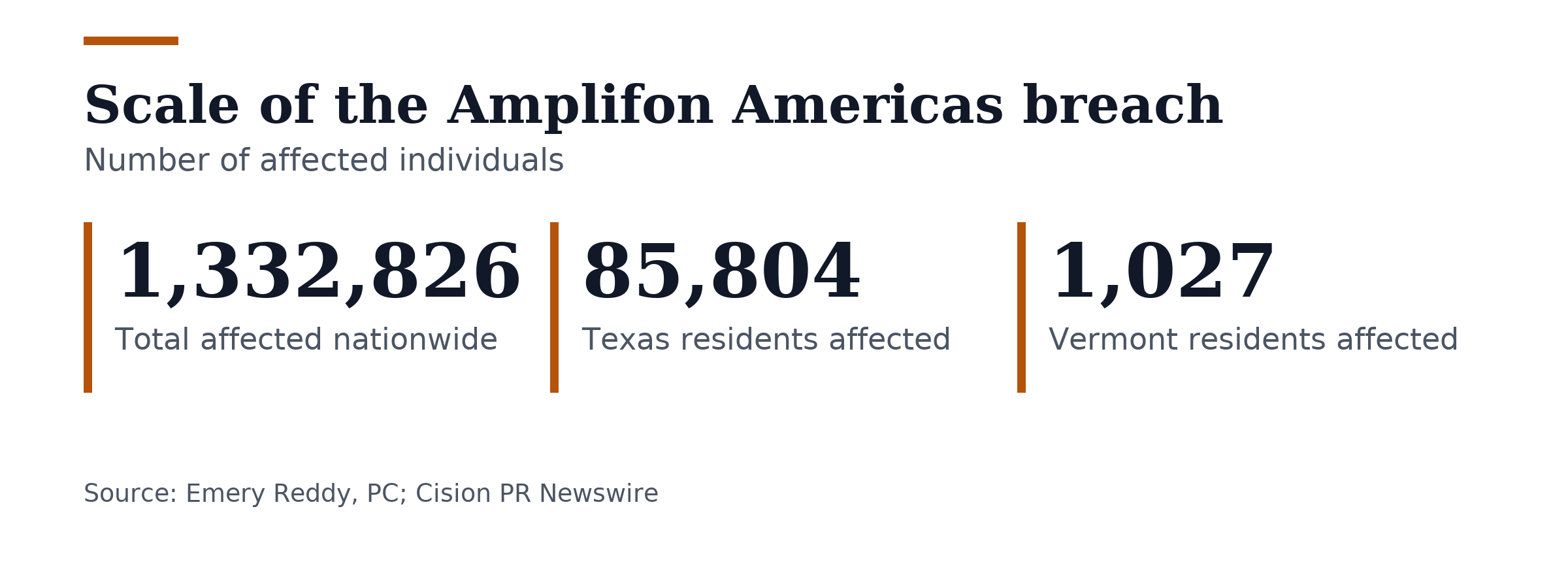
- A Texas Attorney General filing reports 1,332,826 people affected nationwide, including 85,804 Texas residents.
Amplifon Americas learned on Oct. 6, 2026 that intruders had entered its internal networks in January 2026 and extracted files from specific systems from Jan. 18 through Feb. 8, 2026, affecting more than 1.3 million individuals in the United States. “Amplifon Hearing Health Care has disclosed a data breach impacting the information of more than 1.3 million individuals in the US,” SecurityWeek reported.
A Texas Attorney General filing made on Nov. 6, 2026 reports 1,332,826 people affected nationwide, including 85,804 Texas residents, and a Vermont Attorney General filing on Nov. 5, 2026 reported 1,027 affected state residents. Amplifon Americas is the Minneapolis-based U.S. arm of Milan-based Amplifon S.p.A., serving more than 80 million members through thousands of clinics nationwide.
The compromised data included names and contact details, driver’s license and other government identification numbers, dates of birth, hearing and medical records, and service dates. Exposed information covered other health details and health insurance information, while certain individuals had Social Security numbers and financial details removed by the attackers. Not every individual had all items exposed, and exposed details can vary by state.
Some affected individuals may recognize Amplifon only through a health plan hearing benefit, not from visiting a store. Anyone who received a notice letter or used hearing benefits administered by Amplifon may be affected. Affected individuals are being notified by U.S. mail and through a website posting.
Amplifon spent about eight months reviewing the stolen information before deciding personal details might have been exposed. The company moved immediately to contain the intrusion and began an investigation after files were copied from certain systems between Jan. 18 and Feb. 8, 2026. Roughly nine months elapsed from the beginning of the intrusion in January 2026 to the initial regulator notification in early November 2026. Amplifon learned about the breach on Oct. 6, 2026, approximately eight months after the period of unauthorized access ended.
The company has not publicly explained why the breach went unnoticed for so long.
Amplifon described the event as a network security incident without naming ransomware, a vendor, or how the intruders got in. The company stated it has no knowledge of fraudulent use of personal information stemming from the breach. It has not said publicly if free credit monitoring or identity protection will be provided, and it has not identified the specific programs or health plans whose members may be affected.


Edelson Lechtzin LLP, identified as a national firm handling class actions, is looking into data privacy claims tied to the Amplifon breach. The potential class action covers hearing-benefit members, retail hearing-care patients, and possibly employees whose information Amplifon maintained during January and February 2026.
Criminals can use health and insurance information to bill for care never received, fill prescriptions, or submit false claims, with problems appearing months later. They can use a Social Security number together with a date of birth and driver’s license to open accounts in someone else’s name, and fraudsters may contact people by e-mail, text, or phone while citing an actual breach to sound credible. Firms that gather Social Security numbers, medical records, and insurance information are legally required to safeguard the data and provide prompt notification after exposure.
The Identity Theft Resource Center tracked 3,158 data compromises in 2024 that produced more than 1.3 billion victim notices, and victim notices rose 211 percent from the prior year. Healthcare held the top spot as the most attacked industry every year from 2018 through 2023, but financial services surpassed it in 2024. The center recorded 536 healthcare compromises in 2024, including the Change Healthcare mega-breach with 190,000,000 victim notices.
Recipients should watch for the mailed notice and keep it with any enrollment details for protection services offered. If a Social Security number was exposed, affected individuals can freeze credit files at Equifax, Experian, and TransUnion, request free credit reports at AnnualCreditReport.com, and consider an IRS Identity Protection PIN. They should also look for unfamiliar charges on explanation-of-benefits statements tied to hearing care, and suspected identity theft can be reported through IdentityTheft.gov.
Join the discussion