
Key facts
- The Pitjantjatjara artist and National Gallery of Australia First Nations advisory chair Sally Scales said AI systems are converting First Nations art into Temu slop.
- Scales said the technology weakens First Nations artists' control and the authenticity of their work and amounts to theft of cultural knowledge.
- Prime minister Anthony Albanese promised to shield Australian artists from copyright theft.
- Attorney general Michelle Rowland said there are no intentions to reduce copyright protections.
Pitjantjatjara artist Sally Scales, the National Gallery of Australia’s First Nations advisory chair, told The Guardian on Nov. 1, 2026 that AI systems are converting First Nations art into “Temu slop,” low-quality derivatives that strip artists of control and authenticity.
Scales said the technology weakens First Nations artists’ control over their work and damages its authenticity, and that it amounts to theft of cultural knowledge. “It’s a theft of the agency of the artist,” she said.
The National Association for the Visual Arts told a joint select committee AI inquiry that artificial intelligence scraping had reached Indigenous art centre websites, with artists’ names removed and their work changed, a pattern documented by Wuthathi and Meriam lawyer Terri Janke. Janke described the practice to the ABC in August 2025, and the arts peak body’s submission drew on her standing as an authority on Indigenous cultural and intellectual property.
Janke said AI has no Dreaming, no kinship, no country and no cultural obligations. The Guardian reported her warning that AI might reproduce cultural knowledge without regard to accuracy or proper use. The ABC’s Indigenous Affairs Team found that popular AI models readily copy, blend and generalise First Nations art, stories and language, and a large wave of AI could multiply the infringements that already occur, she said, and selling AI-made images damages people’s health and wellbeing by flattening culture, altering real and sacred stories and reducing diversity. She said AI-generated Aboriginal art is simple and inexpensive to find, with items on print-on-demand sites.
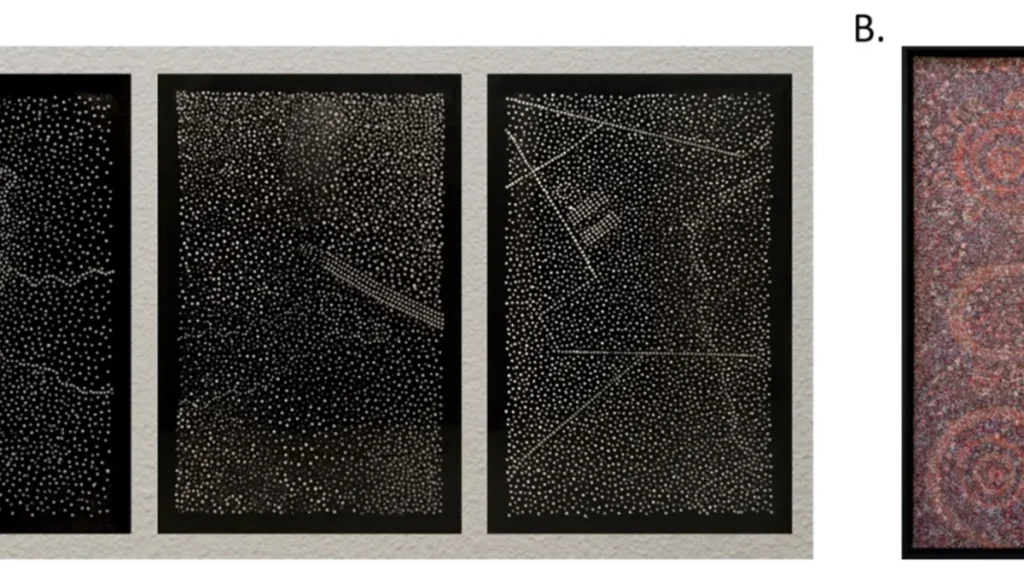
Ngunnawal elder Jude Barlow said AI-generated dot paintings lack authenticity because no Ngunnawal artwork is dot painting, and that AI takes generic Aboriginal art popular today and homogenises Indigenous peoples although they are dynamic and varied. First Nations groups have distinct cultures, languages, songs and stories tied to their countries, she said. Barlow said much First Nations culture is passed down verbally, creating an incomplete data set that produces false results, and that AI’s use of Ngunnawal language without consultation or consent is disrespectful appropriation because engagement guidelines require working with Aboriginal and Torres Strait Islander people.
The Guardian reported that experts are especially concerned about Indigenous cultural and intellectual property because AI companies can sweep up anything posted online, including songs and paintings that carry sacred and cultural knowledge. AI supercomputers can harvest online data to interpret many thousands of years of First Nations cultures within seconds, the ABC reported. The National Association for the Visual Arts defines Indigenous data sovereignty as First Nations peoples holding authority over their data, cultural material and knowledge.
The national visual arts peak body said artificial intelligence has already changed artwork, stripped attribution and sold the results, causing cultural and economic harm. Its members also worry that AI-generated Aboriginal-style images copy local methods, stories, symbols and painting styles, then get marketed as Indigenous or Indigenous-inspired work. That spread of false information competes with First Nations artists and inflicts cultural and economic damage, the body said.
Prime Minister Anthony Albanese promised to shield Australian artists from copyright theft, while Attorney General Michelle Rowland said there are no intentions to reduce copyright protections. An attorney general spokesperson said Australian creatives are world class and that the government remains committed to backing them, adding that it keeps consulting creators, media groups and AI companies so future copyright changes give meaningful control and fair pay.
The Tech Council of Australia, led by Atlassian co-founder Scott Farquar, wants the law changed so AI models can learn from copyrighted material. A Productivity Commission report warned that excessive regulation could limit the major economic benefits available from AI, and commissioner Stephen King said AI creates new risks and makes existing harms easier to commit, though existing laws should be checked for fitness rather than replaced by a broad AI act. OpenAI, valued at $460 billion, creates its own rules and ethical frameworks using text and data mining and human reviewers, and said it found no public evidence it consulted Aboriginal or Torres Strait Islander groups while developing its policies.
The Guardian reported that searches on Temu, Shein and Amazon turn up works labelled Aboriginal paintings and goods such as coasters and stubby holders carrying Aboriginal-style designs, usually without artist attribution. The ABC’s Indigenous Affairs Team found sellers on Etsy openly using AI to create Aboriginal items, a practice the website’s rules allow, and Adobe Stock offering hundreds of AI-generated Aboriginal-style images for royalty-free commercial use.
The ABC’s Indigenous Affairs Team found similar goods on China-based Temu, though whether AI made them is less clear, and it remains uncertain how many images on Etsy or Adobe Stock were made by First Nations people. Janke regards selling these images as cultural theft but said they probably do not break current copyright laws.
As much as 75 per cent of Indigenous-style art on sale was not created by First Nations people, according to estimates cited by the ABC and the National Indigenous Times. Australian Indigenous-style souvenirs sell for $250 million each year, and more than 60 per cent are counterfeit, a 2022 Productivity Commission inquiry found. International visitors spent over $78 million on Indigenous-style art in 2019–20, the commission’s earlier report said, while Indigenous artists earn an average of just $1,800 annually. The National Indigenous Times blamed low earnings on a market flooded with fake Aboriginal paintings made abroad, imported into Australia and sold mainly to tourists by non-Indigenous businesses.
A Kalkadoon woman, Chern’ee Sutton, and her sister Brooke are considering legal action after finding AI versions of Brooke’s art for sale on an Australian website, the National Indigenous Times reported on Oct. 13, 2026. Artist Emrhan Tjapanangka Sultan said he knows several Aboriginal artists whose work was used without authorisation, and that he has seen many fake artworks copying regional styles, particularly Western and Central Desert dot art, often altered using AI platforms.
Sultan said AI adds another layer of worry for Aboriginal artists rooted in storytelling, making it harder to earn a living or even a small wage, though his own practice is unchanged because his work is grounded in culture and country. Lauren Rogers said what worries her most is how fast AI can produce something resembling Indigenous art without the cultural knowledge, relationships and lived experience behind genuine work. Indigenous art carries Country, culture, story, identity and knowledge, she said, and scraping, copying or imitating it without consent, attribution or cultural understanding risks accelerating cultural appropriation through technology. Rogers said consumers can help by buying Aboriginal art directly from reputable businesses.
Louise Buckingham, chief executive of the Arts Law Centre of Australia, said Aboriginal art counterfeiting is now on steroids because of artificial intelligence. She knows of no newer study like the 2022 counterfeiting inquiry, but said all evidence indicates the problem is far worse now because generative AI runs roughshod over culture and law. “We know it’s happening at an inconceivable scale,” she said, calling for AI companies and sellers of fake Indigenous art to be made legally liable for any part in fraud against Indigenous artists. Regulation must intervene, she said, or the activity denies sovereignty and the use of art for community self-determination and income.
Kathy Bowrey, an intellectual property specialist at UNSW Law, said one in five creators already faced copyright infringement before AI, and that matters grow more complex for First Nations creators partly because of limited control over ownership and respect for Aboriginal culture. She gave the example of a body that paid for access to artwork or images of Aboriginal people, then used artificial intelligence to alter or reuse them without permission. In another scenario, a corporate client pays once and then creates unauthorised Aboriginal derivative work, using artists’ faces without consent. Bowrey said artists lose repeat business and compete with AI when producing new work.
Bowrey and creative technologies expert Oliver Bown proposed a Copyright Plus framework that would require AI companies to reveal their data sources and let artists refuse scraping or imitation of their work. The proposal also includes a levy on AI companies to fund payments to creative professionals and a cultural fund, plus takedown notices for false material. Bowrey said the draft policy was written according to what the government has stated so far.
The Guardian reported that AI has already been trained without payment on works by well-known Australian artists including Kylie Minogue and Nick Cave. Global Voices reported that many top generative AI models illegally collected internet content without creator permission, and that Indigenous activists say people have used generative AI models to make and sell counterfeit Indigenous art.
Voice actors said their work was copied without consent, and local journalists said their reports were plagiarised and used on AI-created news sites. A University of Sydney report from January 2026 warned that journalists are increasingly hidden in generative AI search results. Australian artists, journalists and Aboriginal cultural workers started the Stop AI Theft campaign to demand stronger protection for creative work as generative AI use rises.
The campaign’s open letter to the heads of Amazon, Google, Meta, Microsoft, Open AI and X says creative output is unique and original and accuses the companies of stealing it. MEAA chief executive Erin Madeley said, “It is theft, plain and simple – theft of people’s voices, their faces, their music, their stories and art.”
In July 2024 MEAA told a Senate Select Committee on Adopting Artificial Intelligence that users should be able to opt out of AI training, that companies must pay creators for training use, and that transparency rules should force public disclosure of training materials. Australian Council of Trade Unions assistant secretary Joseph Mitchell said big tech profits from stealing Australian creative workers’ and journalists’ work and that calls to legitimize this theft are incomprehensible.
The Tech Council of Australia said in August 2025 that 84 percent of Australians working in offices use AI. Its research projects AI could add up to AUD 115 billion yearly to Australia’s economy and create 200,000 jobs by 2030.
Join the discussion