


VulnCheck’s canary network data shows credential harvesting represented 13% of all observed vulnerability exploitation from January through November 2026, according to Help Net Security’s report published Nov. 25, 2026./
The monthly share climbed from roughly 1% in January 2026 to between 25% and 35% in September and October 2026. September’s peak reached 34.5%, partly because React2Shell exploitation dropped that month while harvesting continued to grow.
Monthly harvesting records increased from roughly 17,000 in July 2026 to 99,000 in October 2026.
The median CVSS, or Common Vulnerability Scoring System, score of vulnerabilities used for harvesting is 9.4. Medium-severity bugs comprised just 6% of the list yet generated 23% of all harvesting records.
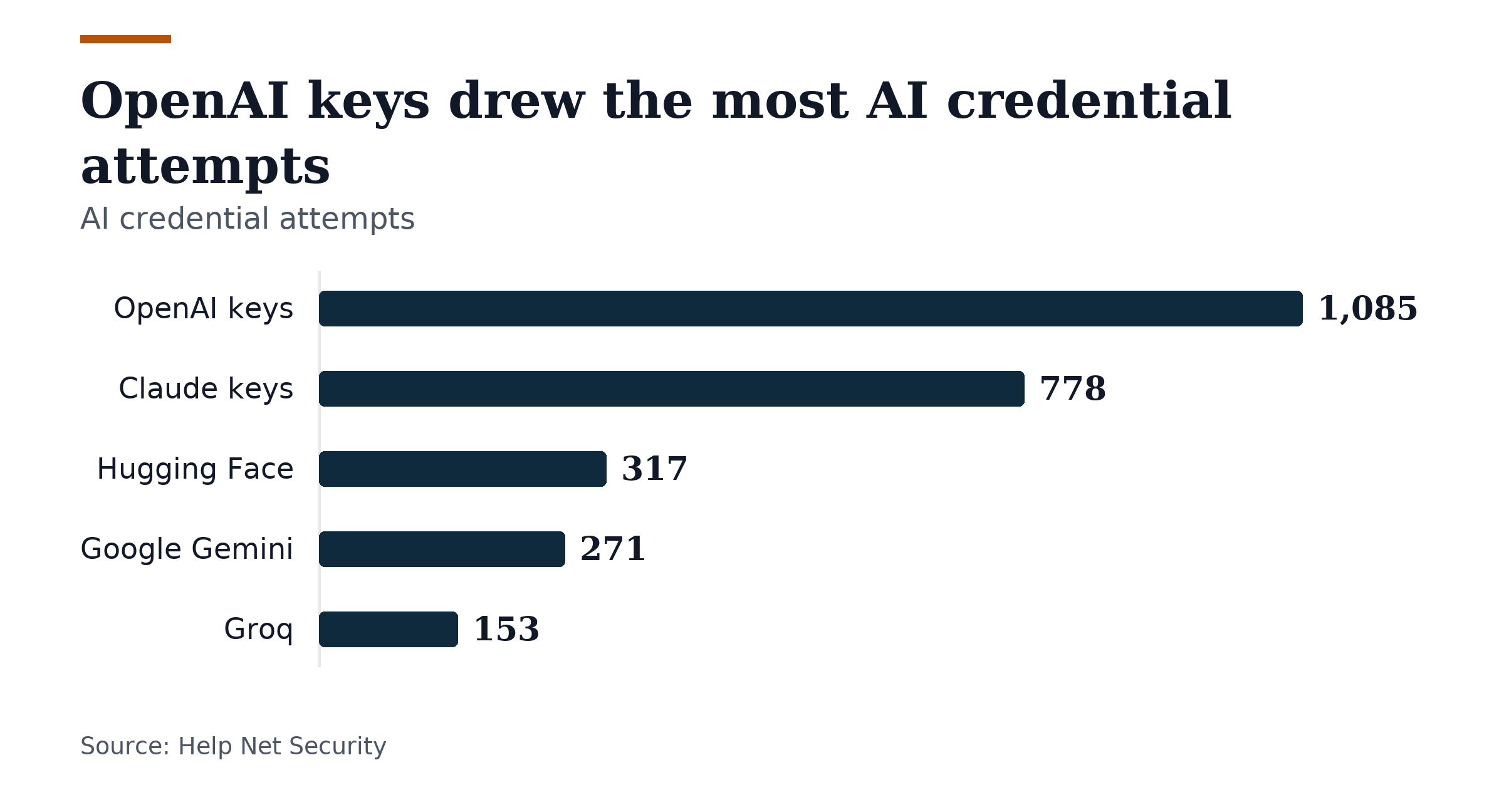
File-read and server-side request forgery flaws let attackers read secrets from a server without running code on it, according to Patrick Garrity, a security researcher at VulnCheck./ VulnCheck first detected attackers seeking AI credentials in May 2026, and the activity appeared every month after. OpenAI keys generated 1,085 attempts and Anthropic’s Claude keys generated 778, ahead of Hugging Face at 317, Google Gemini at 271 and Groq at 153.
Some attackers requested config files from servers, while others searched environment variables after obtaining code execution or scanned file systems for key prefixes including “sk-ant-” and “sk-proj-“. Attackers exploited older Langflow and Vite vulnerabilities for months before searching for AI keys through them. Open source software, AI products and developer tools made up 77 of the 127 CVEs used for credential harvesting. Network edge devices accounted for 10 of those CVEs.
Scanning focused on CVE-2025-30208, a file-read vulnerability in the Vite frontend tool, during August and September 2026. Requests for Laravel secrets came from 4,784 distinct IP addresses.
AWS keys were sought by 1,687 IP addresses and Google Cloud credentials by 1,007.
Join the discussion