

Key facts
- Tailscale is rushing to fix nearly twelve security flaws that could allow credential theft, server crashes, and root privilege gains.
- Cyberdione Labs discovered 11 flaws known as Tailworm during an audit of Tailscale 1.104.2 and headscale v0.29.5.
- Tailscale said it received Cyberdione Labs' report on Monday and was preparing patches for release by the end of Tuesday, October 27.
- Tailscale said users should not all turn off Tailscale SSH, according to VP of Engineering Mike Shaver.
Tailscale is rushing patches for nearly twelve security flaws in its SSH server and related mesh components after Cyberdione Labs researcher Erica Windisch disclosed the Tailworm findings Oct. 25, 2026, publishing details before fixes existed.
Cyberdione Labs found 11 Tailworm flaws during an audit of Tailscale 1.104.2 and headscale v0.29.5. No CVE identifier or fixed version existed when the details went public Oct. 25, 2026, and Tailscale has not yet released fixed version numbers. The researcher’s testing ran Oct. 22 to Oct. 24, 2026, on Tailscale 1.104.2, released Oct. 21, 2026, and headscale 0.29.5.
Tailscale builds a software-defined mesh VPN on WireGuard that links computers, servers and cloud instances into one encrypted tailnet (a private mesh network) through direct peer-to-peer connections. Tailscale SSH decides access from device identity and network policy rather than passwords or keys. Six of the findings are high severity, and four involve Tailscale SSH.
The gravest flaw sits in the Tailscale SSH server, where authorized attackers might run code as root through Unix-socket forwarding on a tailnet. Tailscale SSH handles some forwarding operations with root privileges, and the restrictions meant to limit them can be bypassed. In lab tests, an attacker controlling one device reached servers over Tailscale SSH, gained root and stole enrollment keys, though Tailscale said exploitation depends on permissions, configuration and other conditions. Tailscale and the Tailworm report describe no real-world exploitation, and the report does not claim remote code execution from the internet.
The Tailworm report calls the SSH flaws wormable, saying an automated attack could cross each server the policy allows in under a second per hop with no user action. Windisch put it this way: “the mesh converts one ordinary foothold into fleet-wide privileged access at machine speed.” Other researchers publicly doubted the wormable label, and in lab tests the spread stopped when access rules named one source and one destination. Hardware-bound device keys such as TPM or Secure Enclave also limited the movement.
The findings also reach beyond SSH. The experimental app connector conn25 lets an approved user steer traffic to unapproved destinations, including cloud metadata that can issue server credentials. A race-condition chain defeated a file-path safety check, captured an enrollment key and added an attacker-controlled machine as a trusted server when Tailnet Lock was off. Tailworm also covers the Serve feature, headscale and the client relay, potentially exposing cloud metadata, internal networks or denial-of-service conditions.
Windisch characterized the disclosure as reported rather than coordinated and said she sent Tailscale the report and exploit code before the public post. She said she delivered the report and proof-of-concept code to Tailscale’s security contact on the Saturday before the public post, and that the exploit code is not public and went only to that contact. Cyberdione Labs said rapid public awareness would speed remediation across impacted devices, that the vulnerabilities were discovered rather than introduced by researchers, and that discovery took low effort.
Tailscale said it received the report Monday and was preparing patches for release by the end of Oct. 27, 2026. The company said fixes were in place for most issues and was preparing a patched client release by the end of that day. A security advisory and technical write-up will come after Tailscale releases the patched update, and Tailscale urged customers to get ready to install the patched client release as soon as available. VP of Engineering Mike Shaver said on Reddit the company was already investigating the same areas with outside security specialists when the report arrived.
Shaver said, “we’re not recommending that everyone disable Tailscale SSH.” He also said the issue is serious but differs from an unauthenticated attacker connecting to arbitrary machines. Tailscale’s probe found privilege-escalation problems in Tailscale SSH that it takes seriously, though it declined to confirm each report claim and is reviewing affected setups.

Until patches arrive, Tailscale advises reviewing SSH access policies, limiting access to needed users and devices, and disabling SSH forwarding where it is not required. The company published TS_SSH_DISABLE_FORWARDING=1 as an environment variable for the tailscaled service; restarting it disables SSH forwarding without disabling Tailscale SSH. Tailscale also suggests turning on SSH check mode, which inserts an extra login step before sessions begin but does not remediate the privilege escalation. For devices that do not need Tailscale SSH, it can be turned off with tailscale set –ssh=false, though documentation warns administrators to secure another access path first or risk losing access.
Tailscale says app connector permissions should be removed from clients that do not need them, and node-key expiry should be turned on for server fleets so a stolen device key does not remain valid indefinitely. A compromised device should be deleted at the control plane because reimaging a machine does not cancel keys an attacker might already have copied. If a compromised Tailnet Lock signing node is involved, Tailnet Lock should be rotated.
Serve forwards that target a Unix socket under tailscale should be taken down, and Serve TCP forwards pointing at Unix sockets should be audited, removing any that target the Tailscale agent’s own socket or other privileged paths. The setting TS_SERVE_ALLOW_ALL_INTERFACES stays off by default because it exposes serve listeners outside the tunnel. For headscale, operators can set memory limits using systemd MemoryMax, supervise restarts, place a rate-limiting proxy in front and restrict network exposure.
Earlier this year Tailscale patched SSH and server socket issues, including SSH Unix socket forwarding reaching a privileged socket, in version 1.98.9. Bulletins TS-2026-004, TS-2026-006 and TS-2026-009 appeared in June and July covering socket forwarding and root-session escapes, all fixed in v1.98.9. Another bulletin, TS-2026-005, covered Serve Unix socket proxy targets without root restrictions and published June 3, 2026; the changelog places the Serve fix in v1.98.9 on July 14 and the SSH fix in v1.98.10 on July 28. Tailscale’s newest security bulletin, TS-2026-013 from Oct. 21, 2026, does not mention the Tailworm report, and headscale v0.29.6 released Oct. 24, 2026, omits the findings from its release notes.
A Tailscale developer opened a pull request Oct. 25 titled ssh/tailssh: route SSH forwarding through the privileged monitor. It proposed socket forwarding in child processes using the logged-in user’s credentials rather than root tailscaled and was still open and unmerged when checked. The pull request cited an internal ticket rather than the Tailworm report. From Oct. 23, 25 commits landed on the project’s main branch, and 15 of them concern changes to the SSH package.
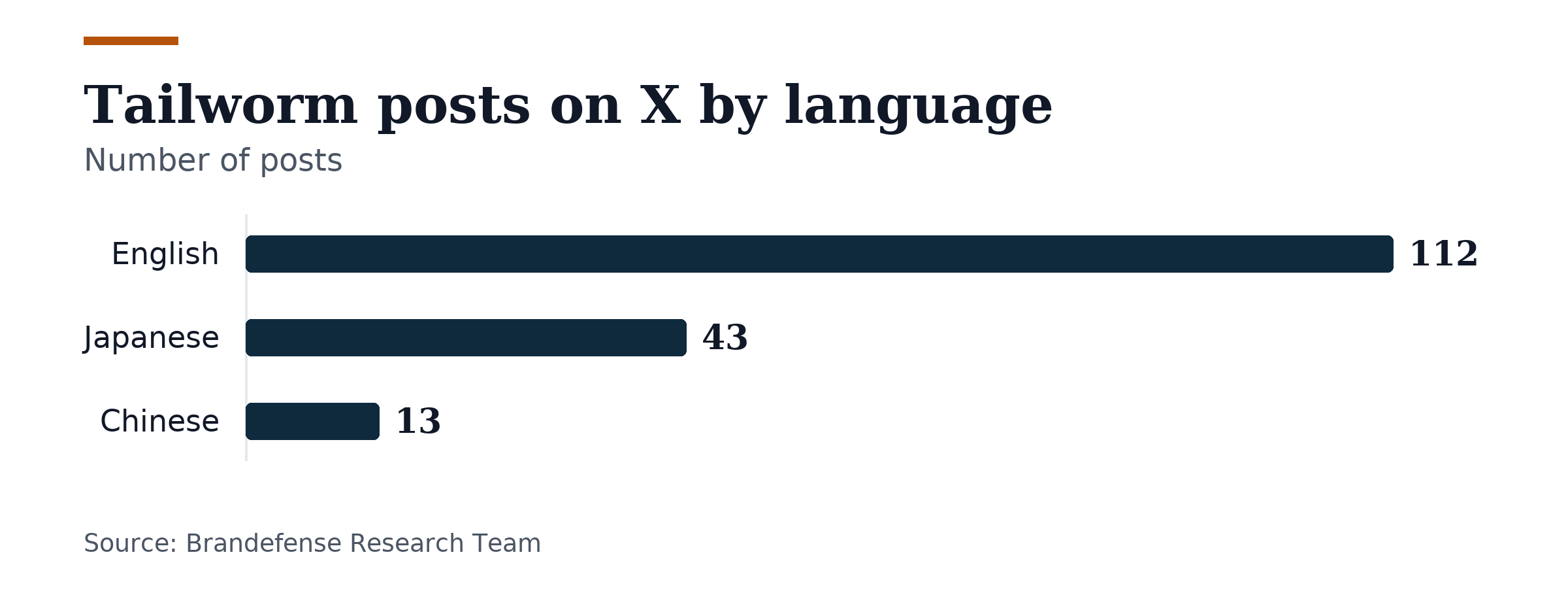
Every finding rests on Windisch’s report alone, and the results have not been publicly reproduced by any other researcher. Windisch rated the three most serious SSH findings High and said they share one root cause. Social discussion picked up quickly: 186 posts named Tailworm on X from Oct. 25 to Oct. 26, 2026, with about 373,000 views total, roughly 343,000 of them on Oct. 25 posts. The posts were mainly in English (112), Japanese (43) or Chinese (13); some critics objected that Tailworm was published without a coordinated disclosure or fix, while other discussants said the findings affect only an opt-in feature and not default installs.
Tailscale expects patches by the end of Oct. 27, 2026, but no CVE identifier or fixed version numbers have been released. Tailscale said a security advisory and technical write-up will follow the patched update. Until then, Tailscale’s interim controls include limiting SSH forwarding, disabling SSH on devices that do not require it, and other steps it published.
Join the discussion