

Key facts
- Palo Alto Networks released PAN-OS patches for Fragnesia, a flaw in the Linux kernel that escalates privileges. Attackers combined it with PHP2Shell to gain root access on firewalls.
- Dream reported in October 2026 that a China-nexus actor combined PHP2Shell and Fragnesia to root 24 Palo Alto firewalls plus one internal firewall management server.
- On October 29, 2026, Palo Alto Networks' Unit 42 verified the findings and said about 0.02% of customer devices with internet-open management interfaces were affected.
- Fragnesia fixes cover PAN-OS 10.2, 11.1, 11.2, 12.1 and 12.2, and the advisory says all later releases are fixed too.
Palo Alto Networks released patches Nov. 25 for Fragnesia, tracked as CVE-2026-46300, a Linux kernel privilege-escalation flaw that attackers chained with the PHP2Shell exploit to gain root access on firewalls with internet-exposed management interfaces.
The vendor published advisory PAN-SA-2026-0015 the same day, rating it informational with no CVSS score assigned. Palo Alto Networks said CVE-2026-46300 sits in the XFRM ESP-in-TCP kernel subsystem and lets a local low-privilege attacker escalate to root.
On PAN-OS, the only known exploitation pathway is to first exploit PHP2Shell, and Palo Alto Networks is not aware of another route. PHP2Shell covers CVE-2026-109618 and CVE-2026-109619, critical PHP flaws that let unauthenticated attackers run code remotely as the PHP web worker, and the entry step requires an internet-facing management interface or a dataplane interface carrying a management profile.
Dream reported in October that a China-nexus actor combined PHP2Shell and Fragnesia to root 24 Palo Alto firewalls plus one internal firewall management server. Dream Security researchers reported the same chain against servers in the United States, Japan, Taiwan and South Korea, including a U.S. government affiliate. On Oct. 26, Dream warned that a Chinese-speaking threat actor exploited the PHP2Shell bugs and a Linux kernel weakness against two servers of a U.S. government-affiliated organization. Dream did not name the firewall maker, and Palo Alto Networks later confirmed the exploited firewalls were made by Palo Alto Networks.
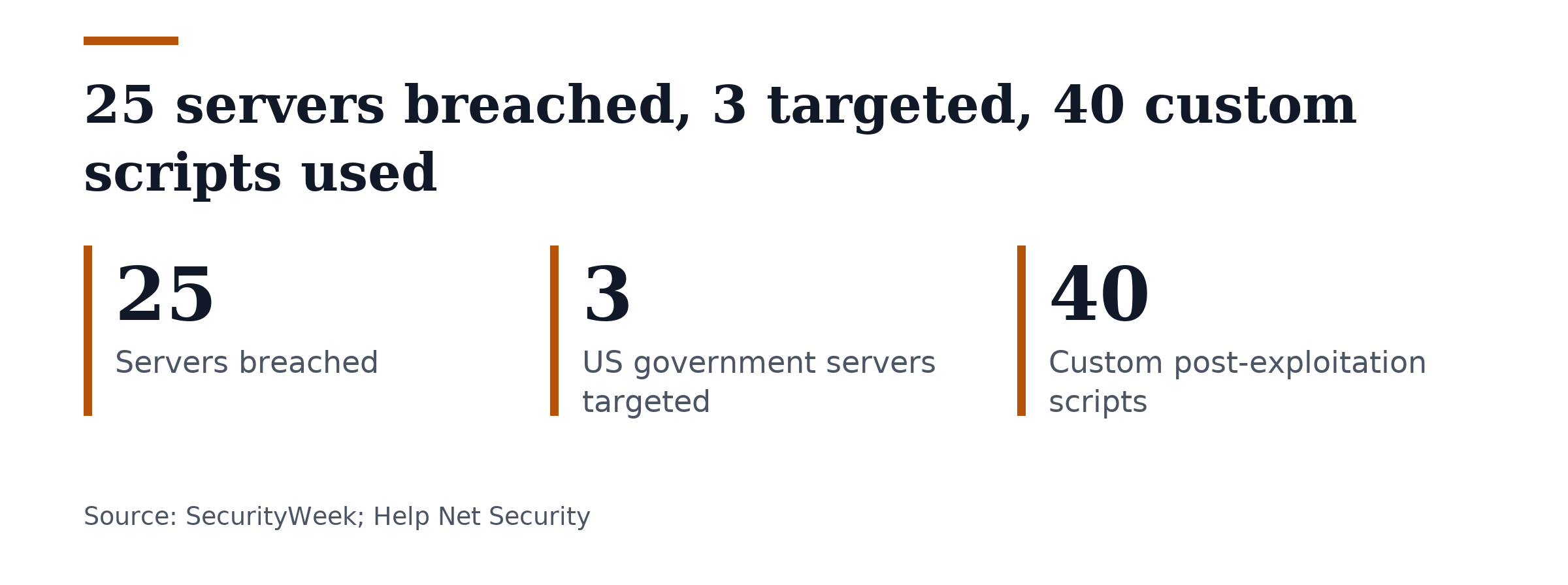
The campaign rooted 25 servers—24 firewalls plus one internal firewall management server—using PHP2Shell for remote code execution and Fragnesia for root-privilege webshells, then focused on three specific servers in a U.S. government-affiliated environment. After rooting 25 servers, the attacker extracted credentials from Active Directory domain controllers. Dream researchers identified custom PHP2Shell-Fragnesia weaponization, target lists, exploitation logs and roughly 40 custom post-exploitation scripts.
Palo Alto Networks’ Unit 42 verified the findings on Oct. 29 and said about 0.02% of customer devices with internet-open management interfaces were affected. Palo Alto Networks confirmed the same day that the actor hit PAN-OS firewalls with internet-exposed management interfaces in attacks chaining PHP2Shell with Fragnesia.
Palo Alto Networks said just approximately .02% of its global installed base exposes internet-facing management interfaces and was affected, and every affected customer was contacted one by one. In a threat brief, the vendor said, “Only a small fraction of a percent (approximately .02%) of our global installed base has internet-facing management interfaces configured and were impacted.”
CISA issued an alert Oct. 28 warning that PHP2Shell and Fragnesia were being chained to deploy PHP webshells and run commands as root. The agency added CVE-2026-46300 to its Known Exploited Vulnerabilities catalog the same day, saying it should be addressed by Oct. 31 and imposing the BOD 26-04 forensic triage requirement. According to CISA, the vulnerability can be linked with CVE-2026-109618 and CVE-2026-109619 so attackers can implant PHP webshells and execute commands as root.
Palo Alto Networks issued PHP2Shell patches for every supported PAN-OS version by Oct. 30, shutting down the known initial-access path. Customers already running a PAN-OS build patched for PHP2Shell were protected against that entry route. Palo Alto Networks said, “If you are running a fixed PAN-OS listed in the CVE-2026-109618 [PHP2Shell] advisory, you are protected.”
The Fragnesia fixes cover PAN-OS 10.2, 11.1, 11.2, 12.1 and 12.2, and the advisory says all later releases are fixed too, though the exact patch-carrying build varies by release.
New fixed versions include 12.2.4-h3, 12.1.10-h6, 12.1.7-h15, 12.1.4-h15, 11.2.16-h3, 11.2.13-h6, 11.2.10-h19, 11.2.7-h25 and 11.2.4-h25. Additional fixed builds are 11.1.16-h6, 11.1.13-h18, 11.1.10-h38, 11.1.7-h14, 11.1.6-h42, 11.1.4-h40, 10.2.18-h15, 10.2.16-h14, 10.2.13-h29, 10.2.10-h45 and 10.2.7-h41.
Organizations whose management interface is reachable from the internet should install the fix immediately and allow access only from trusted internal IP addresses. Where access is already limited to trusted internal IPs, risk is much lower, but Palo Alto Networks still recommends upgrading at the next maintenance window. The vendor recommends not exposing the management interface directly to the web; allow access only from the management network or route it through a VPN.
All exploitation activity Palo Alto Networks observed involved PAN-OS devices exposing management interfaces to the public internet, against recommended best practices. The October advisory for CVE-2026-109618 assigned a critical rating and a CVSS 4.0 score of 9.2, and said attacks targeted internet-exposed management interfaces. GlobalProtect portals, gateways and Clientless VPN were outside the affected set in that October advisory, which instead covered the management web interface and its XML API service.
Fragnesia was disclosed in May 2026 as a flaw letting any unprivileged local user gain root on major Linux distributions released before May 13, and a working public exploit has been on GitHub since disclosure day. It carries a CVSS score of 7.8 (High) with Attack Vector: Local and sits in the XFRM ESP-in-TCP kernel subsystem, the same area as Dirty Frag (CVE-2026-43284 and CVE-2026-43500), disclosed May 7.
AlmaLinux published patched kernels for AL8, AL9 and AL10 on May 13, and Fedora 42 shipped kernel-6.19.14-102.fc42 on May 13. AlmaLinux rebuilt patched kernels on May 14 to pick up two follow-up upstream patches from netdev, while Red Hat Enterprise Linux, Ubuntu, Debian and SUSE advisories remained pending on May 15. NSFOCUS CERT issued an emergency advisory on Fragnesia on May 15.
Hyunwoo Kim, who reported Dirty Frag, said Fragnesia “emerged as an unintended side effect” of the patch closing CVE-2026-43284. The Fragnesia patch series by William Bowling explicitly cites the Dirty Frag fix as a commit it must repair, and patches for Dirty Frag do not address Fragnesia, so a separate patch is required.
A Fragnesia exploit running inside an unprivileged container gains root on the worker node as a container escape. Microsoft’s Defender team said the exploit is not constrained to /usr/bin/su and can modify any user-readable file, including /etc/passwd. Tenable confirmed the exploit works on Ubuntu 6.8.0-111-generic on a Linode VPS with no race condition.
The temporary mitigation is to unload and blacklist affected modules, a sequence Wiz and CloudLinux recommend. Because mitigation leaves poisoned cached binaries in place, administrators should drop the page cache after unloading modules so the system reloads from disk. NSFOCUS recommends Seccomp to block unprivileged AF_ALG socket creation and interception of unprivileged user-namespace creation.
Administrators should monitor /etc/passwd, /etc/sudoers, /etc/shadow and /usr/bin/su for tampering and restrict splice, add_key and unshare for ordinary users. Microsoft said its Trojan:Linux/DirtyFrag detections also cover the public Fragnesia exploit.
Kevin Beaumont said he knows of a ransomware cartel that used PHP2Shell against Palo Alto firewalls to obtain initial access. He also cited reports that a Chinese national state group exploited PHP2Shell vulnerabilities to access Palo Alto Networks firewalls for espionage against the U.S. government.
Palo Alto Networks’ Unit 42 independently verified the attacker’s tooling and confirmed the reported results in a threat brief on Nov. 2. The vendor did not provide technical details about chaining the PHP2Shell vulnerabilities.
Join the discussion