

Key facts
- The shutdown follows a French court order requiring Quad9 to block websites accused of infringing a sports broadcaster's copyrights.
- The Paris Court ruled against Quad9 on October 21.
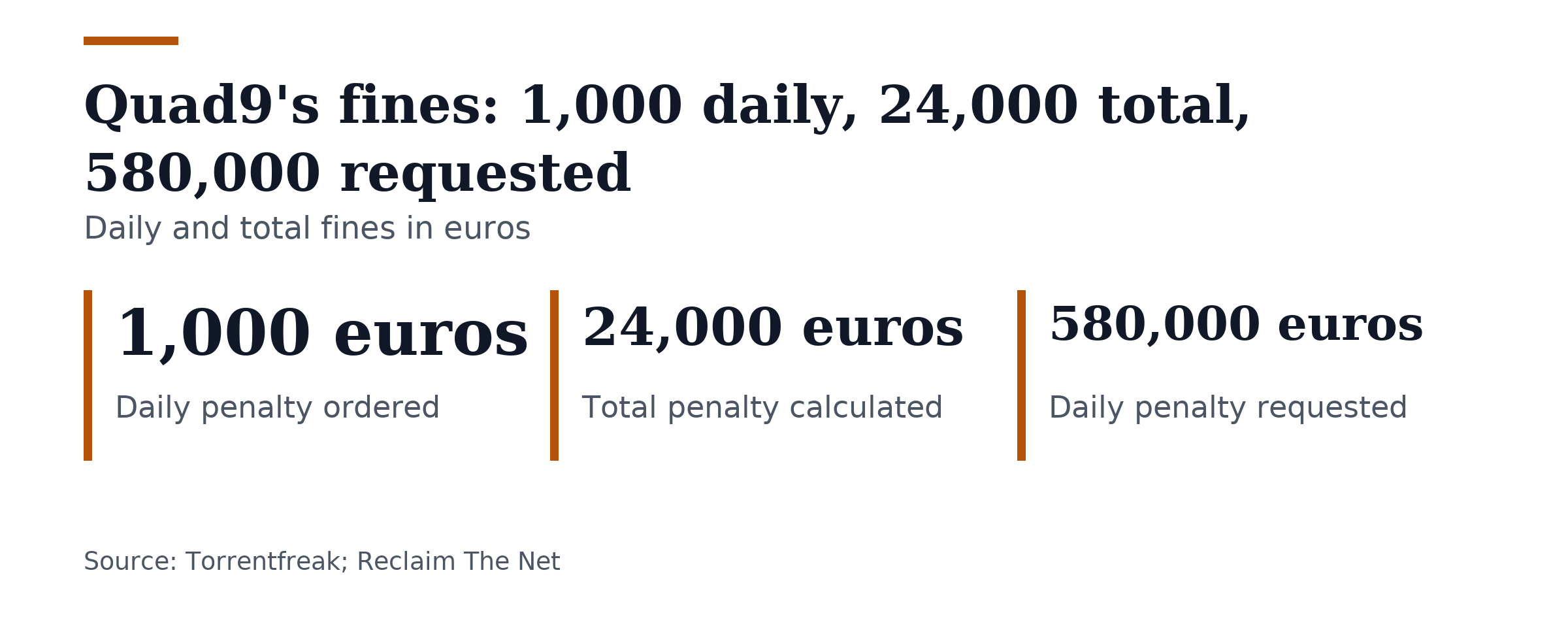
- The penalty is 1,000 euros per day in total until November 14.
- Quad9 says about 20 other lawsuits in France seek similar blocking orders.
Quad9 said it will end service in France on November 24, after the Paris Court ruled against the resolver (which maps website names to internet addresses) on October 21. The shutdown follows a French court order requiring Quad9 to block sites accused of infringing a sports broadcaster’s copyrights. beIN Sports France brought the case over pirate streams of the WTA women’s tennis tournament.
The court said Quad9 must enforce the May 13 blocking mandate covering 58 domain names or pay 1,000 euros per day until November 14. Quad9 puts the cost at 24,000 euros, excluding legal costs. beIN Sports demanded 10,000 euros daily for each accessible domain, or as much as 580,000 euros daily for all 58. Quad9 said it will leave the domains unblocked until the order ends and accepts the penalty.
Quad9 says it cannot survive the buildup of penalties in about 20 other pending French lawsuits seeking similar orders, or future cases like beIN’s. The resolver says accurate geoblocking of French users is not possible because its free service requires no sign-up and collects no user data. The Paris court said Quad9 did not show it cannot perform geolocated blocking.
Quad9 says recursive DNS resolution should stay neutral, and the resolver wants to leave it alone. Blocking every domain would satisfy the court, but Quad9 will not apply a French order to users around the world. The resolver says blocking would not work because users can switch to thousands of other open DNS resolvers. “We categorically refuse to alter or lie to you about the DNS responses you receive in a way that opposes your expectations,” Quad9 said.
Quad9 is weighing imperfect ways to stop serving French users and has not chosen a method. Quad9’s CTO said on Hacker News that the exit would probably use IP address-based location to cut off French users. The CTO said using that method to block only the sites would mean accepting DNS-based content restrictions, which Quad9 is not prepared to do.
EDF, SNCF, France Télévisions, the Institut Pasteur, the Marseille public hospital group, and RENATER will lose the service, along with regional and local councils. Quad9 warned these customers will lose service on November 24 because of legal risks in France.
Quad9 does not host websites, so leaving France will not remove allegedly infringing material from the internet. People looking for particular websites can switch to a different DNS resolver, and sites targeted by copyright holders will stay accessible online. But French users will lose Quad9’s malware and phishing protection because the resolver blocks domains known to be malicious.
Quad9 is an NGO based in Switzerland, partly to shield users from data demands. A DNS resolver can see which websites users connect to, so its privacy policies matter. Local ISP and wireless carrier DNS resolvers face government demands, censorship and commercial monitoring.
Quad9 says it cannot dependably target French users for blocking, and imperfect blocking in France could lead to massive fines. Quad9 says applying French law around the world through worldwide blocking is also unacceptable. In a statement to the court, Quad9 said it has not blocked a single domain. Quad9 refuses to “extend French law to the whole world (blocking globally).”
The Paris court said Quad9 must make reasonable efforts to block domain names but decided to take no action. The court earlier turned down beIN’s penalty requests against Cloudflare and VPN providers that had blocked some domains. In September, Canal+ lost a similar penalty request against Cloudflare.

The May 13 order also reached Google and Whalebone, which runs DNS4EU. That order initially covered six domains before growing to 58 plus sites not yet identified. Unidentified sites are to be reported to regulator ARCOM.
The judge said Quad9 has not proven it cannot do geolocated blocking and contradicts itself because it blocks malware domains. The court said Quad9’s failure to take compliance steps justifies a penalty.
Quad9 says an appeal is pending and it will keep fighting court-ordered blocking of DNS traffic. It also says it does not keep dossiers of users and does not think users should have to identify themselves before going online. Quad9 points to poor experience with geoIP blocking.
OpenDNS ended its French service in 2024 after a Canal+ blocking order, showing this is not the first resolver exit. A French sports law lets ARCOM block suspected pirate streams during a live broadcast and review them later.
EFF says lawmakers are weighing site-blocking measures requiring ISPs and intermediaries including DNS resolvers to block websites to protect copyright. These bills threaten speech and access to information and amount to invitations to abuse, EFF says.
EFF says the Quad9 withdrawal shows users can lose privacy and security services if internet services must act as copyright cops. EFF says forced site-blocking systems make it easier for repressive governments to demand censorship of speech they dislike around the world.
Quad9 warned that current reasonable and infrequent actions will multiply into a flood of petty demands used to suppress political, religious, economic or social outcomes. The American Copyright Protection Act, introduced by Rep. Darrell Issa in September, lets courts order domain name resolution providers to block sites.
Sen. Thom Tillis and Rep. Zoe Lofgren submitted the DEFEND IP bill, which would cover public DNS resolvers with annual revenue above 100 million dollars. Sony Music used a VPN to bypass a Germany block, leading to a contempt fine that Quad9 eventually won after spending time and money.
Join the discussion