

Key facts
- The Metropolitan Police announced a six-month handheld pilot of operator-initiated facial recognition that began on November 17.
- Immigration and Customs Enforcement uses NEC's NeoFace algorithm in its Mobile Fortify app in the U.S.
- The devices will compare collected images against the Metropolitan Police's database of custody images.
- The system returns a top match above a similarity threshold, and a trained officer assesses it.
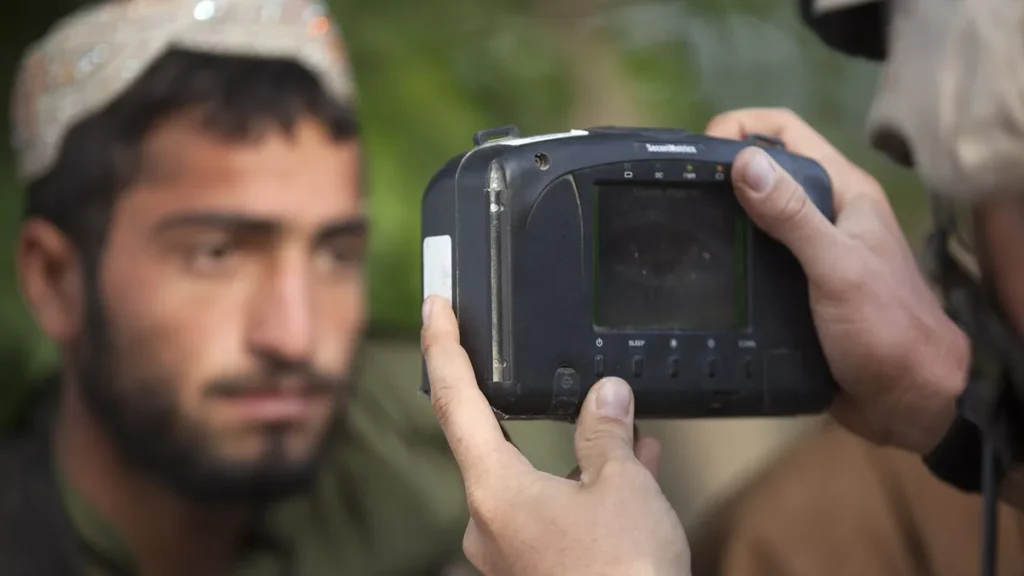
The Metropolitan Police announced a six-month handheld pilot of operator-initiated facial recognition that began on November 17, equipping 100 trained officers with devices that compare collected images against the force’s custody image database.
Operator-initiated facial recognition means an officer must start a search for a specific person rather than scanning everyone who passes a camera, as live facial recognition does. The system returns a top match above a similarity threshold, and a trained officer assesses it. A potential match does not independently establish identity.
The 32-page policy document establishes two permitted uses for the technology. Officers may identify a person whose identity is unknown or uncertain when identification serves a law enforcement purpose, including people suspected of criminal offenses, people wanted by courts and vulnerable individuals needing assistance. The second permitted use is identifying people who are arrested or detained so risks to themselves or others can be assessed.
Officers gain no new powers to photograph people or compel cooperation under the policy. Consent should be sought where practicable, but officers may photograph without consent if a legal power allows it, and a search can still proceed even if consent is refused. Image capture must be overt from a distance that lets the officer engage with the subject, and an officer must be plainly identifiable to anyone using the system. Use is limited to specified policing circumstances.
Probe images (the photos officers take to run a search) must be deleted within 31 days after a search is completed, subject to disclosure obligations. Unmatched images may be kept for later searches under the framework, but that feature stays off during the pilot. Paperwork must accompany matches, and administrators can access an audit log cataloguing system use and results.
The MPS FR Technology Board, MOPAC and LPEP provide oversight of the system. The Biometrics and Surveillance Camera Commissioner, the Information Commissioner’s Office and the Equality and Human Rights Commissioner provide independent reviews and consultations.
Decision makers must weigh rights including privacy and freedom of thought, belief and religion alongside proportionality and less intrusive identification methods. The policy document explicitly bars “intrusive” or “directed surveillance.”
The pilot aims to assess whether officers can quickly identify wanted individuals and verify identity claims. It serves as a proof of concept for evaluating utility, effectiveness, legal ramifications, safeguards, governance and proportionality, and future use decisions will be guided by what it shows. After the pilot ends, the Metropolitan Police plans to search an “Unsolved Crime Cache” database.
NEC’s NeoFace is the biometric algorithm behind the Metropolitan Police’s OIFR capability, and Immigration and Customs Enforcement uses the same algorithm in its Mobile Fortify app in the U.S. NEC’s Mobile ID software also includes NeoFace as a component.
Static live facial recognition cameras are being extended to Soho and London’s West End by Britain’s biggest police force. Deployment in central London by the end of the year is planned for the street-furniture cameras monitored remotely, and the rollout will reach other parts of the capital in the following year.
A six-month pilot of static cameras in Croydon ran from October 2025 until May 2026 and produced 173 arrests, including one woman sought for more than 20 years. More than 470,000 people passed the camera during the pilot, according to the Metropolitan Police. Officers spoke with the person after the single false alert, then let them leave.
Commissioner Sir Mark Rowley said “Public confidence in this is clear – around 80% of Londoners support its use.” Live facial recognition cameras have helped the force arrest more than 2,000 people since 2024 began.
According to Commissioner Sir Mark Rowley, the Croydon pilot led to more than 170 arrests and reduced crime and violence against women and girls. Officers use the technology to find wanted criminals and registered sex offenders, and the commissioner said it assists rather than replaces them. Last summer, during a West End visit focused on crime fighting, the commissioner said he planned to double live facial recognition use.
The force is shrinking as it loses officers and staff, so the commissioner said officers must get cleverer while facing pressure to reduce shoplifting, phone theft and violence toward women in busy areas. A High Court legal win and Croydon pilot results have increased the Met’s confidence in the technology.
Civil rights and privacy groups oppose the move, and ministers are weighing more specific legislation after consulting the public, while the force wants no over-regulation. Akiko Hart of Liberty called the rollout a major escalation of the technology’s use. Hart said safeguards, oversight and transparency should already exist before cameras are brought into city centres and high streets, and she said it is deeply concerning to have fixed cameras across the capital without a law in place. She said the Metropolitan Police should pause use of the technology rather than expand it until a law is in place.
The UK government is weighing new guardrails and oversight rules for police facial recognition during the pilot’s launch. Professor William Webster of the Biometrics and Surveillance Camera Commissioner’s office says important details remain unresolved.
Planning by UK police for the rollout of operator-initiated facial recognition began in 2023. Police in South Wales, Gwent and Cheshire tested NEC’s NeoFace with the Police National Computer Database in 2023.
Join the discussion