
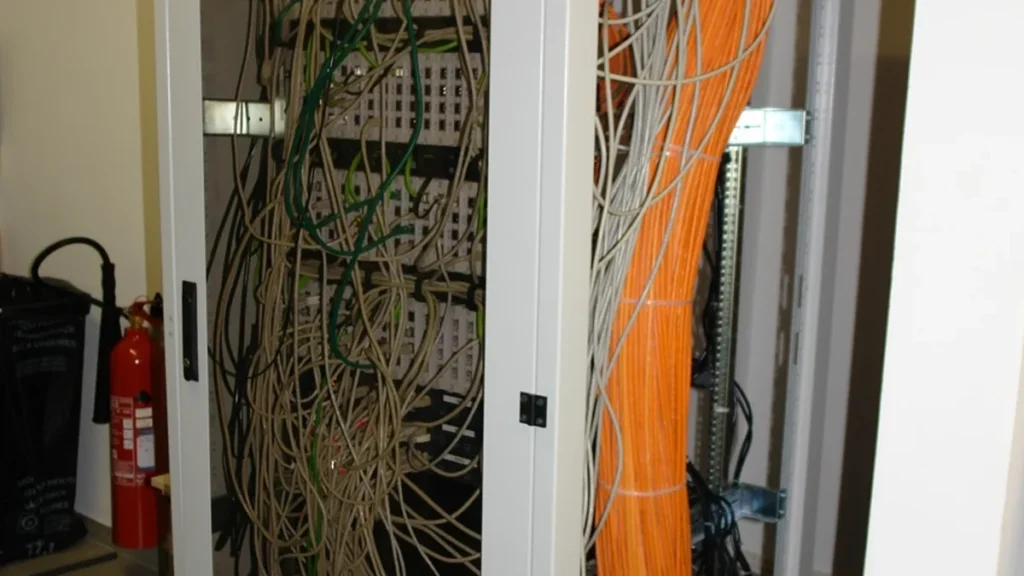

This is a new development in a story we reported earlier: NSA Net Experiences outage.
Key facts
- During those appearances, Clayton would not explain the suspected FBI hack or the security incident involving the Department of Agriculture.
- Clayton said on CNN that upgrade work will cause glitches, gaps and service interruptions, adding that this is going to happen.
- Clayton said the upgrades are necessary for performance and cybersecurity since newer technology puts strain on older systems.
- The outages were not coordinated and not state-sponsored, Clayton said on ABC.
Jay Clayton, the director of national intelligence, spoke on CNN, ABC and Fox on Nov. 22 and said Americans should expect more outages because companies and federal agencies are replacing and patching aging systems, and Clayton declined to explain the suspected FBI hack or the security incident involving the Department of Agriculture.
On Fox Business on Nov. 17, Clayton said a PHP flaw had been patched, but the NSA network went down when the updated systems failed to come back online and could not pass work to other systems as intended. He described it as a failure where machines did not reboot cleanly and connections between systems broke down.
On Fox Business, Clayton said the FBI and NSA properly told operators to power systems down and apply the fix. Implicator relayed an NSA statement that pointed to scheduled maintenance instead of a patch.
Wiz, a security firm, says PHP2Shell consists of two critical flaws covering four bugs in PHP, a scripting language running on about 70 percent of websites, and Wiz says the code containing the flaws had been in place for more than a decade. Researchers from Calif and Wiz located the flaws using AI, and OpenAI also assisted. PHP released security patches around Oct. 21.
Wiz calls the flaws memory-safety bugs in PHP, flaws in how a program manages memory, tied to how the software processes fatal errors, particularly out-of-memory errors. Engineers use the term regression for new bugs introduced when patched code is added to running software. A patch can disrupt functions and require testing, and large organizations may miss dependencies between systems.
Publishing a patch exposes the flaw, and attackers can reverse-engineer the fix faster than users apply it, pressuring defenders to deploy every patch at once. A patch alters running code, so it can add new bugs, break dependencies between systems, or prevent systems from restarting, and one failing part can shift load onto neighbors. The risk rises on older systems when many patches arrive at the same time.
Clayton said the upgrades are needed for performance and cybersecurity because newer technology strains older systems. Older systems allow little margin for error because a failure in one area can move load to neighbors that then overload and fail. Backup routes can overwhelm systems never designed to handle that traffic.
Uptime Institute data cited by Network World shows that 41 percent of network-related outages stem from configuration and change-management failures. Downdetector logged 6.4 million US outage reports in the seven days ending Nov. 17, about four times a normal week, though the service tallies complaints rather than confirmed failures. Mark Giles, director of Ookla Research, which owns Downdetector, said the outages seem somewhat coincidental.
Jane Fraser, Citigroup’s CEO, said patch volume around the world is running five to ten times above anything the industry has seen before. A Cloud Security Alliance research note attributes to Krebs on Security counts of 570 fixes in Microsoft’s July 2026 Patch Tuesday release and 398 in August 2026.
Clayton said on CNN that upgrade work will produce glitches, gaps and service interruptions, adding that this is going to happen. Clayton said on ABC that the outages were not coordinated and were not state-sponsored.
On Fox, Clayton said he was unable to identify the source of the FBI incident or confirm whether anything was compromised. He said he was not able to provide more details about the FBI incident. He said the FBI will determine the origin and scope of the incident before telling the public.
CNN broke the story of an FBI investigation into a suspected hack of the National Crime Information Center database, and the Associated Press later confirmed it. Local, state and federal agencies use NCIC to check records involving fugitives, missing persons and criminal history. The FBI’s Criminal Justice Information Services Division has run NCIC since 1967, and the system contains 21 files including wanted persons, terrorists, vehicles, license plates and guns.
The FBI has not immediately answered questions about who is behind the suspected NCIC hack or about any impact on law enforcement operations. The Associated Press said the apparent hack follows tech outages that the administration attributed to upgrades, but it did not state whether the incidents are connected.
Reuters reported that Clayton declined to discuss the USDA report and said investigators would respond in due course. Nextgov/FCW reported that several USDA applications went offline for several days after an internally disclosed security incident, including financial tools used for payments between USDA and farmers. Nextgov reported that it remains unclear who carried out the USDA intrusion or whether data left USDA systems. Nextgov regarded the FAA and NSA disruptions as separate from the USDA incident.
On Nov. 13, the FAA says its legacy network became unstable when it saw 1,000 connection attempts at intervals of four to five seconds, leaving 17 of 22 Air Route Traffic Control Centers unstable. The FAA’s initial investigation pointed to two sources: an Amarillo, Texas, radar site and an El Dorado, Arkansas, radio site where L3Harris was deploying a new router. The FAA says the network stabilized once both locations were blocked.
The FAA says the issue began around 3:30 p.m. ET on Nov. 13 and that air traffic returned at 8:15 p.m. ET. The FAA says about 12,462 flights were canceled that day, though not all resulted from the ground stop.
The root cause remains under investigation by the FAA and L3Harris, and the agency says it sees no indication of a cyber attack. Network engineers call this pattern a broadcast storm, but the FAA has not made that diagnosis. Managed switches can prevent these storms by halting broadcast forwarding once it passes a set threshold.
As a precaution, the FAA shut off broadcast functions on the new routers. An HPE spokesperson said the equipment worked as configured, while the FAA reviews the setup and performance across all infrastructure involved. Transportation Secretary Sean Duffy told CNBC that older equipment experienced flooding and produced network inconsistencies.
Router maker Juniper Networks is owned by HPE. The FAA blamed the instability on its legacy time-division multiplexing system, an older networking technology. A source close to the investigation told Network World that the Juniper device’s multicast feature is not enabled by default and that the investigation is ongoing, and the FAA has paused installation of the Juniper router without giving a timeframe.
Microsoft said its outage stemmed from a technical update and denied any link to cyber or AI agents. Fortune reported that neither Microsoft nor JPMorgan Chase linked its outage to patching of AI-discovered flaws. Chase’s trouble caused customers of other banks to report their own banks as down.
Officials and companies have said the November outages were not cyber attacks. The FAA sees no indication of a cyber attack, Microsoft reported no sign of one, and Chase blamed a bug in on-premise hardware, calling the problem not cyber-related. Investigations into several incidents remain open.
KUTV reported bipartisan skepticism about the White House message on the outages. At a Nov. 18 House hearing, Representative Nick LaLota, a Republican from New York, said the week’s events appeared more than coincidental. Before LaLota’s comments, Clayton said no sign of a coordinated or state-sponsored attack had been seen, as did Homeland Security Secretary Markwayne Mullin, with FBI Deputy Director Christopher Raia saying the same. Senator Josh Hawley, a Republican from Missouri, said he finds Duffy’s explanation of the ground stop hard to believe.
Clayton said that, based on what officials know today, the incidents are separate service outages linked to maintenance and technical changes. When asked about coincidence, Clayton said his gut says yes, partly because of a substantial rise in system upgrades. Clayton anticipates more disruption from patching and upgrades on aging systems.
Company and agency statements are the only basis for Clayton’s account of the NSA, the FAA and the banks. Clayton’s account leaves out the FBI and USDA intrusions, and their findings will reveal whether his distinction holds. Clayton said threats from Iran have substantially increased, though he did not connect them to the outages.
President Donald Trump named Jay Clayton AI czar to lead the new White House AI group called the Super Intelligence Force, announced Oct. 4. AFP says Clayton lacks a tech industry background. A 2022 FDIC biography shows Clayton’s disclosed finance roles as non-executive chair of Apollo Global Management and director of American Express.
On Fox Business, Clayton urged cooperation between government and the AI industry to deal with cyber issues ahead of new frontier model releases. CSIS says an executive order dated June 2 requires covered frontier models to undergo a 30-day pre-release review.
Warner and Fraser link a patch surge to AI, while Microsoft says its outage was not related to AI and Ookla’s Giles sees partial coincidence. There is no proof that AI-driven vulnerability discovery is causing more outages. Clayton’s account of the NSA outage and Wiz’s report that AI helped find the PHP flaws form the only public chain from AI-found flaws to a specific failure.
Rapid7 says AI-driven discovery compresses patch timelines and advises prioritizing exposure that attackers can reach over every severity score. Kris Beevers, CEO of NetBox Labs, told Network World that problems often occur during change and that network changes can resemble an internal denial-of-service attack.
A person usually cannot distinguish an outage from a hack based on symptoms alone. Only findings from investigators can separate an outage from a hack. Password resets triggered USDA outages after a security incident, while the FAA ground stop followed a network flood still under investigation.
Join the discussion