
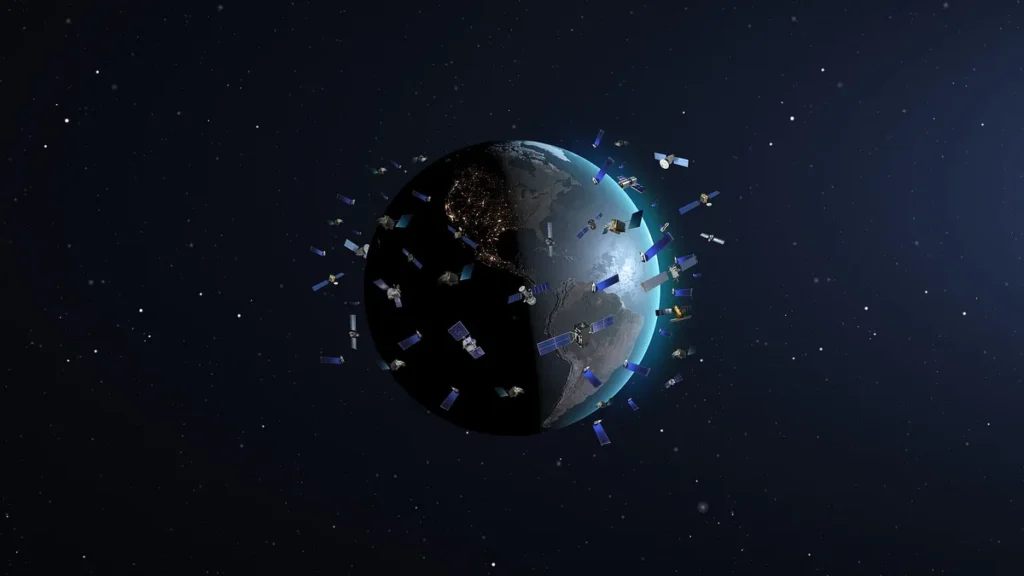

Key facts
- SpaceX launched the classified USSF-317 mission for the U.S. Space Force from Vandenberg Space Force Base in California at 11:20 p.m. EST on Nov. 20, 2026, and officials have not disclosed the payload.
- The Space Force logged 23 satellites following each of the five prior flights in the series.
- USSF-317 was the 121st Falcon 9 launch of 2026 and SpaceX's third Space Force mission of November.
- USSF-385 was B1100's 10th flight on Sept. 26.
SpaceX sent the classified USSF-317 mission aloft for the U.S. Space Force from California’s Vandenberg Space Force Base at 11:20 p.m. EST on Nov. 20, 2026. Officials have not revealed what the payload is.
The liftoff happened at 8:20 p.m. local time in California, or 0420 UTC on Nov. 21, 2026. Space Launch Delta 30 shifted the target date from Nov. 18 to Nov. 19, 2026, and SpaceX scrubbed the earlier attempt without explaining why. Residents of Santa Barbara, San Luis Obispo and Ventura counties were advised that sonic booms were moderately likely, depending on weather and other conditions.
About eight and a half minutes after liftoff, booster B1100 set down on Of Course I Still Love You, a droneship or seagoing landing platform, in the Pacific Ocean. SpaceX cut its webcast shortly after the booster landed, so viewers never saw the upper stage reach orbit or the payload deploy.
This was the 11th flight for booster B1100, following earlier missions including NROL-105 for the National Reconnaissance Office, USSF-385 for the Space Force and eight Starlink launches. Recovering the booster gives SpaceX the option to inspect it and prepare it to fly again.
USSF-385 marked B1100’s 10th flight, which took place on Sept. 26, 2026. The booster flew those two Space Force missions 55 days apart, and no other flight flew between them.
USSF-317 is flight number six in a run of Space Force missions that started in August. It was also the year’s 121st Falcon 9 launch and its third mission of the month for the Space Force.
SpaceX has at least two more Space Force missions on its schedule before November ends. Before liftoff, Spaceflight Now reported only that SpaceX planned to fly an undisclosed number of satellites, with no count given for USSF-317.
After each of the previous five flights in the series, the Space Force recorded 23 satellites. Five flights at 23 satellites apiece total 115 satellites, and should USSF-317 match the pattern, six flights in the R series would come to 138 satellites. Third-party launch records identify USSF-317 as SBST R-6.
USSF-259 lifted off from Vandenberg on Sept. 16, 2026, and USSF-481 lifted off from Vandenberg on Oct. 15, 2026, and each carries a listing of 17 satellites. Counting those flights together, third-party labels put the number of SBST flights since mid-August 2026 at eight.
The Space Force has not released that count. Some experts believe the USSF-317 mission could carry Starshield satellites built by SpaceX for the Space Based Sensing and Targeting portfolio, according to Space.com.
The Space Force has not confirmed the link between the R flights and Starshield; the link remains a third-party inference, not a confirmed fact. The Space Force has disclosed no link between USSF-317 and missile warning or any other specific capability. It has not yet said whether the spacecraft entered service or reached their intended orbits.
Space.com describes Starshield satellites as believed to use a Starlink spacecraft bus, the underlying satellite platform. Orbital Radar counts 394 Starshield satellites in orbit but withholds orbital elements for 388 of them.
Canadian amateur satellite tracker Scott Tilley picked up signals from 170 Starshield satellites from 2025 to 2110 MHz, NPR reported in October 2025. Kevin Gifford studies spacecraft radio interference at the University of Colorado Boulder, and he told NPR the signals are certainly occurring. Gifford told NPR that it remains unresolved whether those signals disturb other services. NPR’s requests for comment went unanswered by SpaceX and the National Reconnaissance Office.
Space Systems Command awarded SpaceX a $2.29 billion firm-fixed-price agreement to build an optically interconnected satellite mesh. The mesh will act as a transport backhaul for data moving through the Space Force’s Space Data Network, and a prototype is due by the end of 2027. Space Systems Command said on July 29, 2026, that task orders worth $1.6 billion will pay for 18 Falcon 9 launches tied to the portfolio, flying from Vandenberg through the end of 2027.
Two efforts sit inside the Space Based Sensing and Targeting portfolio: the Space-Based Air Moving Target Indication program and the Space Data Network. Space Systems Command defines assured access to space as keeping a satellite network going by replacing older spacecraft when their service lives end. A delay can leave an older satellite carrying the workload longer or postpone a replacement’s availability.
Military satellite communications let commanders stay in touch with forces operating across long distances. GPS handles positioning, navigation and timing for U.S. operations. Space Force doctrine calls for warning of threats to the U.S. homeland and to forces overseas. The launch shows the Pentagon relies on quick commercial Falcon 9 capacity to launch and maintain military satellite networks for combat operations and homeland defense.
Falcon 9 flew 165 times during 2025. More than 11,000 Starlink satellites are in operation, and roughly 70 percent of Falcon 9 flights in 2026 have flown for the constellation. SpaceX plans to retire the Falcon 9 and Falcon Heavy rockets in favor of Starship, although no retirement date has been announced. Starship deployed 26 Starlink V3 satellites on its last two test flights, according to Space.com.
In April 2025, Space Systems Command’s National Security Space Launch contracts went to SpaceX, United Launch Services and Blue Origin. Those contracts have covered launches for next-generation GPS satellites and for the Next Generation Overhead Persistent Infrared missile-warning program. Multiple providers give the government more options to match rockets with payloads and schedules if one provider is disrupted. According to NPR, the Space Force has secured Falcon 9 launches through 2028.
Gunter’s Space Page lists USSF-366, USSF-153 and USSF-385 as the first launches believed to be in the Space Data Network Backbone constellation. The Orbital Radar catalog record for USA 627 lists USSF SSC as the operator, SpaceX as the manufacturer on a Starshield bus, and SDNB as the program in a communications category.
The U.S. Space Surveillance Network, operated by the Space Force, tracks satellites, spent rocket bodies and debris, typically watching objects of about 10 centimeters or larger. Each confirmed object receives a catalog number in the order of its discovery. Classified military and intelligence satellites get a number, a cover name and a launch date, after which their records are not updated further.
If independent trackers catalog 23 new objects under the name SBST R-6 in the coming days, that would indicate USSF-317 matches earlier flights. A count of 17, as with the previous Space Force flights, would point to a different batch of satellites.
According to Spaceflight Now reporting, the Space Force has remained silent after each of the five earlier flights in the R series. Only the Space Force can say if the R series amounts to a data relay system, a radar constellation or something else entirely.
Join the discussion