
Key facts
- National Grid agreed last week to buy 29.5 hectares, or 73 acres, of land at Dorman Point on Teesside for what could become Britain's largest electricity substation.
- Ben Houchen, mayor of the Tees Valley combined authority, said the biggest problem for datacentre builders is obtaining enough power quickly.
- Matt Pearce, head of land at National Grid, said the agreement reflects constructive work and will support AI and digital technologies and the region's industrial and economic development.
- Houchen said Britain needs somewhere to physically put AI capability with sensitive data stored on British soil, and he prefers Teesside to Texas or Abu Dhabi.
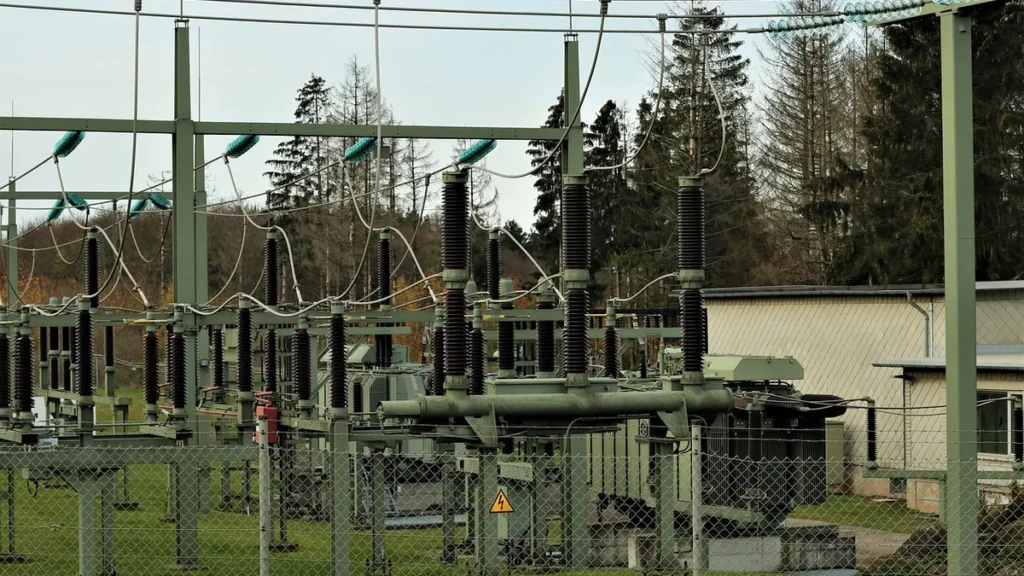
Last week, National Grid agreed to buy 29.5 hectares of land, or 73 acres, at Dorman Point on Teesside. The purchase is for what could become Britain’s largest electricity substation. Teesworks, a local private-public partnership, owns the land at Dorman Point, and the planned substation could supply power to a neighbouring AI datacentre.
Reports last year said the UK government chose Teesworks for a new AI datacentre. Planning applications were filed for a scheme covering nearly 500,000 square metres.
A substation routes and controls electricity but does not generate electricity. National Grid’s Tees Dock project information outlines a planned 400-kilovolt transmission facility close to Middlesbrough. The same project information lists more than 1 gigawatt of contracted import and export capacity.
Ben Houchen, mayor of the Tees Valley combined authority, said access to up to 3.2 GW of capacity would let the region compete for investment with the United States, the Gulf and parts of Europe. He pointed to up to 3.2 GW of possible site capacity. The figures cover different scopes. Neither confirms an approved 3.2-GW substation or an operating power plant.
“Everyone who has tried to build a datacentre in this country knows the biggest problem is getting enough power to the site quickly,” Houchen said. He said Britain needs somewhere to physically put AI capability with sensitive data stored on British soil, and he prefers Teesside to Texas or Abu Dhabi.
Matt Pearce, head of land at National Grid, said the agreement reflects constructive work and will support AI and digital technologies and the region’s industrial and economic development. “We are committed to working closely with our partners to progress the development as quickly as possible,” Pearce said.
Last week, the UK government released a draft policy document on datacentres. The document describes datacentres as fundamental to the economy alongside railways and electricity networks. The government said the country must take control of datacentre development.
Reporting indicates Balfour Beatty may deliver the substation for National Grid, while Steel River Power (SRP) is also heavily involved in the project. The Redcar and Cleveland planning register shows a valid outline application submitted on September 24, with consultation open until November 11.
The former steelworks site needs remediation before construction can begin. Next steps include planning decisions and land remediation, followed by detailed engineering and regulatory review. The current milestone is land access rather than energized grid capacity.
No final data-centre operator or delivery timetable has been publicly confirmed. The label of Britain’s largest substation is a projected comparison, not a confirmed operating record.
Campaign groups have protested against planned datacentre developments across the UK, including at Auchtertool, a village north of Edinburgh, and Brick Lane in east London. The Guardian reported in October that AI companies gave ministers 12 months to counter public opposition to UK datacentres. The companies warned of protests like those in the United States that could threaten construction.
Join the discussion