
Key facts
- Anthropic unveiled EFS on September 1, 2026.
- Automated safety monitoring accesses the content, which is not used to train models or classifiers.
- EFS helps organizations detect AI misuse.
- EFS identifies misuse patterns spread across multiple requests that look harmless one by one.
On November 23, 2026, Anthropic opened a public beta of Enterprise Frontier Safeguards (EFS), letting organizations detect Claude misuse spread across multiple requests while conversation data stays inside their own cloud.
The tool targets customers running Claude under zero data retention agreements, meaning Anthropic does not retain questions or answers. Automated safety monitoring accesses the content but does not use it to train models or classifiers, and Anthropic receives monitoring metadata rather than conversation content.
Conversation data moves to the customer’s Amazon or Google cloud account in an encrypted form the customer cannot read, and the system promptly deletes inputs and outputs after writing them to customer-controlled storage. Customers control encryption keys and access policies. Anthropic and cloud providers do not retain copies after data reaches customer storage, and neither Anthropic nor cloud-provider personnel can access the content.
EFS identifies misuse patterns that look harmless one at a time but form a wider attack across many requests, covering deliberate AI misuse such as AI-powered cyber attacks and agent overreach through vulnerability exploits. Teams receive reports on harmful activity ingested via SIEM, and Anthropic first revealed EFS on September 1, 2026.
Anthropic built EFS with feedback from more than 100 customers, and companies representing a quarter of the Fortune 100 participated alongside members from healthcare, financial services and law firms. Bridgewater, Salesforce and Stripe took part in the private beta, while Accenture, Deloitte, KPMG and PwC provide implementation support.
When a Safety Case is raised, customers get seven calendar days to reply, and an unanswered case may lead to suspended access. Investigators receive a readable Transcript copy, while Sealed Safety Data holds encrypted prompts, responses and model reasoning in Anthropic’s format, and Anthropic staff see limited details without reading Transcripts.
Teams check storage or poll the Safety Cases API, with no automatic alerts, and teams see safety flags within a week. A proper response closes the case, and Anthropic may suspend access in rare cases of obvious, deliberate harm while the customer investigates.
The beta runs on Claude Platform, Claude Platform on AWS, Amazon Bedrock and Claude on Google Cloud, with Microsoft Foundry support listed as coming soon. On Claude Platform, EFS covers every Messages API request for any model in an enabled workspace, but leaves out code execution containers, Files API uploads, Batch API results and Claude Managed Agents sessions.
EFS carries no fee from Anthropic, though customers pay their cloud provider for storage, reads, writes, key operations and network transfer, and pricing otherwise stays the same. Firms with HIPAA readiness turned on cannot get EFS. Applying EFS to only some traffic requires separate workspaces, and only eligible organizations’ internal use is allowed.
The public beta answers enterprise pushback over 30-day retention introduced with Fable 5 in mid-2026, which many tightly regulated firms balked at. Anthropic added inference hooks in August that block sensitive data before Claude, and it let companies run its agent service on their own infrastructure.
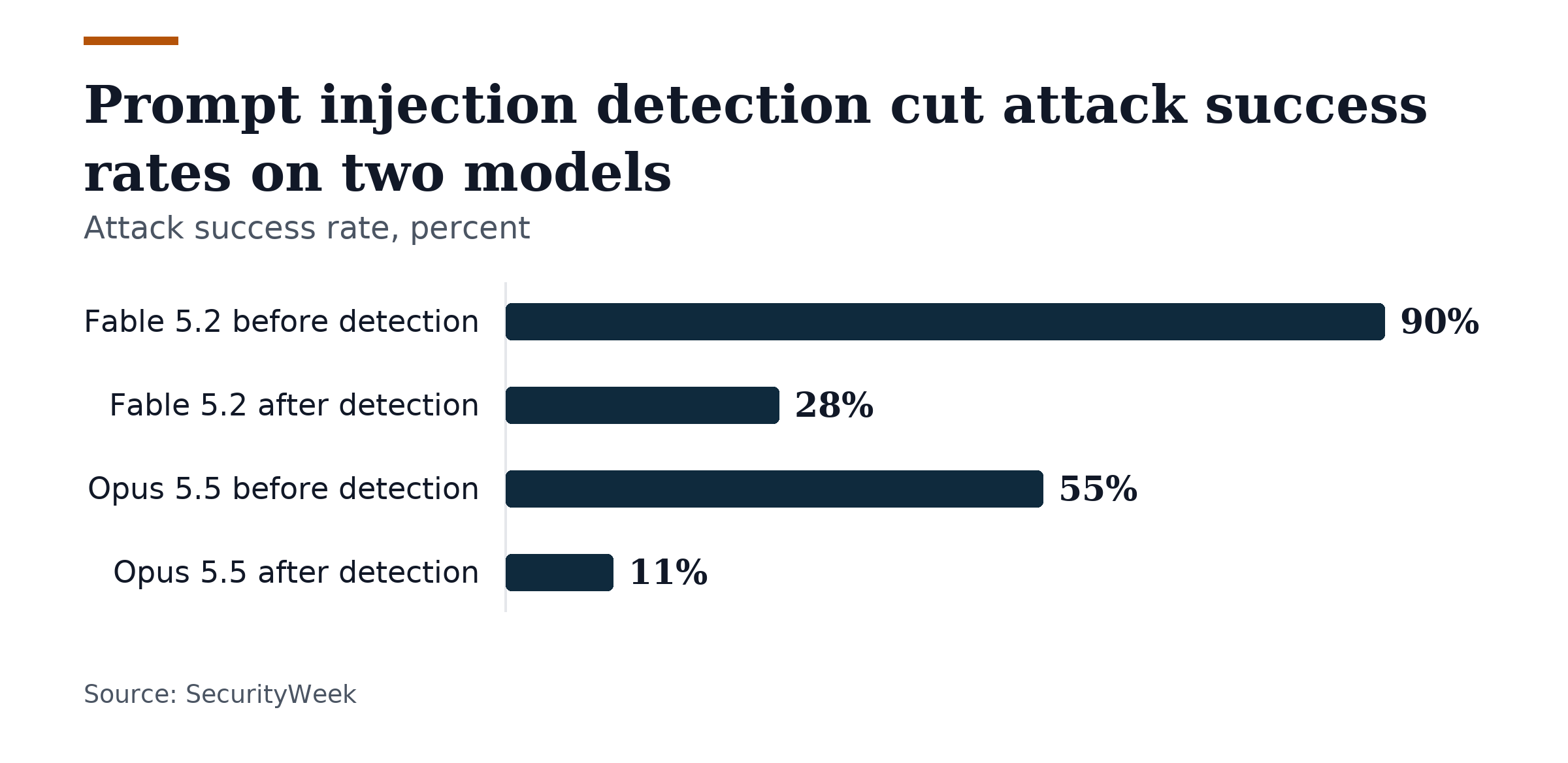
On November 23, 2026, Anthropic also released guidance for securing enterprise coding agents covering privilege abuse, credential exposure, risky dependencies, prompt injection and data exfiltration. Attack success rates fell from 90% to 28% on Fable 5.2 and from 55% to 11% on Opus 5.5 with prompt injection detection. OpenAI showed off a similar system called Private Safety Processing in August, and a September threat report described attacks on about 50 groups that AI agents split into small tasks.
“We keep custody of our data while Anthropic operates the detection,” said Munish Kumar Sharma. Matthew Kemelhar said EFS helps “enable the use of frontier models with added protection against misuse.”
Banks, hospitals and law firms see zero data retention as required for internal AI use. Anthropic’s top-tier models make up the Mythos class, including Claude Fable 5. EFS tries to settle the clash between data secrecy and misuse detection by moving where data is stored.
Join the discussion