

Key facts
- A cyberattack affected 178 major websites including BBC, CNN, Zoom, HSBC, Salesforce and Equifax.
- During October, hackers raised refrigerator and freezer temperatures at more than 350 French supermarkets to 50 C (122 degrees Fahrenheit).
- Overnight, spoiled food, overheated equipment and fires were reported, and affected stores discarded food and temporarily closed.
- Similar attacks were reported in November across Ireland, Sweden, the Netherlands, Belgium, Estonia, Finland and Luxembourg.
Critical infrastructure operators and boards should prepare for cyber attacks by assuming their defenses will fail, according to a TechXplore report. The report’s Carleton University research team says keeping essential services running matters more than merely blocking attackers from computer systems. TechXplore described an attack that affected 178 major websites such as BBC, CNN, Zoom, HSBC, Salesforce and Equifax.
The TechXplore research maps cyber attack impact across seven dimensions: operational, physical, safety, environmental, economic, societal and reputational. The framework comes from the Carleton University team. Operational impact means a system fails to perform its intended job, while physical impact means changes or damage to equipment and materials. Safety impact exposes people to hazards such as fires or unsafe food, and environmental impact covers damage to air, water, land or ecosystems.
Economic losses can include ruined goods, repair costs, downtime and loss of customers. Societal harm means community damage and lost access to essential goods such as fresh food. Reputational damage happens when the public loses trust in an organization or service over food-safety worries. A single disrupted operation can produce several effects at the same time, with some continuing after the technical problem is fixed.
Operators can prepare for unsafe water, damaged equipment, environmental harm, service interruptions, financial losses and weaker public trust without knowing the next attack. Impact analysis gives decision-makers a way to ask which consequences are unacceptable, where additional safeguards are needed, who should respond to harm, and which services to restore first. The goal is to keep essential services running even after cyber defenses fail, rather than only blocking attackers from computer systems.
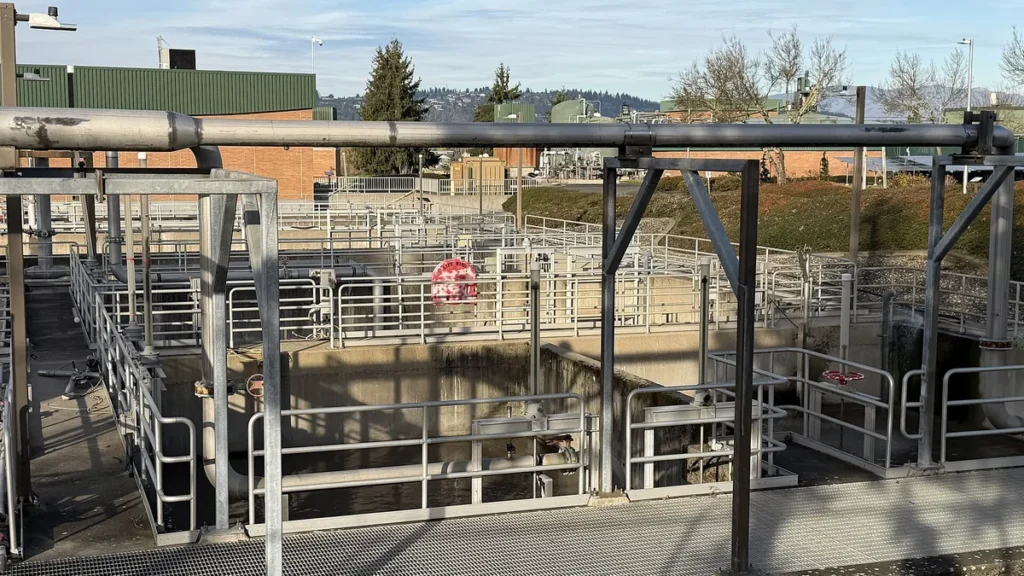
The list of possible targets includes blood banks, plants that manufacture chemicals, nuclear reactors, aviation and transport networks, and wastewater treatment facilities. The Cyber Security Evaluation and Assurance lab at Carleton University ran simulated attacks against a Canadian municipal wastewater treatment facility.
The simulations showed that attackers could force wastewater equipment to run past safe limits, push chemical consumption higher, trigger costly emergency operating modes, or disrupt how chemicals are dosed. In the most serious outcome from the simulation, undertreated wastewater would be released into a river running through a city. It recalls a 2000 incident at Australia’s Maroochy Shire wastewater system. A former employee interfered with sewage pumping stations, causing millions of gallons of untreated sewage to enter waterways and parks over three months.
In October, hackers lifted refrigerator and freezer temperatures at more than 350 French supermarkets to 50 C (122 degrees Fahrenheit) by altering settings on internet-connected temperature controls and putting evaporators into defrost mode. Overnight brought reports of spoiled food, overheated equipment and fires, with affected stores discarding food and temporarily closing. November saw similar attacks across Ireland, Sweden, the Netherlands, Belgium, Estonia, Finland and Luxembourg. French authorities pointed to Iran as responsible for the October attacks.
ABC News reported that sources familiar with the situation said the U.S. Department of Agriculture was hit with a cyber attack. FPAC, the Farm Production and Conservation mission, issued a Monday notice about a security breach covering Geographic Information System mapping, payments and contracting. The mission shut the systems down until further notice. At a Kansas City press event, Richard Fordyce, the FPAC undersecretary of agriculture, told reporters the incident was a cyberthreat, not a software update.
Fordyce said work would continue through the weekend unless most systems were back online by the end of that business day.
Ryan Marquardt, vice president of the Iowa Farmers Union, said the union knew only what was shared publicly and was demanding answers for farmers. Marquardt called the timing critical because farmers are selling grain and livestock, processing loan payments and closing their books for the year. He said USDA should explain what happened, what data might have been accessed and when payments can resume.
The government watchdog said the U.S. food sector faces increasing cybersecurity threats. In a Thursday report, the GAO said USDA and the Food and Drug Administration reported limited resources for critical cybersecurity activities such as information sharing and emergency preparedness. The GAO said the agencies have taken steps to improve cybersecurity but have not run emergency response scenarios for potential cyber attacks since 2024. A blog post said both agencies reported that limited resources and staffing prevented them from meeting all cybersecurity requirements.
GAO recommendations for HHS and USDA include preparedness exercises, sharing threats with the Cybersecurity and Infrastructure Security Agency (CISA), and planning documents for coordinated action during cybersecurity disasters. Food and agriculture is essential to health, security and the economy, the GAO said, among the nation’s 16 critical infrastructure sectors. Cyber attacks could result in unsafe food and lost public trust in the food supply.
The Trump administration has said many recent outages result from system upgrades rather than cyber attacks. Marco Rubio, the Secretary of State, said recent outages affecting Microsoft Outlook, United Airlines and the FAA lack any connection and show zero evidence of nefarious actors. A cyber breach affected some JPMorganChase customers’ personal information such as e-mails and addresses, and the bank said third parties serving the bank were the target. Other organizations, including Microsoft, United Airlines, Apple, Marriott and the National Security Agency, reported recent separate technical issues or tech outages.
Satya Nadella said much of what exists in critical infrastructure is unpatchable, citing firmware, chillers and HVAC systems connected to the internet. Nadella said transportation systems contain discoverable equipment running unpatchable firmware, and he said the U.S. must modernize and assess threat vectors and real-time defense ability. Nadella said patches must move instantly from availability to production because they are being exploited in the wild, creating instability. Nadella said a recent global Microsoft Outlook inconvenience came from a latent bug that created a perfect storm.
Maria Cantwell of Washington and Mike Rounds of South Dakota sent Jay Clayton, the AI czar, a letter urging a new national strategy on AI-assisted cyber threats. Clayton, the Director of National Intelligence, assumed the AI role in early October and leads a task force producing an AI policy by the end of January. The senators asked Clayton’s task force to bring AI companies and federal agencies together to protect infrastructure and set security standards for autonomous AI agents. The senators said AI can quickly uncover software vulnerabilities and evade standard cyber defenses, that testing and installing infrastructure patches may take weeks or months, and that autonomous AI agents introduce fresh security risks.
The National Interest article proposes a grand bargain between the U.S. government and industry to ensure resilient and interoperable digital infrastructure. Starting points for sector-specific protocols include the Department of Homeland Security’s Roles and Responsibilities Framework for Artificial Intelligence in Critical Infrastructure. Other starting points are CISA’s Secure by Design and Anthropic’s Cyber Missions. An interoperable system works seamlessly and can be separated during an attack so core services continue.
Institutions should stress-test risks they have identified and addressed, then build contingency scenarios, protocols and drills spanning energy blackouts, financial system collapses and defense system failures. Because attacks spanning multiple countries and domains would erode collective defense against shared adversaries, institutions should test interoperability at home and with international partners.
An AI grand bargain between governments and AI companies would create safety procedures meant to lower risk for the public, markets and governments. Safety measures include trusted-user programs for verified users, ringfencing critical infrastructure by identifying organizations and adding safety measures, and algorithmic monitoring that suspends suspicious activity immediately with law enforcement and intelligence coordination.
The National Interest links hackers from China, Iran and Russia to critical infrastructure attacks in the United States, Ukraine and the UK. Less sophisticated groups can now attack constantly without specific targets using AI agents, and these attacks have begun.
Join the discussion