
Key facts
- Meta announced on November 9, 2026 a global expansion of AI age estimation for Instagram to place millions more teenagers in Teen Account protections.
- The system finds accounts Meta suspects belong to teenagers even when they registered with an adult birthday or misrepresented their age.
- Teen Accounts across Instagram, Facebook and Messenger automatically restrict contacts, visible content and app usage time for teenagers.
- Beginning in November 2026, parents in the United States will see an Instagram in-feed video explaining the age placement approach.
Meta announced on Nov. 9, 2026 that it is expanding AI age estimation for Instagram globally, moving millions more teenagers into Teen Account protections even when they registered with an adult birthday or misrepresented their age.
When Meta’s AI suspects an account belongs to a teenager, the placement applies even if the user signed up with an adult birthday or misrepresented their age at registration. To estimate age, the system reviews posts, comments, bios, captions, content the user has interacted with, birthday messages, and photo and video cues including height and bone structure.
Across Instagram, Facebook and Messenger, Teen Accounts automatically limit contacts, visible content and time spent in the app for teenagers. The accounts default to private and block strangers from sending direct messages to teenagers. The protections also filter sensitive content, cap tags and mentions, and screen offensive terms in comments and message requests.
Teen Accounts prompt teenagers to exit Instagram after 60 minutes daily and silence notifications during sleep mode from 10 p.m. to 7 a.m. Users under 16 must get parental permission to loosen built-in protections, and parents can approve or deny those changes. People placed in the wrong experience can change their settings after a misclassification.
Meta removes or deactivates accounts it suspects belong to children under 13, while users aged 13 to 17 enter Teen Accounts. Accounts suspected of belonging to users under 13 must submit proof of age to avoid removal.
Teen Accounts were already available in every country where Instagram operates by June 11, 2025. Meta started proactive AI placement tests in the United States on April 21, 2025, and brought them to the United Kingdom, Canada, and Australia on September 21, 2025. Instagram first received the technology in the United States, Australia, Canada, and the United Kingdom. The company extended it to 27 EU countries and Brazil and to Facebook in the United States in May 2026.
Meta said in September 2025 that more than nine in ten active teenage accounts on Instagram continued using settings intended to limit unwanted material. The figure tracks continued settings use, not the AI’s accuracy at telling teenagers apart from adults.
Starting in November 2026, parents in the United States will see an Instagram in-feed video explaining how the age placement works. “Today, we’re expanding our AI age-estimation technology globally to place millions more teens in Teen Account protections on Instagram,” Meta said. The video links to an article by Larry Magid, internet safety advocate and president and chief executive of ConnectSafely, that describes a multi-layered approach to age assurance. Parents anywhere can read the article.
Meta is continuing to roll out the technology on Facebook and plans to bring comparable technology to Threads worldwide later in 2026. The company has not identified the newly covered countries, describing the expansion only as global, and has not given a Threads date beyond later this year. Its age estimation can serve as a backstop to correct errors and return them to the app store, the company says. The technology is not facial recognition and does not pinpoint a particular person in a photo, Meta says.

No accuracy figures for the system appear in the November announcement.
Meta says making app-store age collection and sharing optional, and leaving developer use optional, results in uneven protection across apps. Meta supports legislation requiring app-store age verification and parental consent. The company argues that a single verified device signal shared across all apps protects privacy better than having each platform verify age separately. Meta says many recent teen-safety laws fail to explain how companies should determine age, demand invasive checks, or provide no guidance.
Meta’s agreement with 52 bipartisan attorneys general across US states, territories, and the District of Columbia underpins the expansion. Announced on August 26, 2026, the agreement was updated after judicial approval on August 27, 2026. The agreement obligates Meta to invest in systems that flag potential under-13 accounts and identify 13-to-17-year-old accounts despite an adult birthdate. Protections from the attorney general agreement apply automatically to users under 18 on Instagram and Facebook in participating US states and territories.
Most terms in the agreement last 10 years, while an independent auditor checks and reports on Meta’s compliance annually for five years.
Meta has begun voluntarily using Apple‘s age-range signal during teenage smartphone setup in Australia. Apple can verify the device user’s age, assign an age range, and send it to the developer when a teenager downloads an app. Meta is urging TikTok and YouTube to adopt the same practices, saying limits on one service can drive teenagers to another.
The Electronic Frontier Foundation challenges the value of the settlement. In September 2026, the Electronic Frontier Foundation said the concession embeds deeply flawed age-estimation technology into the online experience of millions of people. The group warns that age-verification arrangements seriously endanger online anonymity and privacy for every user.
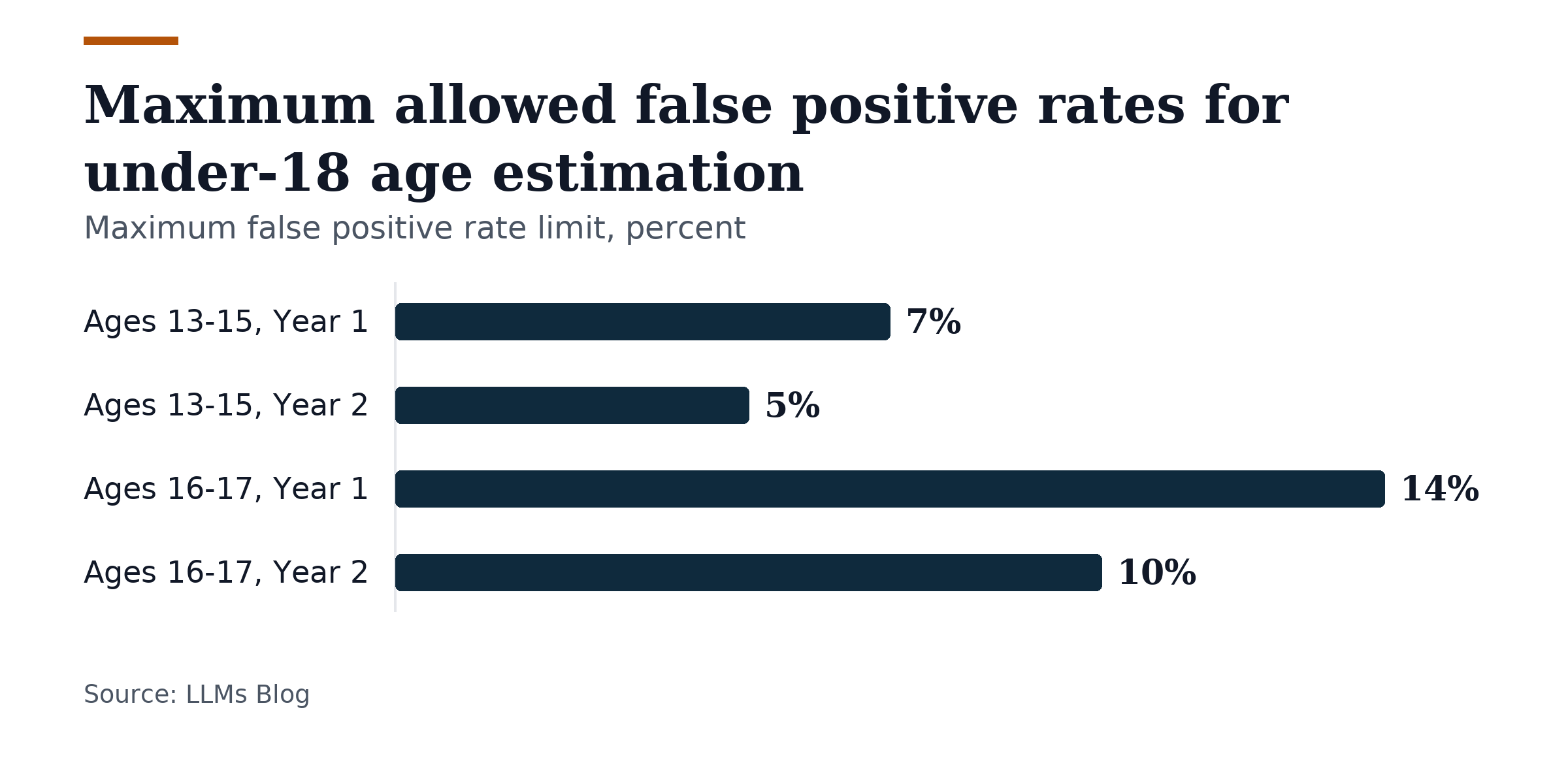
Settlement figures differ across reports. The California Attorney General’s release points to as much as 17 billion in payments to the states over ten years, while a separate report describes a $17.1 billion lawsuit settlement from August 2026 in which Meta agreed to strengthen age assurance and impose heavier restrictions on teen users. The settlement caps under-18 false positive rates at 14 percent for ages 16 to 17 within one year and 7 percent for ages 13 to 15. Within two years, those limits drop to 10 percent for ages 16 to 17 and 5 percent for ages 13 to 15.
Join the discussion