
Key facts
- The replacement is the Enterprise Information Display System, one digital console merging four systems from the 1980s.
- Work on the replacement has been underway for more than six years.
- More than 400 facilities still run floppy disks in four systems to load data onto aging information displays.
- E-IDS will be installed at controller workstations in more than 400 facilities spanning all air traffic control domains.
The FAA plans to remove floppy disks from 435 air traffic control facilities by the end of 2028, while the Government Accountability Office says the updated schedule targets September 2028 and warns the effort lacks a complete cost estimate and a coordinated plan.
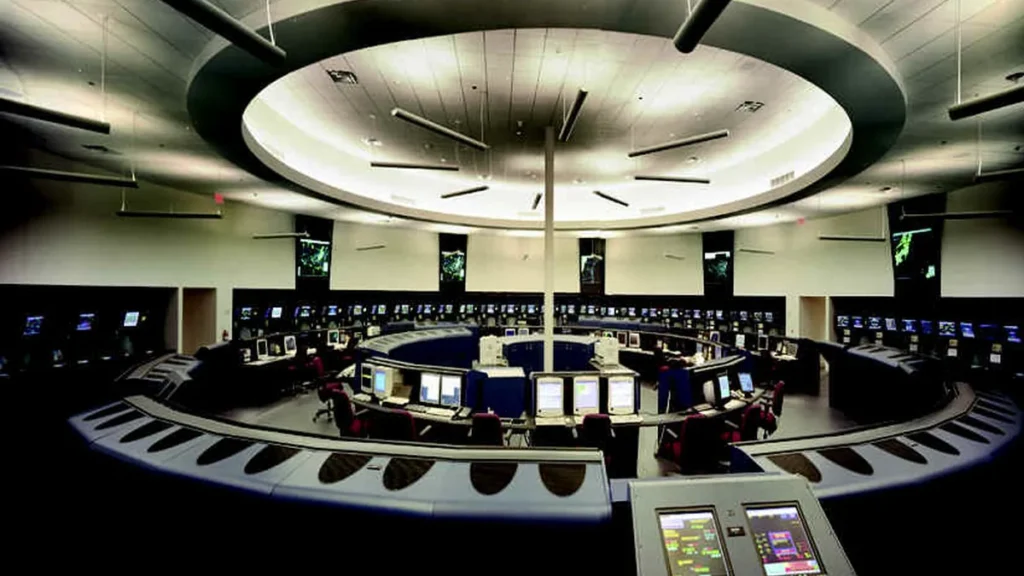
The replacement is the Enterprise Information Display System, a single digital console that merges four systems from the 1980s. The FAA will install it at controller workstations in more than 400 facilities spanning every air traffic control domain, describing the change as historic and saying E-IDS supplies information controllers need to manage aircraft. More than 400 facilities still run floppy disks in those four systems to load data onto aging information displays, and work on the replacement has been underway for more than six years. Defense contractor Leidos received a roughly $292 million FAA contract in 2020 to build the system, and the agency says E-IDS should cut costly repairs and manual workarounds for old equipment.
The agency named Atlantic City International Airport, Nashville International Airport and Greater Rochester International Airport as the first E-IDS sites, along with data processing hubs in Atlanta and Salt Lake City. The FAA says those locations have already dropped floppy disks, though the rollout is a staged process rather than a single systemwide cutover, and upgrades at each facility take about a year. Chris Rocheleau, then acting FAA administrator, said last year before the House Appropriations Committee that floppy disks and paper strips should end.
Floppy disks hold vital information for controllers but do not directly fly aircraft, and controllers now pull operational data from separate, manually updated sources. E-IDS targets two safety concerns: delivering pilot weather reports and swiftly issuing Notices to Airmen about abnormal statuses and hazards. Air traffic controllers handle millions of flights annually, and gaps in operational information create risk. The FAA handles more than 44,000 flights and over 3 million passengers daily, and more than 16 million flights and 976 million passengers yearly.
Floppy disks have not been mass produced since 2011 and largely left use over 25 years ago. The U.S. Air Force stopped using 8-inch diskettes tied to nuclear missile launch silos in 2019, and the Japanese government said in 2024 that it retired every floppy disk system except one. Within the FAA, Information Display System 4 launched in the early 1990s on an unsupported Microsoft platform, and as of last year several sites still ran Windows 95 while the agency kept decades-old Compaq computers going with eBay parts. These legacy systems operate around the clock, passed extensive safety testing and are expensive to replace without halting service.

The FAA’s 2023 assessment judged over a third of national air traffic control systems unsustainable, with some starting to fail, and funding shortages have long impeded modernization. Congress approved $12.5 billion for the aging system in 2025, and the FAA is applying that money from President Trump’s One Big Beautiful Bill to replace aging systems. Transportation Secretary Sean Duffy requested $30 billion more for upgrades, according to Reuters, and characterized the modernization as moving rapidly.
The Government Accountability Office reported the FAA’s earlier E-IDS completion target was September 2034, and said the updated plan shortens the schedule by six years to September 2028. The watchdog warned in September that the FAA had no complete lifecycle cost estimate and no coordinated schedule, noting project schedules numbered more than 11,000 and were not coordinated. Poor planning, the GAO said, risked budget overruns, delays, missed goals and disruption to controller work.
Meeting the deadline hinges on how cleanly the initial installations go, and the FAA is short several thousand air traffic controllers amid a global shortage. The agency is hiring controllers to close the gap, and Transportation Secretary Sean Duffy characterized U.S. air traffic control modernization as moving rapidly. The rollout is part of a wider modernization covering telecommunications, radar, radio and surveillance infrastructure.
A parallel effort moves major airports from paper flight strips to digital tracking. The FAA says 27 of 49 major airports have completed the paper flight strip transition, and targets full implementation for 2028. The agency also says 27 airports replaced paper strips since 2022 and that 49 others must finish by at least 2028. Bryan Bedford said controllers cannot communicate between facilities, with each site acting as its own silo, and an FAA memo dated Oct. 23 cited recent outages blamed on fiber optic cable cuts.
Join the discussion