
Key facts
- GreyNoise tracks the threat actor as GT13.
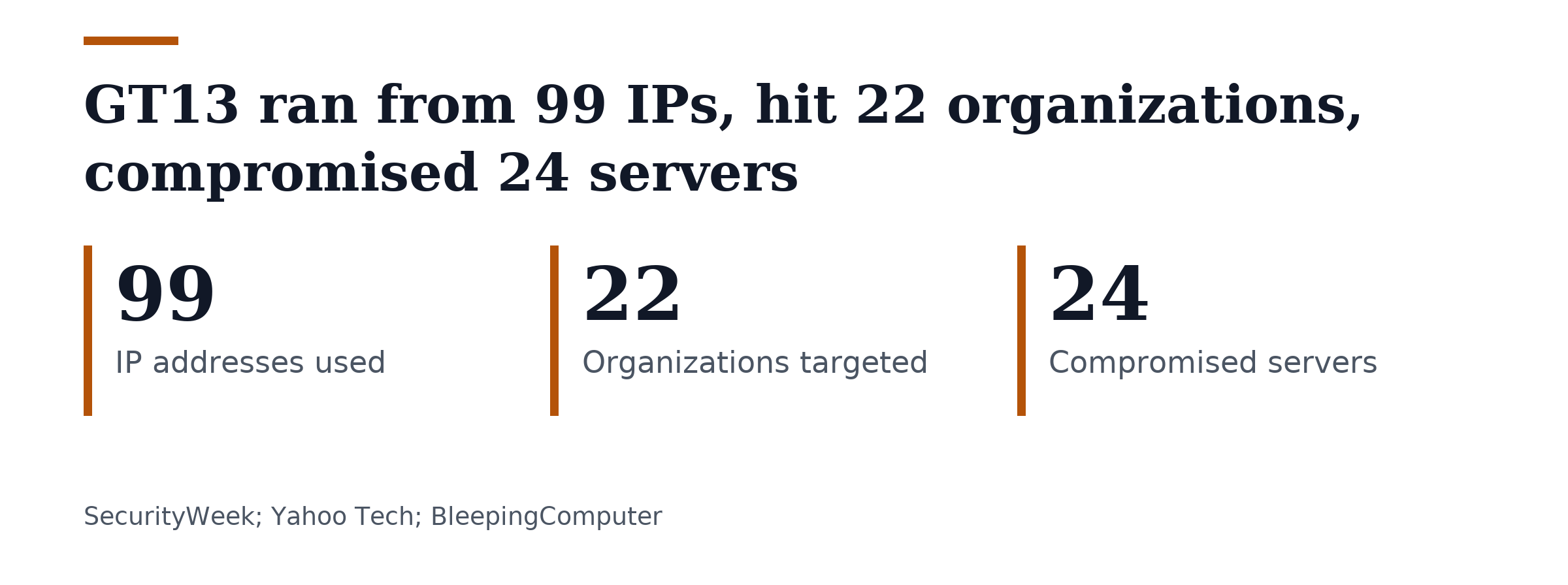
- GT13 conducted scanning, exploitation, and control operations from 99 IP addresses.
- GreyNoise confirmed actor activity on Check Point management servers from October 17 through November 2, 2026, when direct visibility ended.
- GreyNoise believes the campaign remains active because GT13 kept persistent access to the compromised servers.
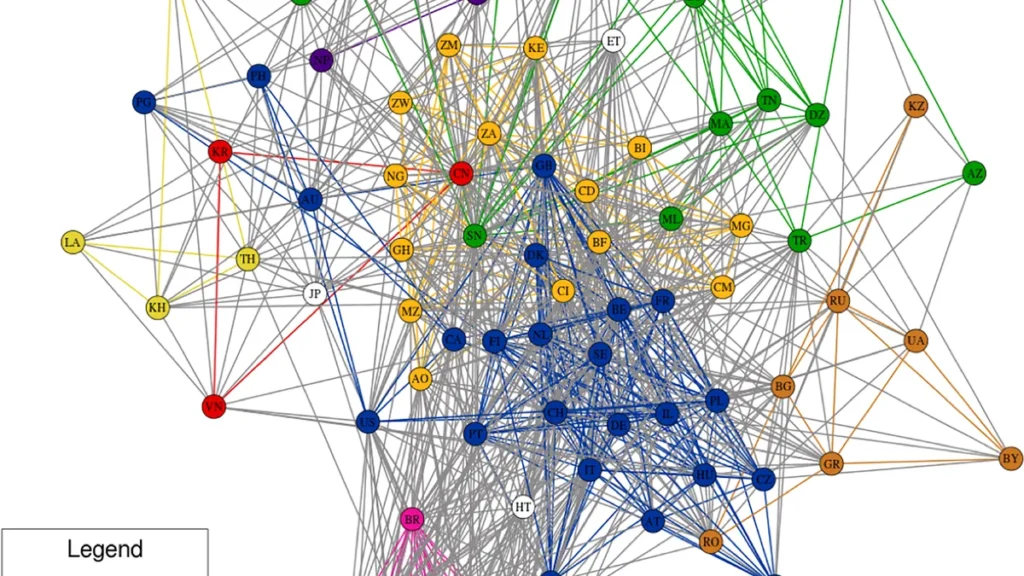
GreyNoise reported that threat actor GT13 compromised Check Point Security Management servers in a campaign with confirmed activity from Oct. 17 through Nov. 2, 2026, in which GT13 conducted scanning, exploitation, and control operations, hitting at least 22 organizations across energy, engineering, financial services, government, manufacturing, mining and transportation in the US, the UK, Australia, Austria, China, France, Germany, Hong Kong, the Netherlands, South Korea, India and other geographies, spanning 17 countries, with no clear sign of specific targeting.
‘We witnessed the GT13 actor use 99 IP addresses,’ GreyNoise said. Many of the addresses were tied to disposable network infrastructure. GreyNoise said every one of the addresses was an ExpressVPN egress or a Check Point device belonging to a victim.
The firm confirmed activity on the servers during that window, when direct visibility ended, and said its tracking began in early October 2026. The firm logged more than 1,400 network sessions, more than 800 command-line artifacts and more than 1,200 file-related activities, and assesses the campaign is likely still ongoing because GT13 kept persistent access to the compromised servers.
GreyNoise’s team assesses that GT13 relied on an AI-powered offensive tool built with automation and custom tooling, but whether AI was used in the campaign remains unconfirmed. The firm tracks the actor as GT13 and believes its agentic tooling worked beside manual keyboard activity, using automation to weaponize vulnerabilities, find exposed targets and run exploits.
GT13 ran Nmap, Chisel, Impacket and Paramiko, plus other Python utilities and scripts, to scout networks, move sideways and raise privileges. The intruders also probed internal networks, tried to move sideways and went after additional enterprise systems.
GreyNoise could not determine when or how the attacker got into the victim servers ahead of the HFS server compromise, though access to the Check Point management servers predated that compromise. On Oct. 2, 2026, the actor logged into an HFS server as an administrator using a forged signed admin session cookie, then used SSH access to poke around the environment and take data.
The intrusion relay used to manage the attacks and gather stolen data was a Rejetto HTTP File Server cracked through CVE-2026-61500. One compromised victim server acted as a hop holding command results and stolen data from 24 previously compromised Check Point servers. GreyNoise said the collected files listed victim IP addresses in increasing order, evidence of an automation loop, and the SSH private key on each compromised device matched the public key planted on the hop server.
From Oct. 20 to Oct. 26, 2026, the actor ran bulk actions against 21 more Check Point devices.
GreyNoise saw CVE-2026-16232, an authentication bypass in Check Point SmartConsole, being exploited during post-compromise stages; the flaw lets attackers obtain an app login token and sign in with administrator privileges. In July 2026, Check Point warned about CVE-2026-16232 as an actively exploited zero-day.
Against Rejetto HFS, the actor used or attempted CVE-2026-61500, the flaw tied to the intrusion relay server. It also targeted CVE-2023-4966 and CVE-2025-5777 against Citrix NetScaler, CVE-2024-21893 against Ivanti, CVE-2026-98432, a Linux IPv4 use-after-free vulnerability, CVE-2020-1472, a Windows NetLogon vulnerability, CVE-2021-26855 and CVE-2021-34473 against Microsoft Exchange, and CVE-2021-21972 and CVE-2023-34048 against VMware vCenter.
GreyNoise said stolen material included internal certificate authority files, configuration details, access credentials and firewall databases. In one victim environment, the attackers generated a fresh certificate and removed security policies so firewall protections were turned off. BleepingComputer asked Check Point for better visibility into the attacks and for the flaw that enabled initial access, and was still waiting for a reply.
Researchers at GreyNoise cannot connect the activity to any known threat group or country, and they say the attacker’s motivation is unknown. GreyNoise said the activity resembled cyberespionage operations, though the attacker’s motivation could not be conclusively determined.
GreyNoise shared indicators of compromise with international government partners and CERTs so affected organizations could be alerted. The timeline overlaps a separate PHP2Shell campaign against unpatched Check Point Security Gateways. That campaign used CVE-2026-109618 and CVE-2026-109619 to get in and CVE-2026-123039 for Gaia OS DynamicCLI privilege escalation, with waves beginning Oct. 30, 2026 and Nov. 2, 2026; GreyNoise said the two campaigns are unrelated.
Join the discussion