

Key facts
- Aikido Security said attackers hosted dozens of phishing pages on Hugging Face Spaces, most built with the platform's AI website builder.
- Aikido said its analysis, released November 24 and revised November 25, used an AI agent to find 42 phishing and credential theft pages on Hugging Face Spaces on October 16.
- Aikido said 29 of the 42 pages bore signs of DeepSite.
- The pages copied 28 brands including Microsoft, PayPal and Netflix.
Aikido Security said attackers hosted dozens of phishing pages on Hugging Face Spaces, and its count put the total at 42 phishing and credential theft pages found on October 16 using an AI agent, most built with the platform’s DeepSite AI website builder. Aikido notified Hugging Face the same day. The analysis was released November 24 and revised November 25.
The pages impersonated 28 brands, including Microsoft, PayPal and Netflix, and Aikido said 29 of the 42 bore signs of DeepSite. DeepSite, Hugging Face’s AI website builder, turns plain-language descriptions into published websites, so attackers can create phishing pages without writing code.
Aikido found prompts written in English, French, Hindi, Indonesian, Portuguese and Russian. Some prompts asked the AI to block search crawlers and security scanners from reaching the pages, while one asked it to reject the first password entry so victims would type it again. Some operators also asked the AI to conceal pages from search crawlers, headless browsers, curl and wget.
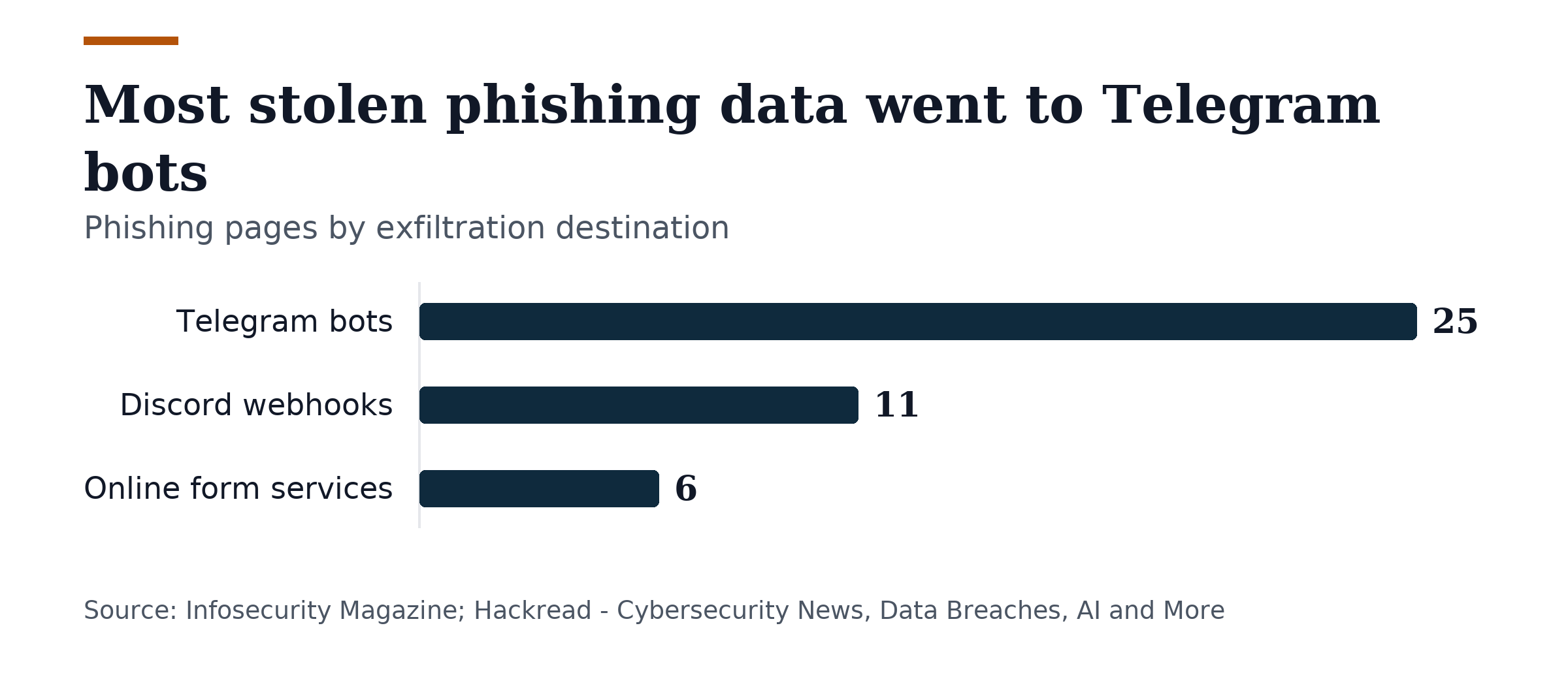
The pages requested credentials such as passwords, one-time codes, payment card information, phone numbers and birth dates. Prompts told DeepSite to replicate login pages, transmit stolen details to Telegram and send victims to real sites after data collection. Twenty-five pages sent stolen data to Telegram bots, eleven to Discord webhooks and six to online form services.
Hunter Schwartz, an Aikido researcher, started his investigation after a malware scan detected a suspicious Jupyter notebook containing a hidden script that displayed a fake Hugging Face login. Hackread reported that the notebook carried a security test label.
Aikido said 23 pages were published more than a year before discovery, 16 within six to twelve months and three in the last three months, with the oldest dating to April 2025. Hackread reports that Aikido’s blog dates the oldest page to April 26, 2025. Publication dates do not confirm how long pages remained continuously active, and Aikido could not establish how many people visited or entered details.
Aikido cautioned that the dates showed how long the pages had existed, not how long they had deceived victims. By October 29, every page had been paused or removed from public access, and none was serving victims at publication time.
Aikido observed that 34 pages were live and 8 were paused before October 16. The company said it lacked visitor data and could not determine how many people entered their credentials.
Aikido said one fake Microsoft login page needed roughly 90 minutes of prompting and required 15 commits, with 14 completed in 90 minutes on October 25, 2025. The company also found no evidence that the operators authored the code themselves, and commit histories showed them directing the AI and requesting changes.
Many pages logged visitor IP addresses before sending them to legitimate sites, and some sent victims to the genuine site after gathering data, making the phishing harder to notice.
The data collected varied by target and included banking transaction passwords and IP addresses. Aikido said building fake login pages for services like Microsoft or PayPal no longer requires much effort for cybercriminals.
Hunter Schwartz, an Aikido security engineer, said a trusted platform’s login page does not prove the page is genuine. “A login page on a trusted platform isn’t proof the page is real.”
Aikido said platforms should screen new pages for login collection and forwarding to messaging services. The researchers said blocking all hf.space links is not practical because legitimate apps use them too.
The company advised defenders to search e-mail gateway, DNS and proxy logs for page visits. The researchers proposed reviewing DNS, proxy and e-mail traffic logs for suspicious links instead of blocking the platform entirely.
The company stated that following any incident, response teams should change passwords, end active sessions and inspect sign-ins, because two-factor authentication may not stop a takeover.
Join the discussion