

Key facts
- Keio Corporation detected a ransomware attack on its corporate network early on September 26, 2026.
- The potentially exposed personal information includes about 20,000 payment card numbers.
- Keio said it has identified no financial losses or unauthorized use connected to the breach so far.
- Keio said roughly 360,000 recruitment applicants and roughly 77,000 current and past employees plus their dependents may have had data exposed.
Keio Corporation, the Tokyo-based railway operator, disclosed on Nov. 24, 2026 that a ransomware attack—a cyber attack in which malicious software locks systems and demands payment—on its corporate network may have exposed personal information covering about 10.63 million customers and business partners. The company said it detected the attack early on Sept. 26, 2026.
The potentially exposed group includes roughly 360,000 people who applied for recruitment roles and roughly 77,000 current and past employees together with their dependents, Keio said. About 46,000 identity document records collected by Keio Real Estate and Rebita in the course of property sales and rental agreements are also potentially exposed. Separately, Keio said confirmed leaks affect roughly 12,000 employees, former employees and their dependents, as well as about 160 job applicants and roughly 150 tenants living in Keio-owned rental properties. Keio said the figures cannot simply be added together because one person may fall into more than one category, and The Japan Times put the affected population at more than 11 million customers, clients and workers even as it cited Keio’s 10.63 million customer figure.
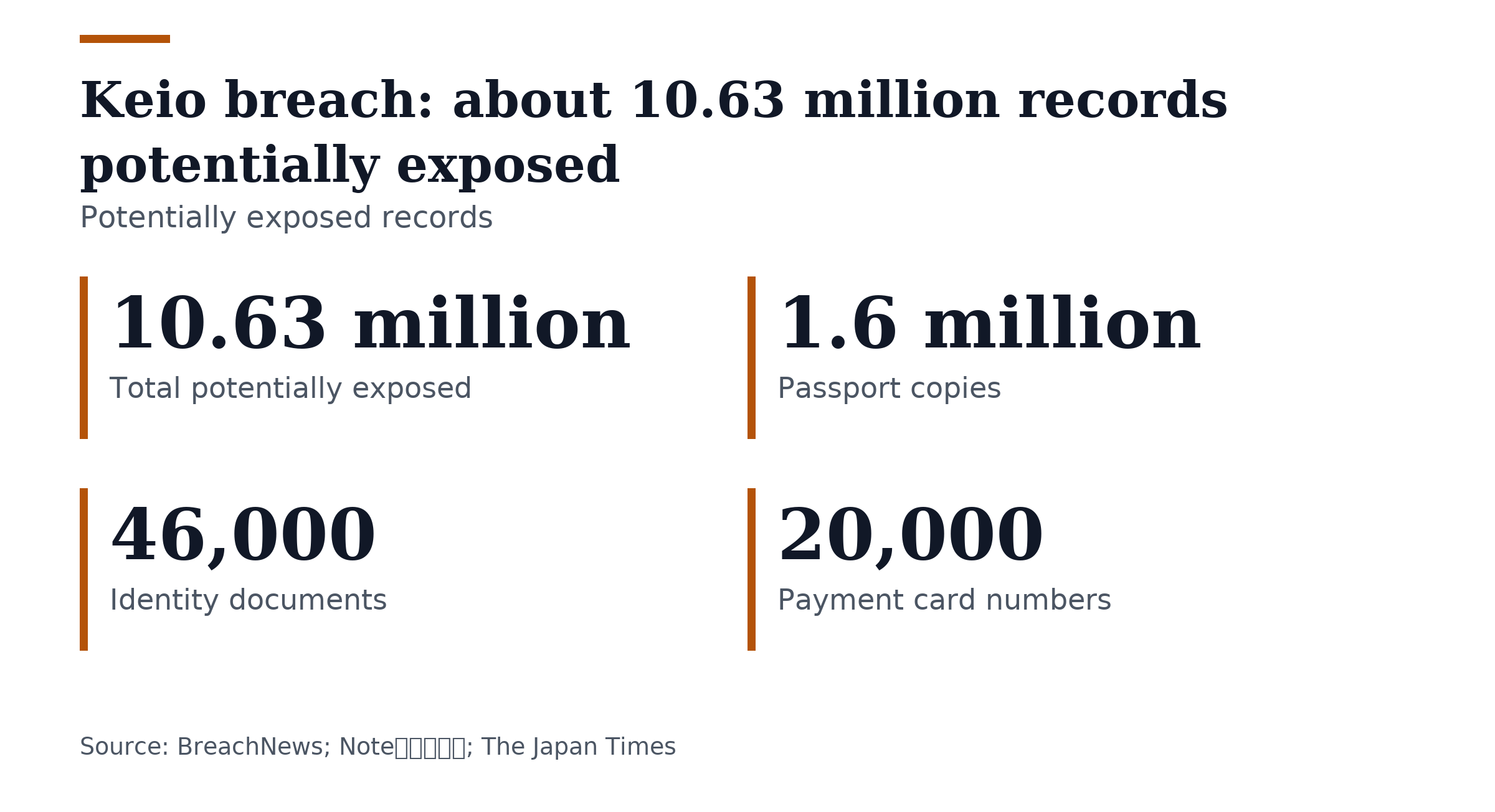
The 1.6 million passport copies—scans or photocopies of passport identity pages—concern overseas guests at Keio Presso Inn, Keio Plaza Hotel, Keio Plaza Hotel Sapporo and Takayama Green Hotel, according to Keio. The figures also cover about 20,000 card numbers tied to Keio Department Store’s own credit card, plus 382 numbers linked to Keio Plaza Hotel Executive Card applicants from March 2012 to January 2018. The company says it has found no financial losses or unauthorized use tied to the incident so far.
On Oct. 16, Keio said a group that claimed responsibility for the breach claimed it had published some of the stolen data. On Oct. 21, Keio said outside experts had confirmed that data the group claims to have stolen was made public. Keio’s disclosure gives no details on the intrusion route, the date the intrusion began, or how long identity document copies were stored.
Once it detected the attack, Keio cut its network connections to stop the ransomware from spreading. The ransomware attack disrupted accounting work, which forced Keio to postpone its interim earnings announcement. Results for the second quarter of the fiscal year ending March 2027 had been planned for Oct. 30, and Keio now aims to release the interim figures—its quarterly financial results—in early December without a specific date set. The delay affects financial closing for Keio and its consolidated subsidiaries, and the company says the impact on overall performance is still under review.
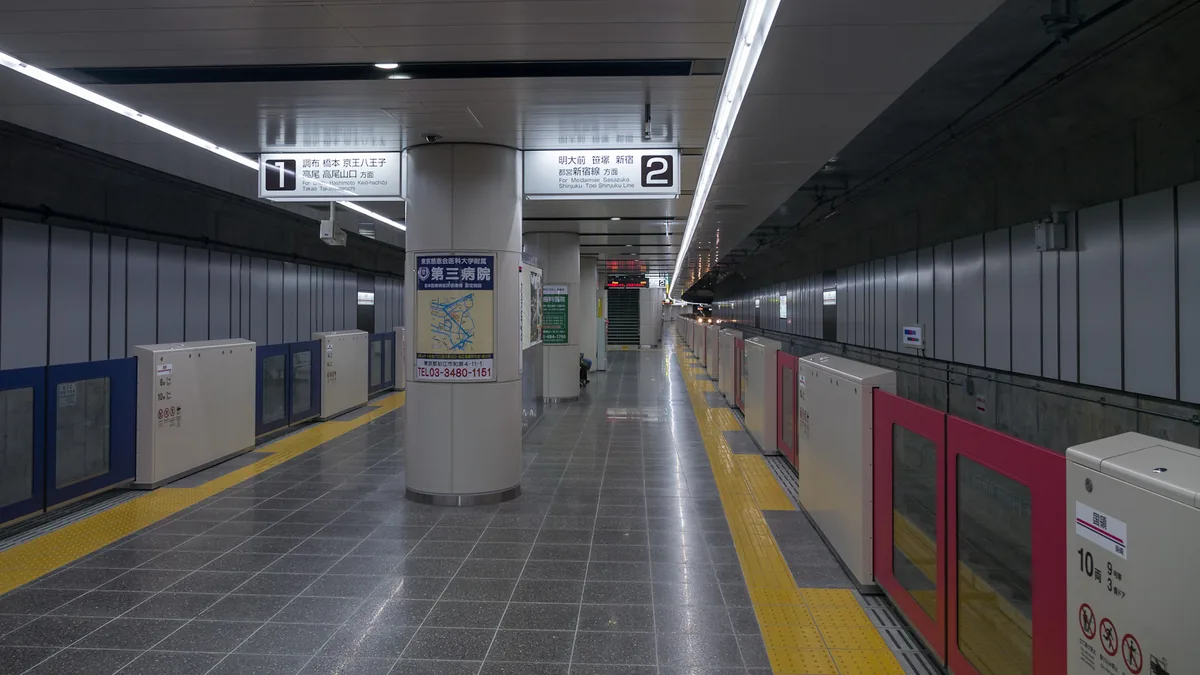

Keio Corporation, based in Tokyo, runs passenger railway services as its main business and also operates in real estate, department stores and merchandise sales. The company faces competition from operators such as Tokyu and Odakyu within Japan’s private railway market.
The company urges affected people to contact their card issuer about charges they do not recognize and to stay alert for fraudulent e-mails, text messages and calls that pretend to come from Keio or its partners. The company plans to notify affected individuals one by one after confirming the facts in each case. People can contact the Keio Group Inquiry Desk Regarding Personal Information Leaks at 0120-089-925 between 10:00 and 17:00, except on weekends and national holidays.
Article 22 of the Act on the Protection of Personal Information calls for efforts to delete personal data without delay once its use is no longer necessary. The Personal Information Protection Commission’s guidelines say preliminary reports should generally be made within three to five days of discovery and definitive reports within 30 days, or 60 days for certain criminal incidents.
Qilin ranks among the most active ransomware cartels and this month claimed an attack that halted production at Osaki Electric, a smart meter manufacturer. Ransomware.live reported that Qilin led all ransomware cartels in victims over the past year.
Join the discussion