

Key facts
- Regulators studied lawful content where a single clip may seem fine but repeated theme-based viewing can harm mental health.
- Henna Virkkunen, the Commission's tech policy lead, urged TikTok to do more to protect user wellbeing, especially for minors.
- Officials said the investigation targets TikTok's business model built around continuous scrolling.
- A Commission official said engagement threatens minors and vulnerable adults.
The European Commission charged TikTok on Nov. 6, 2026 under the Digital Services Act, the EU’s online-platform rulebook, alleging the platform’s recommendation algorithm pushes young and vulnerable users into harmful-content rabbit holes.
The Commission said TikTok’s For You feed shows users a continuous stream of personalised videos even when those videos concern mental health struggles and body image. The more a user interacts with a certain type of content, the more the algorithm recommends similar material, a loop officials said can be harmful when endless repeated exposure involves sadness, isolation or body image. “The more a user interacts with a certain type of content, the more TikTok’s ‘For You’ feed algorithm recommends similar content,” the Commission said.
TikTok did not stop users from receiving repeated content about body image or isolation, the Commission said, and officials named sadness and self-harm as additional mental health themes in the charge. Repeated viewing may cause anxiety and sadness or aggravate eating disorders and other mental health conditions. A Commission official said a chain of hundreds or even thousands of videos of the same kind drives people into a rabbit hole and has a negative impact on mental well-being.
European officials stressed the case was not about removing content, saying investigators focused on videos that were neither illegal nor against TikTok’s own rules, a category one official called the least harmful. The legal theory centers on algorithmic amplification of lawful material rather than traditional content takedown. Officials said the investigation targets TikTok’s business model built around continuous scrolling, and that engagement threatens minors and vulnerable adults.
The rabbit hole effect happens when the algorithm keeps serving similar clips because of what users watch, like or engage with, trapping people inside one type of content. The Commission said TikTok’s tools to stop rabbit-hole effects were ineffective. The platform’s algorithm continued to show diet and body image videos even when users had marked eating-pattern content as not interested, and refreshing the feed only paused the topic briefly before it came back.
The Commission said TikTok’s feed-diversification tools fail, reloading the feed helps only briefly, and tapping not interested loses its effect after some time. Brussels said TikTok had spotted some issues in its own risk assessments but failed to analyze them properly or set suitable safeguards. Officials obtained TikTok’s internal documents and data, reviewed around 20,000 videos with psychologists, psychiatrists and system design experts, and said they did not need to see the exact algorithm.
Officials said they spent two and a half years building one of the world’s most advanced investigatory infrastructures and kept their testing methods secret, so platforms could not game them. The Commission’s preliminary findings allege the recommendation algorithm pulls users into rabbit holes built around sadness, self-harm and body image.
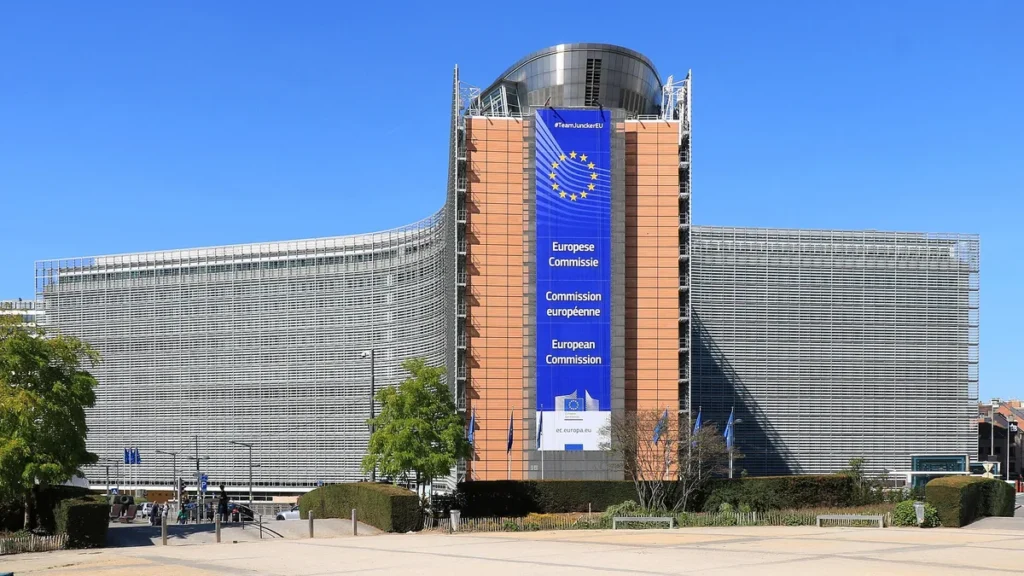
European officials said no EU regulator had previously taken direct aim at a major platform’s engagement-based recommendation system and that, to their knowledge, no similar enforcement action existed anywhere worldwide. The Commission separated this legal theory from prior objections to TikTok’s interface features, saying the case focused on the recommendation system rather than notifications or endless scrolling. The European Commission serves as the EU’s executive arm and digital regulator.
Under the law, platforms must act against disinformation and harm. If the DSA violations are confirmed, TikTok could face a fine of up to 6% of annual global revenue, though neither TikTok nor ByteDance publishes that revenue figure. TikTok’s Chinese owner ByteDance faces a possible fine next year of up to 6% of global annual turnover unless it resolves the issue. The fine could reach 6% of turnover, the maximum potential penalty under the DSA.
The Commission issued preliminary findings after TikTok failed to implement proportionate, reasonable and effective mitigation measures to address the risks. TikTok may review the case file and present a defense before any final decision. Changing the recommendation algorithm could allow TikTok to avoid a financial penalty. Brussels said recommendations should rest on what users explicitly request, not on implicit signals like how long they watch a video.
European officials want TikTok to change its For You feed so users have greater control over content. The Commission suggested giving greater weight to users’ explicit preferences, making recommendation controls simpler to find and use, and regularly assessing the algorithm’s impact. Brussels also said TikTok must change the design of its For You feed algorithm, lean more on explicit preferences, improve access to and usability of controls, and test the algorithm regularly.
Henna Virkkunen, the Commission’s tech policy lead, said TikTok should do more to protect user wellbeing, particularly for minors. “TikTok needs to step up its efforts to protect users’ wellbeing, including those of minors,” Virkkunen said.
A TikTok spokesperson called the Commission’s claims inaccurate and said they misrepresent the platform’s architecture and safety commitments. TikTok says its rules prohibit material encouraging disordered eating or dangerous weight control. TikTok rejected earlier findings as false and without merit and promised to fight them.

The platform counts 189 million users in the European Union. More than 79 million users in the European Union turned on TikTok’s not interested or keyword filters in the first half of 2026, according to company figures.
The case grew out of a 2024 investigation under EU online platform rules. The Nov. 6 findings mark the third action the Commission has taken against TikTok in 2026, after a February challenge to addictive design features and a July move on minors’ account protections. The Commission had earlier found TikTok in violation of EU rules over addictive design features such as infinite scroll.
In February, EU regulators issued preliminary findings against TikTok over restrictions that blocked researcher access to public data. Last December, a transparency complaint over TikTok advertising ended with binding policy changes.
Officials said other platforms also push users into rabbit holes, and the Commission was examining the issue more broadly, though it declined to name any platform besides TikTok. The Commission is also examining Meta-owned Facebook and Instagram to see whether their recommendation systems create similar rabbit hole effects.
Officials cited trends including what I eat in a day and SkinnyTok as legal content that seems harmless in isolation but becomes damaging through repetition, especially for young and vulnerable users. Regulators studied lawful content where a single clip may seem fine but repeated theme-based viewing can harm mental health.
The Commission described the case as a scene setter for its proposed KIDS Act, introduced in September. The Act would bar platforms from relying only on engagement signals to recommend content to children, a provision officials said came directly from the TikTok investigation.
In August, US senators sought answers from TikTok after the death of Chase Nasca, a 16-year-old who died by suicide in February 2022 following a stream of content tied to sadness and suicide. A Bloomberg-reported internal TikTok review from last year found Nasca belonged to a control group covering roughly 10 percent of users, a group excluded from design changes meant to limit repeated exposure to harmful subjects.
The Commission compared the EU probe to a US legal settlement involving TikTok in Alabama. Officials said the settlement does not go as deep into the recommendation system.
The Molly Rose Foundation, created after Molly Russell’s 2017 suicide tied to harmful online content, welcomed the findings. The charity’s survey found that close to 50 percent of girls saw suicide, self-harm and eating-disorder material on social platforms within seven days. The same survey found one third of British teenagers had viewed suicide, self-harm and eating-disorder material on social platforms within a week. The foundation asked UK regulator Ofcom to investigate TikTok’s damaging algorithm.
The action follows rising global worry over how social media affects children’s mental health. Authorities around the world are weighing or bringing in limits on users below adulthood.
Join the discussion