
Key facts
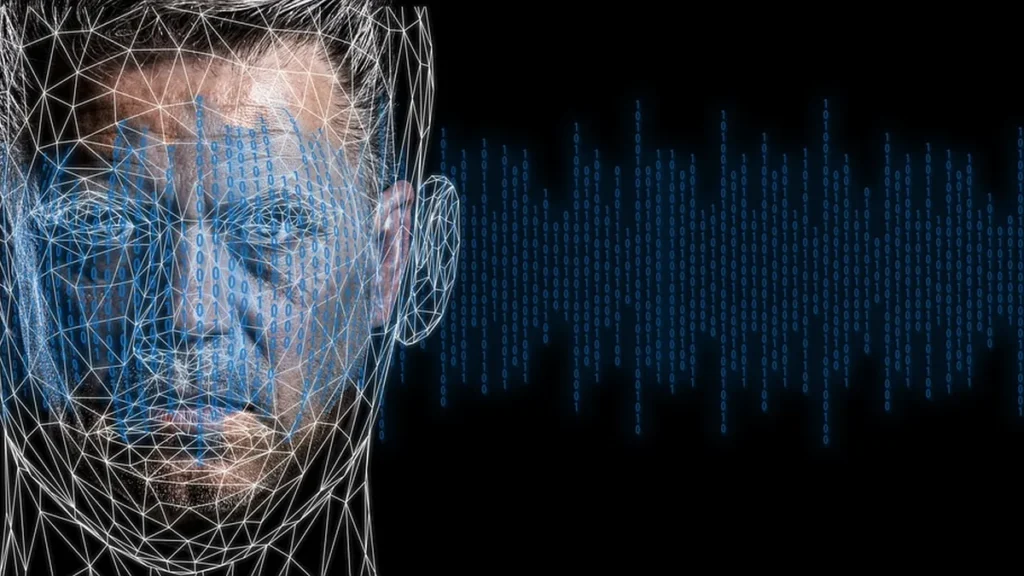
- The Independent National Electoral Commission (INEC) released a preliminary voter register containing images believed to be generated using artificial intelligence.
- Nigeria's 2027 general elections are approaching with President Bola Tinubu seeking re-election against former Vice President Atiku Abubakar and opposition figure Peter Obi.
- Amupitan warned that fake videos, synthetic voices, made-up images and organized efforts may damage confidence in democratic institutions.
- Mallam Jibrin Baba Ndace, Director-General of Voice of Nigeria (VON), urged journalists not to believe reports that could later prove false due to AI manipulation.
Nigeria’s election commission published a preliminary voters list that includes images believed to be AI-generated. SaharaReporters said its review of the commission’s online register turned up suspected AI-generated pictures across several voter profiles.
The affected profiles included Ealefoh Oritsenoma, Ebamenbhegbe Besi, Ebhohimen Godwin, Jacob Gabriel, Maniru Noah, Matthew Isaac and Odion Bibi. Identification numbers appearing next to the profiles were partly hidden on the site.
Deutsche Welle said warning signs on the register included overstated facial features, repeated names, and records belonging to people who died after the last election.
Joash Amupitan, the chairman of INEC, said the commission is investigating discrepancies tied to AI and has set up a dedicated unit to watch for AI-related threats and identify deepfakes. He warned that fabricated videos, synthetic voices, invented images and organized campaigns could harm confidence in democratic institutions.
The commission said more than 103 million Nigerians have registered for the coming election. President Bola Tinubu is seeking re-election in Nigeria’s 2027 general elections, facing former Vice President Atiku Abubakar and opposition figure Peter Obi.
Election officials first used Direct Data Capture Machines in 2011 to collect voter biometrics, combining fingerprint scans with webcam facial recognition. A decade later, the Bimodal Voter Accreditation System became the new standard, combining fingerprint checks with facial recognition.
Weak mobile service slowed voter accreditation in the 2023 general elections. The 2023 elections produced the lowest turnout since democracy returned in 1999, with only 27 percent of registered voters casting ballots.
Before the 2023 elections, fabricated audio and video linking candidates to terror-related activity circulated on social media. Disinformation, fake news and technological challenges count among several concerns for Nigeria’s democracy, Deutsche Welle said, with voter apathy a specific worry particularly for young Nigerians.
Lois Ugbede, an assistant editor at the DUBAWA fact-checking platform, said disinformation driven by AI is serious and increasingly common. She said political parties rely on inflated crowds to show large followership or support.
Akintunde Babatunde of the Center for Journalism, Innovation and Development said people could start doubting genuine information since convincing AI-generated fakes now exist. He cited a lawmaker who spoke at a campaign rally and later said the footage was manipulated.
Chibuike Mgbeahuruike, an election consultant at the Centre for Democracy and Development, said AI intrusion into INEC’s portal could damage institutional credibility. He said the real danger is the lack of effective accountability for how AI is deployed. He added that confidence in INEC is already low.
Mallam Jibrin Baba Ndace, Director-General of Voice of Nigeria, urged journalists not to trust reports that might later turn out false because of AI manipulation. He stressed verification and careful checking in news media, saying public institutions such as INEC may not provide impartial information due to AI and election technology.
The chairman said AI-related risks can emerge across the entire electoral cycle, including voter registration, campaigning, voting, result announcements and disputes after the vote. He said safeguarding the credibility of the 2027 polls goes beyond securing polling units and materials; it also means protecting the information space where voters take in, understand and pass along electoral information. He called for wider cooperation among election bodies, media outlets, technology companies, security agencies, regulators and civil society groups.
Gautier Mignot, the European Union’s ambassador to Nigeria and ECOWAS, warned that artificial intelligence and other information manipulation could damage electoral integrity and weaken public trust. Mignot said AI helps with translation, accessibility and communication, but it also makes deception easier to create and harder to detect. “Artificial Intelligence (AI) can support translation, accessibility, and communication, but it can also make deception easier to produce and harder to recognise.” The ambassador said false information can cause serious harm even without sophisticated AI tools.
He said fake announcements can send voters to the wrong polling place, while false claims about results can deepen suspicion before verified information comes. He said disinformation targets information itself, but its deeper goal is to erode trust. Mignot said work to counter electoral disinformation should begin before election tensions rise. The EU envoy said responses to information manipulation should include everyone, especially women and people who depend on local languages or lack digital access.
The ambassador reaffirmed backing for efforts led by Nigeria to protect electoral integrity and said the goal is to back democracy, not to shape the result.
Bayo Onanuga, Special Adviser to President Bola Tinubu on Information and Strategy, warned against the misuse of AI in political campaigns before Nigeria’s 2027 general elections. Onanuga said X, Facebook and TikTok serve as major channels for spreading AI-generated videos and pictures for political messaging and entertainment.
Onanuga urged urgent AI safeguards while speaking in Beijing at the 7th World Media Summit hosted by Xinhua News Agency and the municipal government. A press release from the State House on November 5 quoted Onanuga saying AI has become an influential tool in electoral campaigns as politicians and backers use it to advance political interests. Onanuga said some political actors use AI to spread falsehoods, others use it for satire and entertainment, and some use it to highlight candidates’ achievements.
The presidential adviser said political actors, media organizations and members of the public must take on greater responsibility as AI’s role in political communication grows. Onanuga acknowledged that AI contributes to areas including medicine, mathematics and scientific advancement.
Onanuga expressed optimism that governments, scientists and citizens recognize the need for AI regulation, along with international bodies such as the United Nations. Onanuga urged that safeguards be put in place before AI causes more harm. “The world must act before it becomes too late. Build guardrails quickly to save humanity,” he concluded.
Police chief Olatunji Disu, the Inspector-General of Police, and Mohammed Haruna, an INEC national commissioner, will lead a PUNCH Media Foundation webinar about AI, misinformation and Nigeria’s 2027 elections. The virtual event was scheduled for Wednesday, Nov. 11, 2026, at 11:00 a.m. Discussion at the webinar will cover newsroom AI policies, human oversight and editorial-credibility standards applying to AI tools used by election officials, journalists and observers.
Mayowa Tijani of the Cable Newspaper Journalism Foundation has covered four Nigerian presidential elections. The US Department of State picked him to report on the 2020 American presidential election. Cynthia Mbamalu co-founded Yiaga Africa. The Not Too Young to Run movement, which she helped drive, lowered the minimum age for elective office in Nigeria.
Hannah Ajakaiye founded FactsMatterNG, a civic media non-profit. It uses social media to deliver civic education and media literacy to young and underserved audiences through fact-checking.
PUNCH Media Foundation, set up in 2019, backs accountability journalism and media development as the development arm of PUNCH Nigeria Limited. Joel Nwokeoma of PUNCH Newspapers will moderate the webinar.
The Federal Government pledged to cooperate with Britain and other partners to fight misinformation, fake news and AI misuse before Nigeria’s 2027 elections. Mohammed Idris, Nigeria’s Minister of Information and National Orientation, disclosed the talks on Tuesday, Nov. 3 in Abuja with British High Commissioner Peter Vowles. About eight weeks had passed since the British envoy arrived in Nigeria when the two met.
Idris said the meeting did not produce a regulatory framework, an enforcement program or a funding commitment. Idris and Vowles held exploratory talks without reaching a formal agreement on a new program against misinformation. The government plans to keep working with Britain and other partners on information threats, though the meeting was a pledge of cooperation rather than a detailed new policy.
British High Commissioner Peter Vowles said elections belong to Nigerians and their institutions. Vowles said Britain also faces misinformation challenges as artificial intelligence changes the digital information environment.
Idris said misleading content during elections can confuse voters and damage confidence in electoral institutions. Idris said the government wants an electoral environment in which citizens get trustworthy information and make informed choices.
Election-related misinformation may include fabricated statements, manipulated videos, false voting instructions and misleading claims about results. Countering false election information requires trustworthy government data, independent fact verification, public media skills and openness by election officials. Government responses to misinformation must be weighed against constitutional free-expression and press-freedom protections.
Beyond the Ballot, a two-day summit, took place on November 2 and 3 in Abuja. The International Press Centre, the Centre for Media and Society and Development Alternatives Incorporated convened the summit under the EU-SDGN programme, a European Union effort to support democratic governance in Nigeria.
The International Press Centre’s executive director, Lanre Arogundade, said the 2023 elections showed the dangers of false claims and manipulation on the internet. Arogundade endorsed the proposed partnership for electoral information integrity as a platform for coordinated action.
Professor Attahiru Jega, a former INEC chairman, proposed chatbots backed by INEC to give citizens verified electoral information and help authenticate claims circulating online. Jega said credible information helps voters distinguish real electoral updates from fabricated claims.
The event featured a drill simulating an AI-powered election disinformation crisis to test coordination. Organizers said the gathering sought to build a national response plan covering election information threats while respecting rights and including many stakeholders. The event is expected to strengthen collaboration and defend electoral integrity while respecting freedom of expression, press freedom and access to information.
Deutsche Welle said critics argue that INEC faces criticism for AI’s growing influence across Africa and for blocking access to procedures that would make voting more transparent. The INEC chairman warned that if the issue is not addressed, election credibility could come under attack. INEC has announced plans to bring AI-powered tools into parts of its electoral operations.
Join the discussion