
Key facts
- ReversingLabs uncovered phishing domains suggesting Inception may have targeted Anthropic, Amazon, Adobe, Nintendo, Netflix, OpenAI and Tesla.
- Domains are registered through NiceNIC, Spaceship, Tucows and NameSilo.
- Patterns include legal-target.com and target-legal.com, with legal themes starting in October 2026.
- DataBreaches said the original ShinyHunters PGP key had reportedly been leaked, so the return announcement could be the work of impostors.
The Inception extortion group claims it holds GoDaddy’s internal data, an accusation GoDaddy has not confirmed, BreachNews reported, and the company’s newsroom had no statement as of Nov. 28.
The group has publicly denied any link to ShinyHunters and says it operates independently. Okta connects the group’s postings to its O-UNC-053 activity cluster but expresses only low-to-moderate confidence. “We cannot currently make a high confidence assessment,” Okta said, about whether O-UNC-053 operates the leak site itself or works with another extortion actor.
BreachNews reported that the listing leaves out customer data, a ransom figure and an intrusion date. Those researchers said the files’ timestamps run from about 2020 to 2024, which they said points to an older corporate backup instead of fresh data, although employee details could still aid phishing. GoDaddy has not authenticated the files.
Okta says it has followed O-UNC-053 since March 2026; phishing domain registrations fell in September and October before rising again in November. The cluster relies on phone-based social engineering rather than e-mail phishing. Its sites impersonate corporate authentication services with legal themes, impersonating Okta mainly and also NetIQ/OpenText Access Manager.
ReversingLabs said Inception started operating in late October. The group surfaced on Nov. 17 claiming seven victims, including AMD, PepsiCo, Cigna Healthcare, AutoZone and Lucid Motors, and none of those companies has publicly confirmed a data breach.
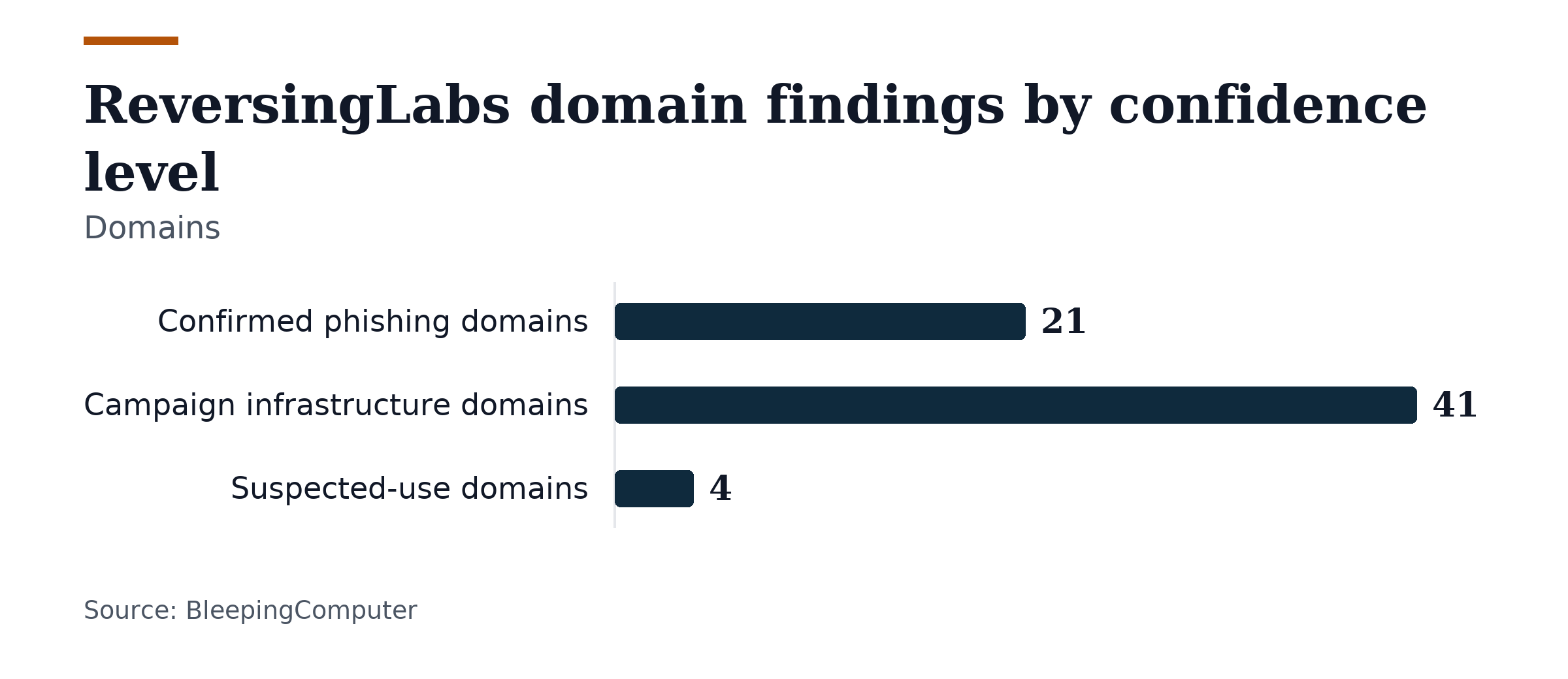
The firm confirmed 21 phishing domains and rated 41 associated domains high confidence, plus four others with suspected use. Its domain findings suggested Inception might have aimed at Anthropic, Amazon, Adobe, Nintendo, Netflix, OpenAI and Tesla, but the firm said none of those companies shows evidence of a successful compromise. Separately, its researchers spotted infrastructure built to impersonate brands including Dropbox, Duolingo, Western Union, Indeed and Activision Blizzard; registering those domains does not prove a breach or targeting.
Unit 42 at Palo Alto Networks observed more than 70 legal-themed domains used for voice phishing since October 2026. The targets spanned cryptocurrency, financial services, healthcare, high technology and hospitality.
O-UNC-053 runs voice-phishing attacks that push targets to type credentials into phishing pages and approve multifactor authentication prompts. The kit intercepts authentication flows and captures credentials and MFA codes, though it cannot defeat phishing-resistant methods like passkeys and Okta FastPass. Users are tricked into handing over one-time passcodes and approving push notifications, letting attackers enter SaaS apps and steal data for extortion.
NiceNIC, Spaceship, Tucows and NameSilo handled the domain registrations. Legal domains tend to be registered on or within a day of launching a campaign, while earlier waves relied on help desk, support and claims themes.
Pages are customized to match each target’s identity provider, and filtered visitors are routed to the organization’s real Okta or NetIQ sign-in page. Examples of confirmed domains tied to this activity include legal-pepsico.com, legal-paychex.com, legal-duolingo.com, activisionblizzard-legal.com, legal-westernunion.com, legal-dropbox.com, legal-indeed.com, legal-creditkarma.com, legal-amd.com, legal-grubhub.com and legal-twitch.tv.
The ShinyHunters data leak site disappeared in late September 2026 after three alleged members were arrested, including a Canadian co-conspirator behind the FBIjobs.gov portal breach. Okta said targeted names appeared on that site one to 28 days after infrastructure registration, during tracking from March to September 2026, and that it had not seen those victims listed anywhere else before Nov. 16. The company also said no O-UNC-053 target data appeared on leak sites from early September 2026 until the Inception listings.
Okta said O-UNC-053 kept registering new phishing domains despite ShinyHunters’ disruption and the shutdown of its leak site. The cluster started its legal-themed campaign in late October, and the Inception leak site went up in mid-November to name targets hit earlier.
Someone claiming to represent ShinyHunters said the group was back, posting on the Exploit cybercrime forum from an account tied to ShinyHunters since 2020 and sharing a fresh leak-site address and PGP key. DataBreaches said the original ShinyHunters PGP key had reportedly leaked, so impostors could have written the announcement.
Researcher Dominic Alvieri floated a possible tie between Inception and ShinyHunters. Inception denies any connection and says it operates independently. Henry Schein appears on Inception’s leak site alongside other major U.S. companies, and the group claims hundreds of gigabytes of stolen data that have not been independently verified.
The report linking O-UNC-053 to the Inception brand came from Okta researchers Moussa Diallo and Katie Nickels. Okta said its advisories rest on rigorous analysis of observed activity and documented patterns, The Hacker News reported.
Its social-engineering and credential-theft campaigns have hit technology, healthcare, biotechnology, financial services, insurance, entertainment, gaming, retail, transportation, hospitality and legal organizations. It also resembles O-UNC-066 and UNC6671, which rely on a phishing kit to capture credentials and multifactor codes.
ReversingLabs said defenders should review DNS, proxy and identity provider logs going back to October 21, 2026, for signs of suspicious activity. Its recommendations: require phishing-resistant authentication such as FIDO2 security keys and passkeys, and tighten help desk identity verification procedures.
Join the discussion