
Key facts
- Phase 1 would permit up to 100 launches per year on any day.
- Phase 1 would permit up to 200 landings per year on any day.
- Phase 2 would permit up to 456 weekday launches and 912 landings within several years, compared with today's cap of 25 launches and 50 landings.
- The two-phase plan has Phase 2 follow Phase 1 within several years after Phase 1 begins, and it sets no start date for Phase 1.
Mexican President Claudia Sheinbaum asked the U.S. embassy for a meeting on Nov. 26 about SpaceX launch permissions, how often it flies from Starbase and a possible relocation of the site.
The meeting has no scheduled date. Questions went to the State Department after the U.S. Embassy referred them, and neither the State Department nor SpaceX offered an immediate response. Sheinbaum called SpaceX a private company whose operations touch national airspace and assigned the matter to the U.S. government.
Mexican air navigation and civil aviation officials from SENEAM and AFAC said on Nov. 14 that a Starship flight spent seven minutes in Mexican airspace, reaching it at 3:08 p.m. Mexico City time. SICT, Mexico’s transport ministry, said the crossing created no risk to air operations. The agencies said an FAA notice arrived on Nov. 13, warning that the crossing might last about 15 minutes, and they added they might coordinate airline route and schedule changes if the crossing occurred.
On Oct. 14, the FAA started the environmental review process for Starbase with a notice of intent to study a programmatic environmental impact statement. The first phase would allow as many as 100 launches a year on any day, paired with up to 200 landings. Under Phase 2, the ceiling would rise to 456 weekday launches and 912 landings within several years, up from the current authorization of 25 launches and 50 landings. The 456-launch ceiling remains under study and is not an approval.
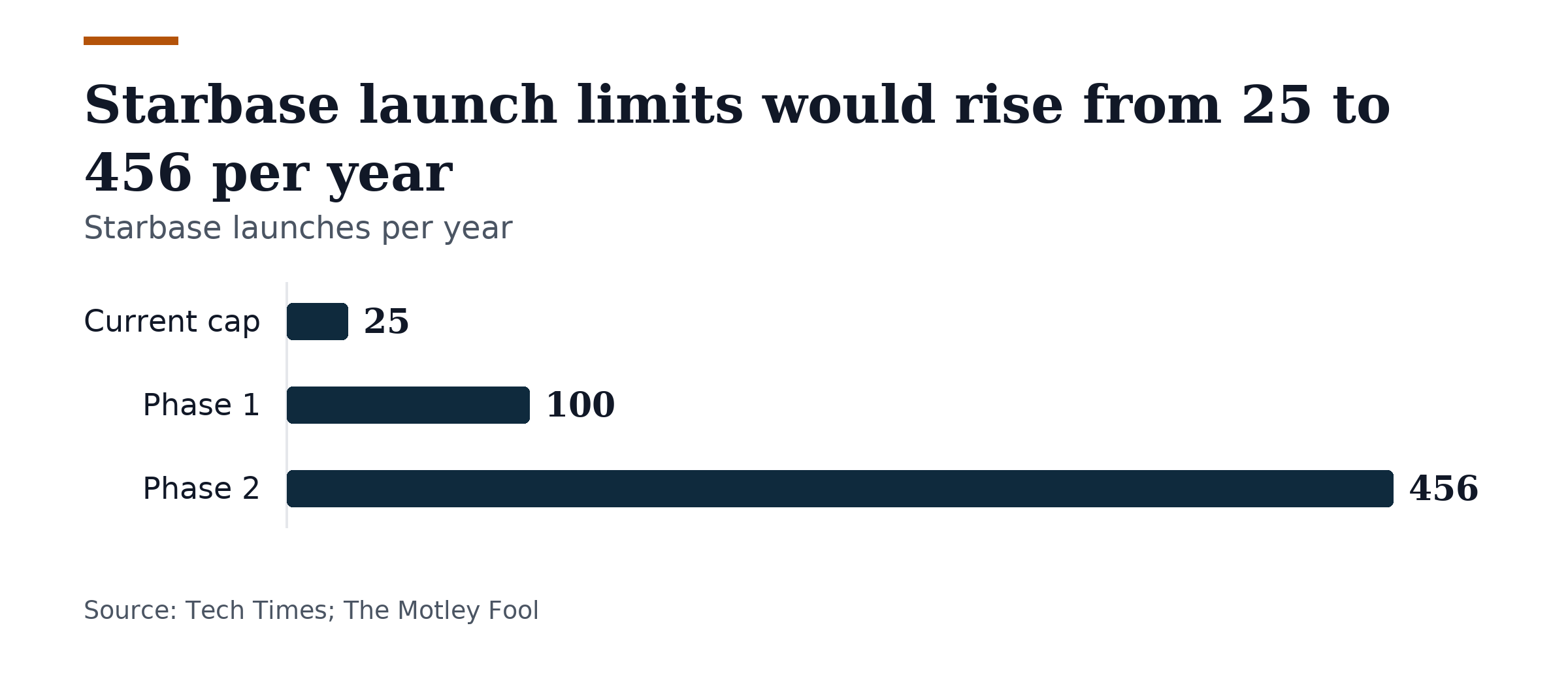
SpaceX holds permission for as many as 25 Super Heavy and Starship launches each year from Starbase, Texas, and it asked the FAA to study up to 456 launches per year, more than 18 times the current limit. Under the two-phase plan, Phase 2 would follow Phase 1 within several years after the first phase starts, with no start date set for Phase 1.
Sheinbaum pointed to a yearly total of as many as 400 flights and asked what that would mean for airspace over Mexico. She said the higher tempo could affect air traffic because of limits imposed during each launch. No public analysis has estimated how Mexico’s airspace exposure would shift under a pace of 456 launches per year.
FAA environmental reviews say flights on southerly paths could pass over airspace above Mexico, Cuba, Jamaica and the Cayman Islands. The same reviews estimate that launches during peak periods might disrupt as many as 200 flights per hour.
On July 24, Mexico issued NOTAM B1467/26 for Starship Flight 13, marking a dangerous zone of 14 coordinate points extending from the surface to unlimited altitude. OPSGROUP said a medical evacuation plane from Guatemala City had to turn back near the Belize-Mexico border after the airspace ahead closed.
An FAA agreement for Boca Chica launches includes Mexico as a party and mentions Mexican air navigation officials. Kelvin Coleman, a former head of the FAA’s commercial space office, said Mexico is included in overflight planning.
Debris began washing ashore at Playa Bagdad in Matamoros, Tamaulipas, by Nov. 17. Environmental group Conibio estimated it recovered 15 kg (33 lbs) of debris by Nov. 17. According to N+, Conibio Global counted more than 1,500 pieces that activists called very large, mostly plastic and able to withstand very high temperatures.
Mexico’s Federal Attorney for Environmental Protection, Profepa, said the debris originated in Starship’s propellant tank lining and that it will ask SpaceX to accept responsibility. Profepa gathered the debris, and Mexico’s navy put it into storage. SpaceX said partners on the ground found very little debris on the beach and that it is unclear whether the material came from SpaceX operations. SpaceX called most social media posts about widespread debris and damage fabrications or deliberately misleading, and it pointed to independent tests, including toxicity analyses, as evidence of no chemical, biological or toxicological risk.
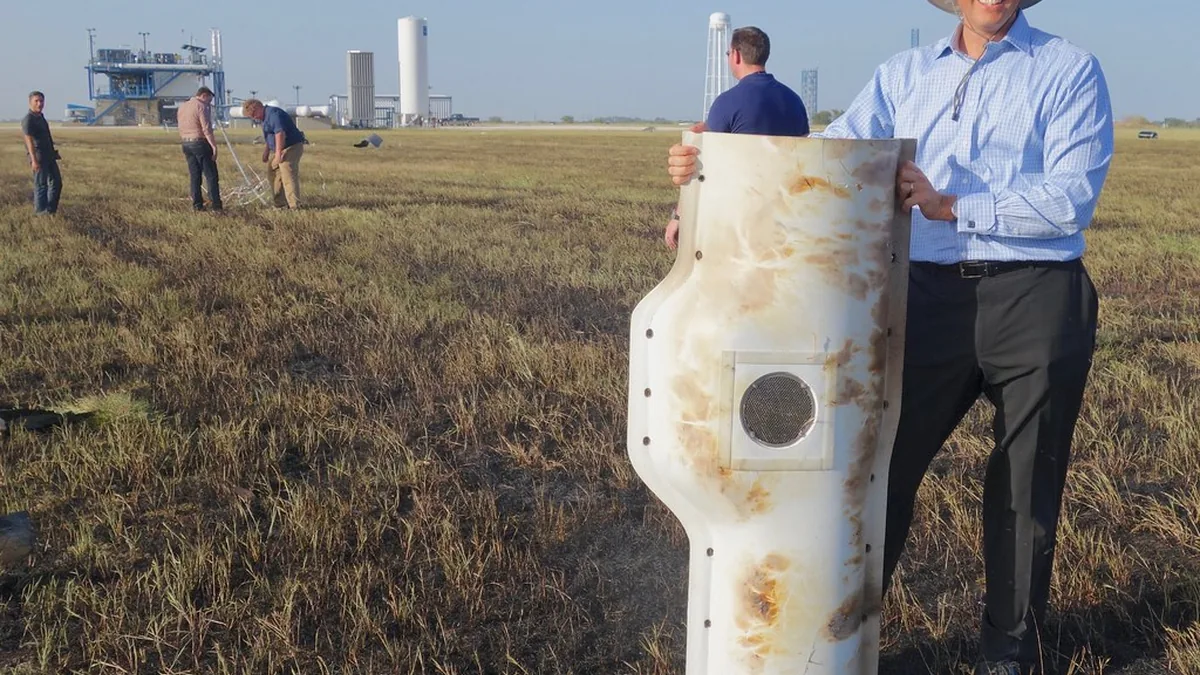
Profepa warned the public not to touch anything found on the beach, and the reports reviewed contain no laboratory results or risk findings from Mexican authorities on the debris. Tech Times reported that Booster 22 called off its tower landing after a low fuel mass alarm cut short its boostback burn. Public accounts differ on whether Booster 22 was destroyed by its flight termination system—a range-safety tool that destroys a vehicle flying off course to keep debris away from populated areas—or splashed down, and no full account of its end has surfaced.
The 1944 Chicago Convention gives every state complete and exclusive control over the airspace above its territory, but no international agreement sets a ceiling for that airspace. Most nations draw the line with outer space at the Kármán line, 100 km (62 miles). While descending, Space Shuttles passed 80 km (50 miles) over other countries without permission.
The 1967 Outer Space Treaty says private companies need authorization and continuing supervision from their home state, and it makes the launching state liable for damage caused by its space objects. Mexico and the United States have ratified both the 1967 Outer Space Treaty and the 1972 Liability Convention. Article IX allows a state to ask for consultations if it expects harmful interference from another state’s activity.
The 1972 Liability Convention makes a launching state liable for damage on Earth’s surface or to aircraft, and it restricts claims to states. Canada’s 1978 claim against the Soviet Union over Cosmos 954 remains the best-known Liability Convention case. The Liability Convention defines damage as loss of life, personal injury, or loss of or damage to property, leaving open whether beach contamination qualifies.
No reviewed report points to a legal authority Mexico could use to force the relocation of a U.S.-licensed site on U.S. soil, and the reports reviewed show that Mexico cannot stop SpaceX launches at Starbase, which sits in Texas under an FAA license. Sheinbaum is seeking a meeting, not a regulatory action.
Two official sources give different comment deadlines: Dec. 7 on the FAA project page and Nov. 30 in the Federal Register notice. Comments on docket FAA-2026-12808 can be submitted through regulations.gov or by mail to the FAA contractor in St. Paul, Minnesota.
Sheinbaum holds a physics degree from Mexico’s national university and a Ph.D. in energy engineering, with doctoral research at Lawrence Berkeley National Laboratory. Her administration’s 2026-2030 Mexican Space Program carries a budget of about $1.7 billion and defines communication sovereignty as its goal. Mexico lacks an industrial base for domestic satellite construction, so all spacecraft are expected to come from foreign manufacturers.
The report points to SpaceX as an example of a launch provider Mexico would probably use. SpaceX’s satellite internet service, Starlink, won a tender from Mexico’s state electricity company for rural internet service through December 2026 under a contract reported during the predecessor’s term.
On May 12, SpaceX said it regularly looks at sites in the United States and abroad to support a Starship flight cadence, and the company seeks thousands of Starship flights each year. SpaceX has started work on a second Starbase in Louisiana with 10 launch pads. On Aug. 25, it announced a $100 billion spaceport on Pecan Island, with construction starting in 2027 and the first Starship launch targeted for 2029. The plans add sites rather than replacing Starbase, and no reviewed report names Mexico or says SpaceX would move the base.
The Motley Fool reported that SpaceX completed 31 commercial missions in 2021, 57 in 2022, 92 in 2023, 130 in 2024 and 161 in 2025. It calculated that 456 Starship launches per year, each carrying a maximum payload of 150 tons, could send more than 68,400 tons of payload into orbit annually, exceeding twice the total payload placed into orbit across all human spaceflight history since the Oct. 4, 1957 Sputnik launch. The Motley Fool estimated that if SpaceX pursues similar goals at the Louisiana site, it could launch more than 2,000 rockets annually, which could put close to 300,000 tons of payload into orbit each year.
Join the discussion