

Key facts
- Prosecutors allege the defendants used artificial intelligence to modify voices and photographs of company executives and lawyers to trick employees into sending large payments.
- Prosecutors say the scheme occurred from 2024 to 2026.
- Spanish police arrested Jacob Soall and Sharon Hazan over the summer of 2026, while UK police arrested Guy Sheetrit in September 2026.
- The United States has requested the extradition of all three men, and extradition proceedings are underway.
Federal prosecutors in Manhattan unsealed an indictment on November 6, 2026 against Jacob Soall, Sharon Hazan, and Guy Sheetrit. The indictment was unsealed by federal prosecutors in Manhattan in the US District Court for the Southern District of New York. Prosecutors describe all three defendants as foreign nationals.
Spanish police arrested Soall and Hazan over the summer of 2026. Prosecutors specify that Soall, 41, was arrested on June 17, 2026, and Hazan, 54, was arrested on August 5, 2026. UK police arrested Sheetrit in September 2026. Prosecutors specify that Sheetrit, 42, was arrested on September 7, 2026.
The United States has requested the extradition of all three men, and extradition proceedings are underway.
The indictment charges the three men with conspiracy to commit wire fraud, money-laundering conspiracy, and aggravated identity theft. If convicted, each defendant faces up to 20 years for every major count upon conviction. Prosecutors describe the charges as allegations, and none of the defendants has been convicted on them. The case was filed in the US District Court for the Southern District of New York.
Prosecutors say the scheme occurred from 2024 to 2026. According to prosecutors, the operation lasted from about July 2024 until February 2026. Accounting staff and other employees with authority to move money were the typical targets. Employees authorized substantial transfers into accounts controlled by the accused.
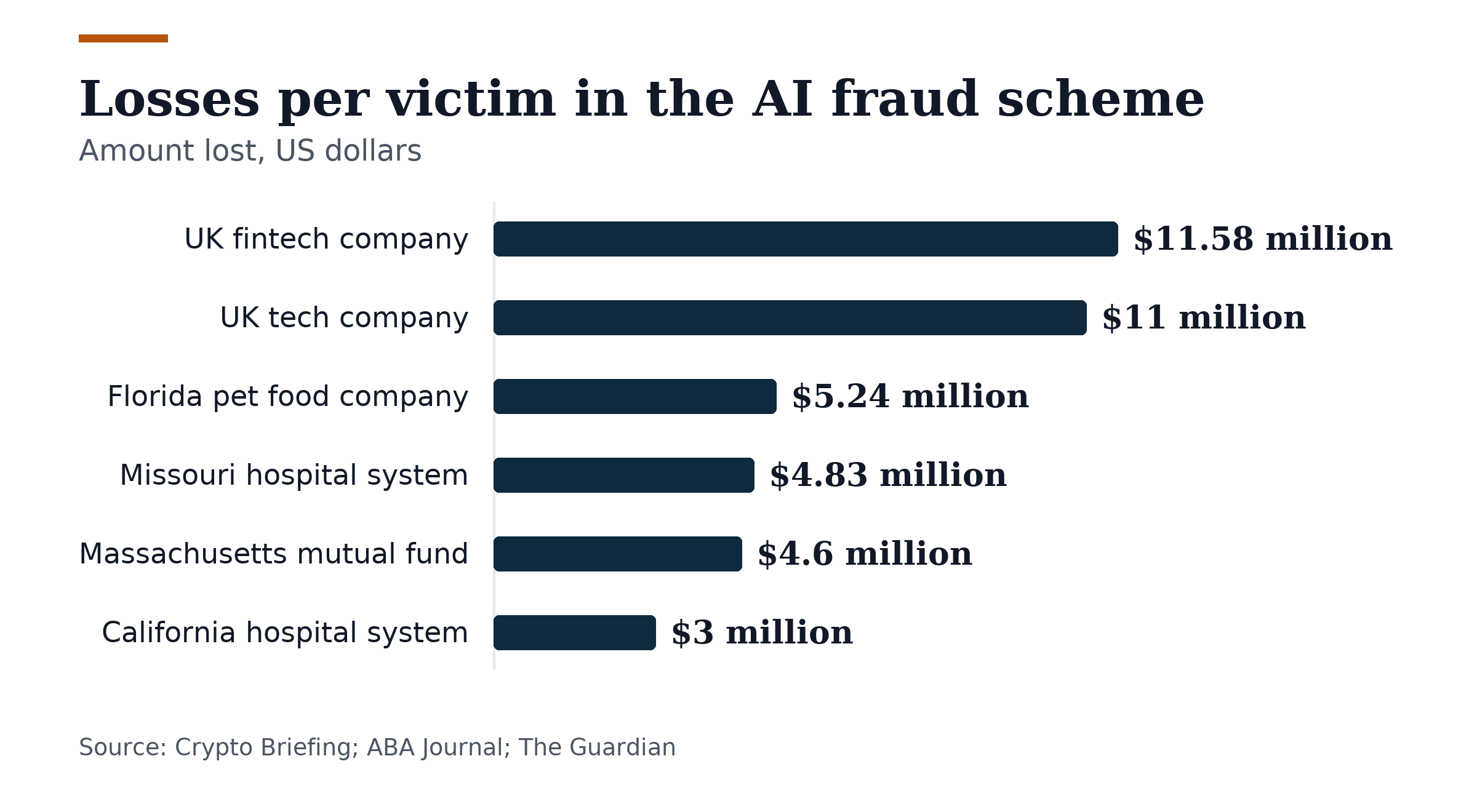
The indictment covers thousands of targeted companies, prosecutors say. The defendants allegedly stole more than $129 million from companies around the world, including in the United States. Prosecutors allege about $2.7 million was stolen from a Rhode Island bank and roughly $3 million from a California hospital system. A Massachusetts mutual fund lost more than $4.6 million.
A UK technology company lost over $11 million. Damage per victim fell between about $2 million and more than $11 million. A Missouri hospital system lost approximately $4.83 million. A UK fintech company lost approximately $11.58 million, and a Florida pet food company lost approximately $5.24 million.
The men directed employees to wire money to accounts in the United States, Spain, Portugal, Greece, the United Arab Emirates, Singapore, Austria, Slovakia, and China. Prosecutors allege the stolen funds were converted into cryptocurrency to conceal their source, ownership, and control, then distributed among the conspirators. Prosecutors accuse Hazan and Sheetrit of laundering the proceeds. Court documents do not specify which cryptocurrency assets the transactions involved or how much money moved through them.
It began with a fake call or e-mail from someone posing as a chief executive who asked an employee for help with a sensitive deal. The defendants then told employees to contact lawyers at a major international law firm and impersonated those lawyers to provide wire instructions. Prosecutors allege the defendants used artificial intelligence to alter voices and photographs of company executives and lawyers to trick employees into sending large payments. The men allegedly acted as corporate executives and lawyers using AI to alter voices and images.
Jacob Soall and Sharon Hazan used aliases including Seba Clarke, Rocky Balboa, Superman Cash, Fat Boy, and Ron. Soall primarily pretended to be UK lawyers and maintained a handwritten script titled Lawyer Call. Sharon Hazan was previously convicted of bank fraud in 2008. The indictment references a 2008 bank fraud conspiracy conviction for Hazan in the same court.
U.S. Attorney Jamie McDonald said artificial intelligence holds great promise but criminals can turn it to criminal ends. James C Barnacle Jr said, “The alleged scheme orchestrated by Soall, Hazan, and Sheetrit demonstrates how the use of advanced technology can be exploited to commit large-scale fraud.” James C Barnacle Jr, the FBI assistant director in charge, said the case illustrates how criminals can misuse advanced technology for major fraud.
The case resembles a 2019 voice-cloning fraud in which criminals faked a chief executive’s voice to steal $243,000. AI impersonation scams have grown fast since 2019.
Join the discussion