

Key facts
- The suit seeks damages for current and former users exposed to harmful content or social media addiction.
- Sydney-headquartered Litigation Lending Services funds the class action.
- Eight unnamed lead applicants bring the case.
- Australia's Federal Court issued a suppression order on Monday blocking publication of claim details and applicant identities.
On Oct. 9, MinterEllison commenced legal proceedings in Australia’s Federal Court on behalf of children and teenagers. A class action is a legal case brought on behalf of a group of people with similar claims. The firm announced the suit on Wednesday after filing it earlier in the week, saying it seeks compensation for current and former Facebook and Instagram users. MinterEllison is a law firm.
Eight unnamed lead applicants bring the case, seeking damages for current and former users exposed to harmful content or social media addiction.
Sydney-headquartered Litigation Lending Services funds the class action. Litigation Lending Services said those bringing the claims “would have no practical means of pursuing these claims against a global technology giant.”
Australia’s Federal Court issued a suppression order on Monday blocking publication of claim details and applicant identities in the case. Meta said through a spokesperson that it is aware of the claim and will defend itself vigorously.
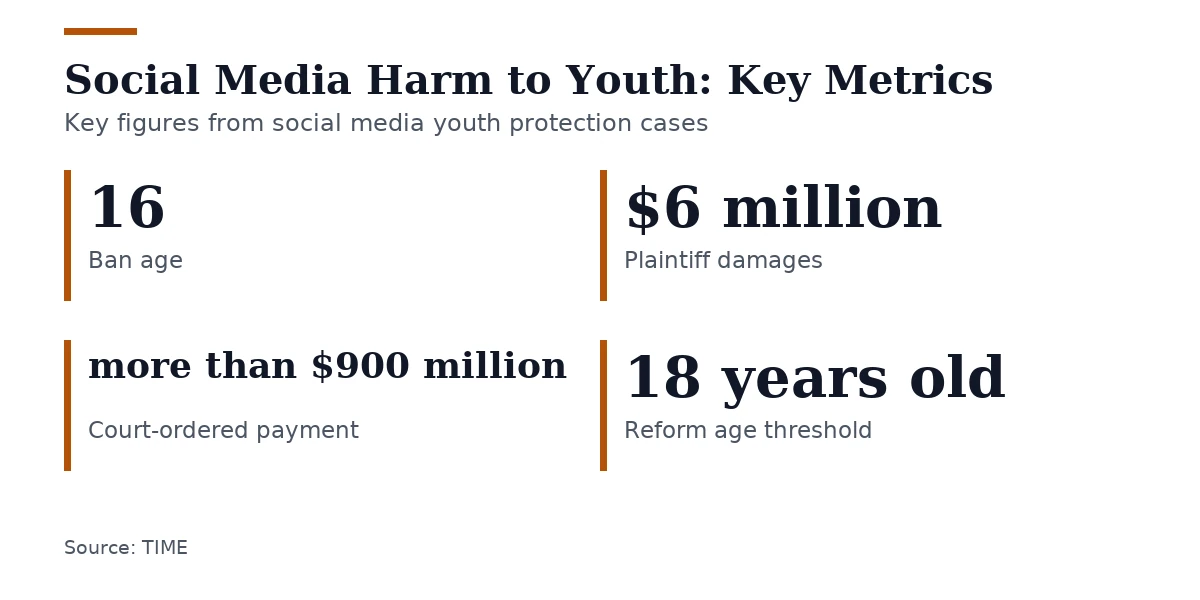
Australia’s government has enforced a social media ban for children under 16 and plans to take court action against Meta and other social media companies over alleged failures to comply with national law. Communications Minister Anika Wells said in a Tuesday Bloomberg interview that the government expects to take Facebook and Instagram, TikTok, Snapchat and YouTube to court over claimed noncompliance.
Sources disagree on the size of Meta’s August U.S. settlement. TIME says Meta settled a nationwide lawsuit for up to $18 billion over claims its platforms were designed to be addictive and harmed children. Tech Xplore and AFP put the settlement at up to $17.7 billion, saying it resolves claims Meta intentionally built its platforms to addict young users. The conflicting dollar figures appear in separate reports on the same U.S. settlement discussed in both stories.
A jury in Los Angeles ordered Meta and Google to pay $6 million in damages to a 20-year-old plaintiff in a March bellwether trial on social media addiction. TIME also cites this as one of several civil victories against Meta in the United States preceding the Australian class action.
In August, a New Mexico court told Meta to pay more than $900 million and put in place reforms such as rigorous age verification. The August ruling appears alongside other U.S. legal actions as context for the Australian litigation.
Rob Nicholls, a senior researcher at the University of Sydney, told TIME the class action did not surprise him because of the U.S. cases.
Nicholls said the Australian suit would probably cover negligence and the supply of an unsafe product. The supply of an unsafe product refers to providing a product that is not safe for users. “It’s likely that in Australia the suit will be both negligence and the consequences of the supply of an unsafe product.” Nicholls provided his assessment by email as part of TIME’s coverage of the Australian filing.
Join the discussion