


Key facts
- Shapiro said the president expected to announce a deal on those terms on Friday, according to the notes.
- A summary given to Intel’s directors said Shapiro accepted that the board could reject the offer.
- The same summary warned that rejection would bring consequences Shapiro could not predict.
- Intel’s board approved the arrangement days after the August 2025 call.
Commerce Department lawyer David Shapiro told Intel’s chief financial officer during an August 2025 call that a demand for a 10% equity stake was not a negotiation, according to internal call notes contained in a federal lawsuit. The lawsuit supports the allegation the Trump administration treated the stake demand as non-negotiable, part of a reported U.S. push for ownership-based industrial policy.
Shapiro said the president expected to announce a deal on those terms on Friday, according to the notes. A summary given to Intel’s directors accepted that the board could reject the offer but warned that rejection would bring consequences Shapiro could not predict. The warning was described as implicit pressure on the board to accept the 10% stake. Intel’s board approved the arrangement days after the August 2025 call, moving quickly after the warning about consequences.
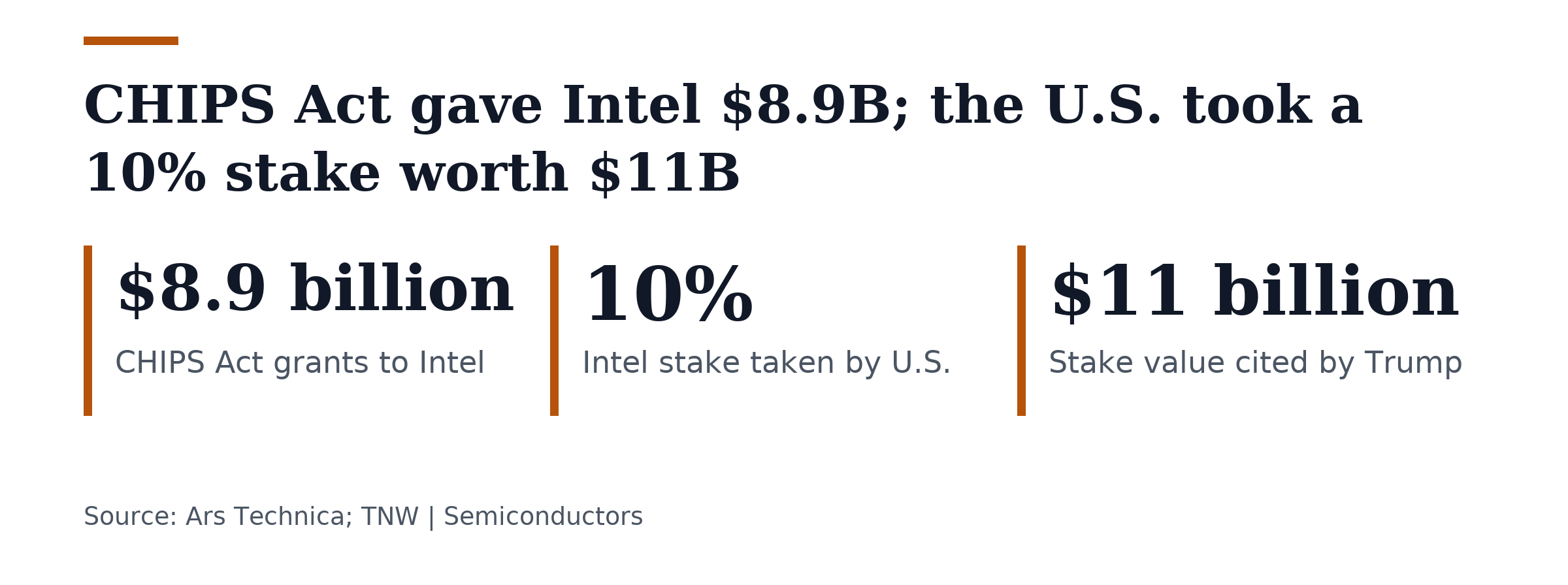
The government received about 10% of Intel’s stock without paying for it. The equity stake was the condition for unlocking previously awarded grants, and the government disbursed $8.9 billion in grants Intel had already secured, with most of the money coming from the CHIPS Act.
Donald Trump pressed Intel chief executive Lip-Bu Tan to step down because of his ties to China in August 2025, part of a broader pattern of administration involvement in chipmaker leadership. Tan later met Trump in the Oval Office on 11 August 2025, a direct presidential meeting following the resignation call. Intel’s board minutes recorded that the economic terms proposed by the administration were not attractive to the company in their current form, and directors expressed doubt before approving.
Shapiro urged Intel to consider how much it would benefit from the administration’s backing, including support with customers, part of the pressure argument presented to the company. Shareholder Richard Paisner alleges the board caved to the government’s extortion, a central claim in the shareholder lawsuit.
Intel’s lawyers reject that account and argue in a motion to dismiss that the board negotiated and won better terms, a direct rebuttal to the extortion claim. The lawyers say the better terms included immediate release of the grants, part of the defense against the extortion allegation.
The case is before the US District Court for the District of Delaware, where Judge Richard G. Andrews unsealed the complaint in June 2026 and scheduled a hearing on motions to dismiss for December 10, 2026. Intel’s board and the Commerce Department both filed motions to dismiss, with both defendants seeking to end the case. Andrews stated in writing that the case probably raises an issue of significant public interest, a judicial characterization of the case’s significance.
The court filing emerged a few days after Trump claimed he had persuaded Nvidia’s board to return Jensen Huang to the chief executive role, a parallel cited to show a pattern of administration interference in chipmaker leadership. On Monday, Nov. 23, 2026, Trump said he had convinced Nvidia’s board to restore chief executive Jensen Huang, reinforcing the pattern of direct presidential involvement in semiconductor firms.
Court documents allege that fifteen months earlier the Trump administration interfered with leadership decisions at another major chipmaker, a historical parallel cited in the article. Allegations swirled that the other chipmaker’s chief executive was too close to China, a similar rationale cited for intervention at that firm.
A former Commerce Department member told WIRED that the government has shifted away from metrics such as job creation, competitiveness, and market share, explaining the reported shift in industrial policy priorities. The former official said the overriding question when dealing with private companies is whether they will give cash back to the government, describing the new governing criterion under the Trump administration.
Paisner additionally wants Nvidia’s internal documents concerning an arrangement under which the government receives a portion of revenue from sales of chips to China, expanding the legal discovery beyond Intel to Nvidia’s government dealings. Intel chief executive Lip-Bu Tan is seeking external customers for the company’s factories, part of Intel’s stated business strategy amid the dispute.
Tan said last week that Intel had signed its first 18A customer, a recent manufacturing milestone cited by Tan. Intel declined to comment to WIRED, and the White House and Commerce Department did not respond to the outlet, a lack of official response to the reporting.
Donald Trump posted, “The United States paid nothing for these Shares, and the Shares are now valued at approximately $11 Billion Dollars.”
Join the discussion