

Key facts
- FCC Chairman Brendan Carr announced the decision, describing it as a major step for American computing infrastructure.
- SpaceX must reach a 10 percent deployment milestone of 100,000 operational satellites by November 25, 2035.
- FCC Chairman Brendan Carr said compute campuses and data centers underpin U.S. leadership in super intelligence, the term the Trump administration uses for artificial intelligence.
- The approval was announced on Nov. 25, 2026, the day before the U.S. Thanksgiving holiday.
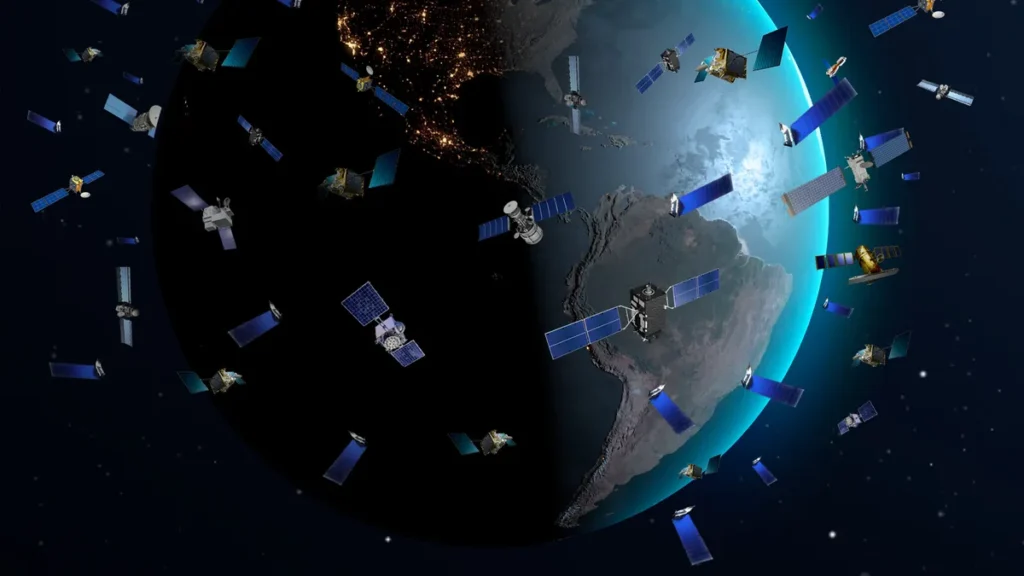
The FCC gave SpaceX conditional approval on Nov. 25, 2026 for as many as one million Starmind satellites to work as orbital data centers.
On Nov. 25, 2026, the day before the U.S. Thanksgiving holiday, FCC Chairman Brendan Carr made the announcement, calling it a major step for American computing infrastructure. “This action opens a bold new frontier for the computing infrastructure needed to power America’s leadership and growth,” Carr said. He also said compute campuses and data centers underpin U.S. leadership in superintelligence, the term the Trump administration uses for artificial intelligence.
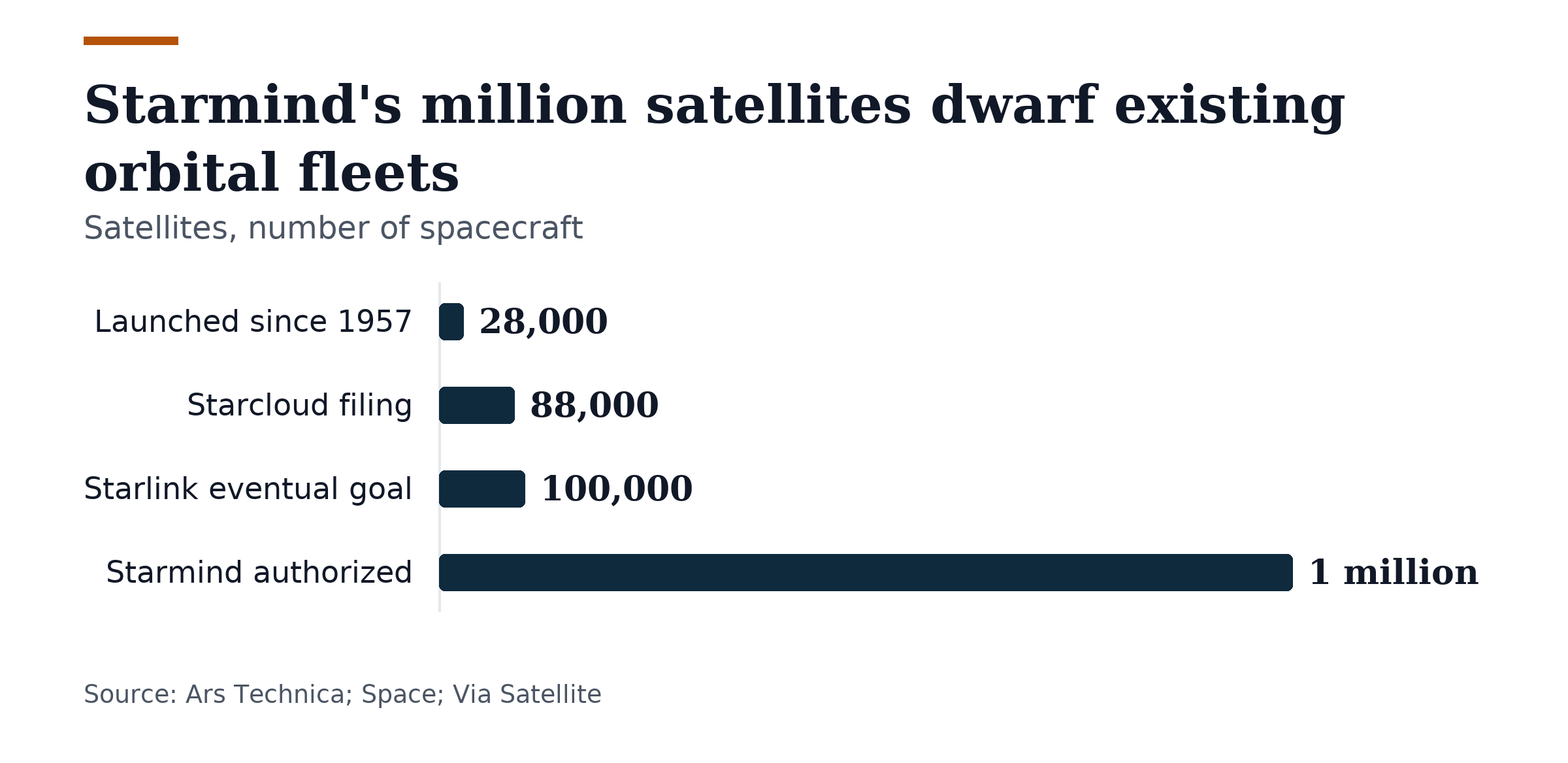
Fully building out the constellation would push the total orbiting satellite count up by roughly 50 times. People have sent about 28,000 satellites into space since 1957, and Starlink now runs about 11,000 spacecraft. Musk said the future Starlink network will eventually reach roughly 100,000 satellites.
The regulator cleared six orbital layers running from 550 km to roughly 1,000 km in altitude. The Starmind satellites will depend chiefly on laser links between spacecraft, with Ka-band radio service, a radio frequency band, under Starlink’s current authorization serving as backup for emergencies. Every Starmind satellite holds a 175-kW average compute payload peaking at 250 kW, with deployable liquid radiators and Starlink-style solar arrays.
In August 2026, Nvidia said the first Starmind satellite would run a modified Vera Rubin NVL72 computing system. Starmind satellites should stay operational for roughly five years. SpaceX said laser links would cut interference with competing satellite networks.
SpaceX plans to send the first Starmind satellite into orbit in the third quarter of 2027 on a Starship rocket. Gwynne Shotwell, who is SpaceX president and chief operating officer, told investors in October 2026 that Starmind launches would begin in 2027. A single Starship flight can transport up to 60 V3 Starlink satellites, meaning roughly 1,700 launches are needed to build the next-generation Starlink constellation.
The company must hit 10 percent deployment, or 100,000 operational satellites, by November 25, 2035. The company must reach 50 percent deployment by November 25, 2038, and finish building the entire constellation by November 25, 2040. The authorization lasts 15 years beginning with the launch of the first Starmind satellite.
The application arrived on Jan. 30, 2026. Public comment opened on Feb. 4, 2026. The xAI purchase closed about three days after the application was submitted, bringing Musk’s space and AI businesses into one company.
Ahead of a June 2026 initial public offering, SpaceX said satellite deployment would not begin before 2028. SpaceX put its long-term addressable market at $28.5 trillion, with almost $23 trillion going to enterprise AI applications. Musk said unlimited solar energy and no land-owning neighbors to complain make space the right place for AI computing.
Amazon Leo requested denial in March 2026, saying the application lacked details on satellite designs, orbital arrangements and collision avoidance. Other filings seek Starcloud’s 88,000-satellite constellation and Blue Origin’s 51,600-satellite Project Sunrise. The FCC has not previously approved an orbital data center constellation.
Cowboy Space, Starcloud, Blue Origin and Google have all said they want to run data centers in space. Starcloud and Google have already sent up AI pathfinder satellites.
The waivers allow SpaceX to use certain spectrum bands without interference protection, covering TT&C operations—telemetry, tracking and command—and processing round rules. The agency said it will not limit how many space stations can get authorization with similar orbital settings.
SpaceX asked for a waiver to retire satellites above 600 km into Earth disposal or heliocentric orbits, meaning orbits around the Sun, rather than burning up in the atmosphere. The agency refused to order additional review under the National Environmental Policy Act. It also said worries about atmospheric damage from re-entry burns are speculative and lack record support. The Secure World Foundation called the constellations a qualitative shift in scale and requested system-level review, public disclosure and step-by-step demonstration approvals.
A University of Massachusetts Amherst poll from September 2026 found 65 percent of Americans against local AI data center construction. Only 11 percent backed it. In the Nov. 3, 2026 midterms, voters backed data center project caps in 40 of 41 local races tracked by Ballotpedia, and Democrats took control of Congress in those elections.
SpaceX must put one working Starmind satellite in orbit by November 25, 2033, and the regulator plans to rule swiftly on other pending requests.
Join the discussion