
Key facts
- FBI is probing an apparent breach of the National Crime Information Center database based on reports from two people briefed on the issue.
- This NCIC intrusion is the second known breach of FBI systems reported in recent months.
- Authorities have not publicly confirmed who the hackers are, how much access they had, or whether any data was stolen, altered or exposed.
- The FBI has not said publicly whether the suspected intrusion reached records that other agencies access through the nationwide network.
The FBI is investigating an apparent intrusion into the National Crime Information Center, the criminal-justice database that federal, state and local law enforcement agencies use to share information about warrants and background checks, according to two people briefed on the matter. CNN reported the investigation on Friday, citing multiple sources familiar with the matter, and said the bureau learned of the intrusion earlier in the week.
Federal, state and local law enforcement agencies use NCIC to share information about warrants and background checks, and the database underpins interagency law enforcement communications. Officers use the system to run searches for fugitives, missing persons and stolen property and to check criminal histories.
Authorities have not publicly confirmed who the hackers are, how much access they had, or whether any data was stolen, altered or exposed. The FBI has not said whether the suspected intrusion reached records that other agencies access through the nationwide network. The bureau declined comment on Friday night and did not immediately respond to requests from CNN and Reuters.
The apparent NCIC intrusion is the second reported breach of FBI systems in recent months, a repeat targeting of FBI infrastructure within months. In September 2026, the FBI said it was investigating an apparent breach connected to ShinyHunters, and the September incident was previously disclosed by the bureau. Hackers tied to ShinyHunters said they took sensitive personal information from employees of the FBI through the FBIJobs.gov recruitment site, and ShinyHunters claimed it obtained sensitive information covering all bureau staff, roughly 38,000 individuals.
ShinyHunters said its FBI hack responded to a bureau announcement that warned organizations and individuals against paying ransoms. Authorities arrested a Canadian cybersecurity researcher and author, and he faces charges in connection with the September hack. Some bureau employees said they received too little information on whether their personal data had been compromised and criticized the help provided. A former FBI agent told the BBC that current employees’ safety concerned him after the September hack.
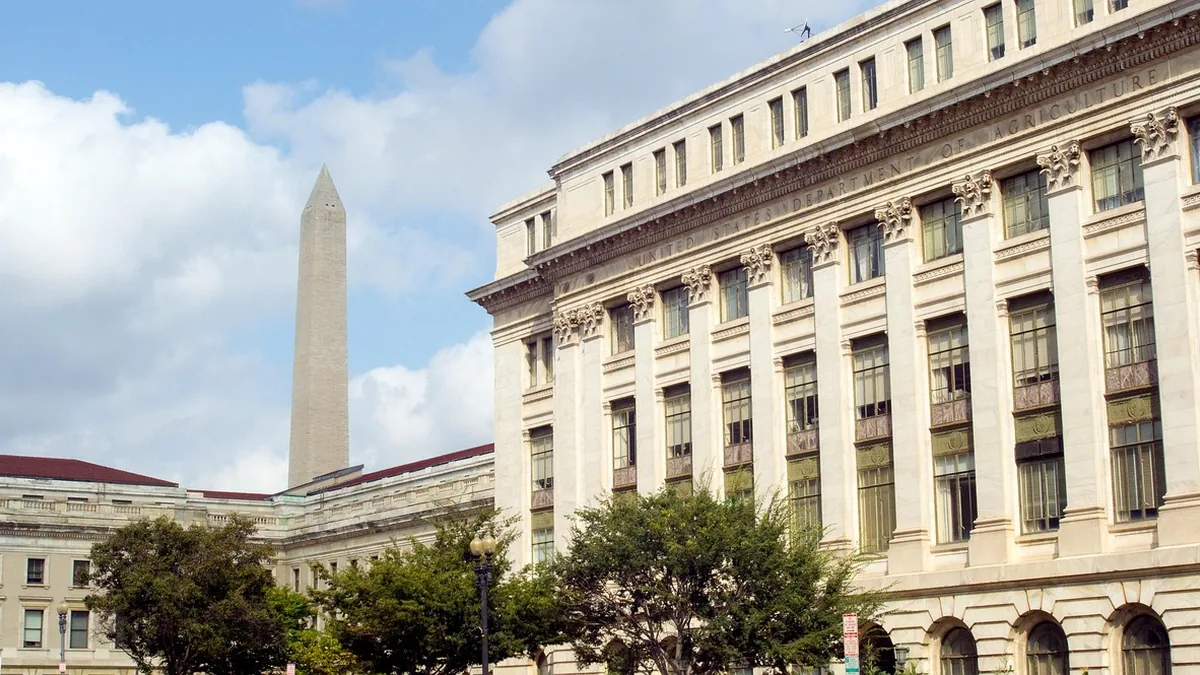
On Thursday, word reached employees that the USDA farm payment system was targeted in an apparent cyberattack. The USDA breach appeared limited, as no other USDA systems had been targeted as of Friday, and officials expressed concern that intruders could reach additional sensitive data.
A wave of disruptions preceded the FBI breach report. Last week, technology outages affected banking, air traffic control and other American sectors, and officials said cyber attacks were not the cause. According to the Trump administration, recent glitches involving Microsoft, major American banks and air traffic control systems, along with the National Security Agency, are not connected to cyber attacks. Last week, online banking disruptions reportedly prevented customers at JPMorgan Chase, at Bank of America and at Wells Fargo from logging into accounts, viewing balances and sending money.
A nationwide FAA disruption halted flights, and the agency said a technical malfunction, rather than a cyber attack, was responsible. A technical problem took down an internal classified National Security Agency network on Tuesday, and the agency resolved it by Friday and found no sign of a cyber attack. Sen. Mark Warner, D-Va., the top Democrat on the Senate Intelligence Committee, said on Wednesday that evidence showed the recent technology outages were not the result of cyber attacks, and he raised AI as a possible factor in weaknesses in the systems.
Officials see no link between the recent technology disruptions and the suspected FBI breach. Sean Cairncross, the White House National Cyber Director, lost his job this week. Trump said Cairncross was not good enough, and the nation’s top cyber official departed amid the disruption reports. On Thursday, a White House official confirmed that Sean Cairncross was departing his position.
Cairncross participated in White House discussions on AI policy, including the summer decision to direct Anthropic to take down two powerful AI systems for national security reasons. On Thursday, FBI Director Kash Patel discussed Operation Winter Shield on Fox News, calling it a program finished months earlier to urge companies to boost digital security, and Patel highlighted cybersecurity efforts during the investigation. “Other administrations could have made these updates, but they didn’t,” Patel said. “We are staying ahead of the curve and making up for lost time.”
Join the discussion