

Key facts
- Several partners have begun using Claude to remediate vulnerabilities and share remediated results with their customers, Anthropic said.
- Anthropic launched the Critical Infrastructure Defense Program on October 8, 2026, pairing frontier Claude models with on-site engineers and threat research for companies that advise critical infrastructure operators.
- The partners include consulting firms, security vendors and hardware makers, with Hitachi Ltd. and Rockwell Automation Inc. responsible for building and patching industrial equipment.
- Anthropic is beginning with a limited group of providers to determine which approaches work best in real-world conditions before widening the effort.
Anthropic launched its Critical Infrastructure Defense Program on October 8, 2026, pairing frontier Claude models with on-site engineers and threat research for companies that advise critical infrastructure operators.
The eleven founding partners span consulting firms, security vendors and hardware makers. Accenture plc, Booz Allen Hamilton Inc., Deloitte & Touche LLP and PricewaterhouseCoopers LLP are the consulting firms. CrowdStrike Holdings Inc., Dragos Inc., Insane Cyber Inc., Nozomi Networks Inc. and Palo Alto Networks Inc. are the security vendors. Hitachi Ltd. and Rockwell Automation Inc. are the hardware makers, and both are responsible for building and patching industrial equipment.
Hitachi, Ltd. joined the program as a founding partner on October 8, 2026, and will take part in working groups while sharing operational technology expertise for critical infrastructure. The company had already entered a strategic partnership with Anthropic in May 2026, joined Project Glasswing in June 2026, and launched HMAX Cyber in September 2026. Hiroaki Koiwa of Hitachi, Ltd. said, “Through participation in this program, we look forward to collaborating with Anthropic and fellow members to further enhance cyber resilience for critical infrastructure.”
Anthropic said several partners have begun using Claude to remediate vulnerabilities and share the remediated results with their customers. The company is beginning with a limited group of providers to determine which approaches work best in real-world conditions before widening the effort. The founding providers reach only part of the nation’s critical infrastructure systems.
Anthropic launched the program to place Claude models, engineers and threat research inside the firms that advise critical infrastructure operators, working with eleven founding partners that span consulting, security and hardware. Several of those partners are already using Claude to fix vulnerabilities for their customers. The push follows a small power plant in the United Kingdom being knocked offline for four days in August and more than 30 community water systems in Minnesota switching to manual controls for two days in July after a coordinated attack, with programmable logic controllers flagged as a target of Iranian-affiliated hackers.
Anthropic is enlisting a small group of trusted providers to identify exposures and recommend fixes for running operational technology systems, supplementing AI’s limits. The program acknowledges operational technology and internet-of-things complexity, but success hinges on operators applying AI-identified fixes quickly enough without interrupting operations.
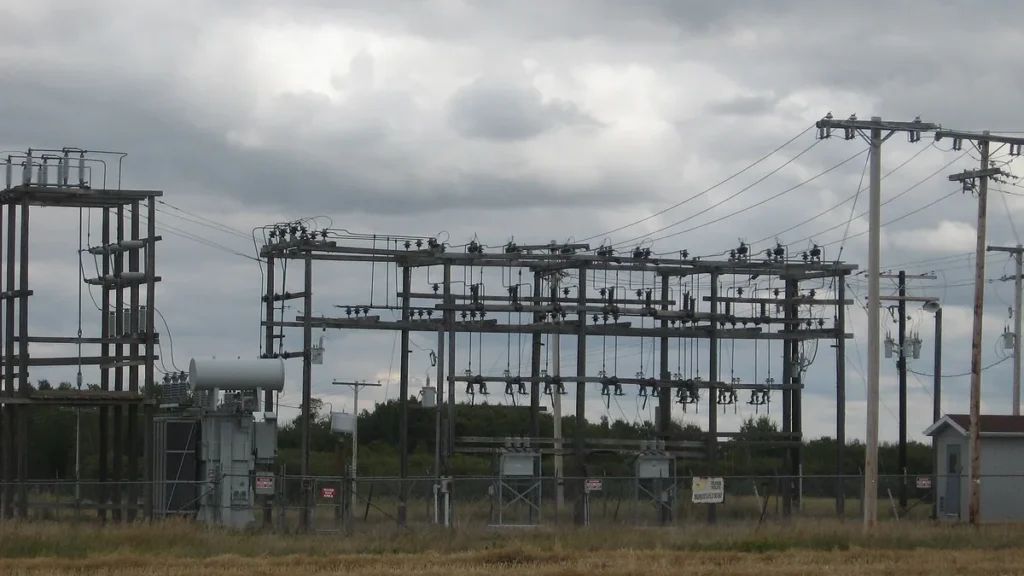
The program focuses on operational technology at plants, substations and water systems, where operators often cannot shut down machinery built to run for decades for patching. Operational technology is the hardware and software that monitors and controls physical machinery. Many legacy OT devices prove tough to catalog and protect, since some run old software, rely on default login credentials, or operate beyond normal monitoring.
Experts warn that many legacy operational technology devices run outdated software, use default credentials, cannot be patched often, and may remain unsupported for 30-plus-year equipment lifespans. Older, unsupported versions of products from Schneider, Rockwell, Honeywell, Eaton and Siemens often remain in use because equipment lifespans can reach 30 plus years. Operators with aging equipment sometimes cannot patch at all, and when patches exist they may schedule maintenance windows as rarely as once a year.
Because many operational technology systems cannot be shut down without disrupting essential services, finding a vulnerability represents only half the challenge. For operational technology, a fix may wait until it can be safely deployed to running machinery, and in rare cases that could take decades.
John Gallagher of Viakoo said artificial intelligence suits the task of unpacking binary firmware blobs on obscure edge sensors, IP security devices and programmable logic controllers. Binary firmware blobs contain compiled code stored on hardware devices. The aim is to find nested unpatched open-source libraries such as BusyBox, log4j or outdated OpenSSL forks. He said existing commercial tools often miss the final remediation step, speeding up discovery without solving how operators physically fix devices.
Jen Sovada of Claroty said artificial intelligence cannot substitute for the human expertise required to grasp operational technology operations and the stakes of failure. Josh Corman of the Institute for Security and Technology said routine IT hygiene such as asset discovery and port scanning can reboot or break fragile operational technology equipment including old programmable logic controllers.
According to Andrew Turner, president of commercial cyber at Booz Allen, operational technology marks the next frontier for attacks that run autonomously using AI. “What matters now, he said, is how much control artificial intelligence can gain over an industrial process and how fast.”
The infrastructure effort follows Anthropic’s expansion of its Cyber Verification Program to all critical infrastructure operators, offering AI models with reduced guardrails for defensive and offensive security work. Project Glasswing gave vetted organizations access to Claude Mythos from April until Anthropic folded it into the expanded Cyber Verification Program. Anthropic said finding vulnerabilities has never been easier but verifying, prioritizing and fixing them remains hard.
Anthropic launched OSS Scanner alongside the infrastructure program to provide eligible open-source projects with no-cost recurring vulnerability scans using its strongest models. Over the past six months, Anthropic’s models identified more than 29,000 candidate vulnerabilities in widely used software, and staff manually reviewed about 6,000. Nearly 5,000 unreviewed vulnerability reports with proposed patches have gone out to maintainers so far.
Findings from OSS Scanner bypass human review and reach maintainers directly, though Anthropic warned some may carry errors such as incorrect severity ratings. The company’s disclosure testers examined 97 critical and high-severity early-version findings spanning 48 projects and approved 85 for disclosure. During early trials, embedded encryption library developer wolfSSL Inc. found all but two of 74 reports valid, with five becoming CVEs.
Core maintainers can join OSS Scanner via a code contribution to an Anthropic-managed GitHub repository, and eligibility depends on critical impact on infrastructure and user security. The Defender Advantage Fund, established in August, pays to keep the OSS Scanner free. Anthropic has also contributed funds to groups including the Python Software Foundation and Apache Software Foundation, plus Alpha-Omega and OpenSSF via the Linux Foundation.
Anthropic has not disclosed pricing terms, including whether partners receive free model access or who pays for compute. The company anticipates artificial intelligence will benefit defenders more than attackers within two years, even as exploit costs keep falling and repairs remain slow, people-dependent work.
Join the discussion